
Nov 18, 2026
Choosing ASTM A249 TP304 Tubing Suppliers for OEM Projects
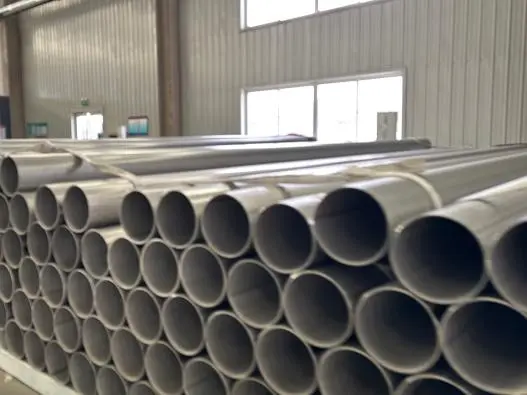
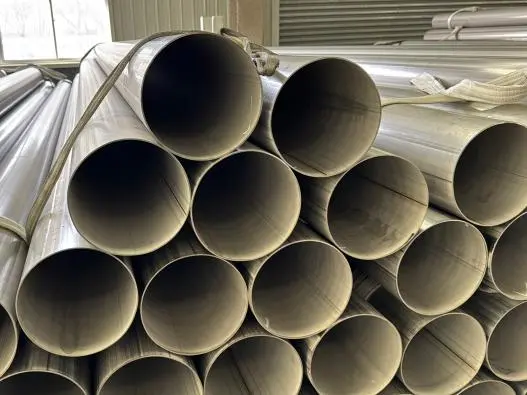
The best way to choose a supplier of ASTM A249 TP304 Tubing is to weigh technical compliance, manufacturing capability, inspection evidence, documentation, and total landed cost together, not price alone. Ask for heat-specific mill test certificates, check outside diameter and wall tolerances against your drawing, and request a sample before bulk production. A supplier that welds, anneals, tests, and packs under one controlled process is easier to audit and easier to trust on repeat orders. This guide shows how I screen suppliers step by step, and how YOUFA supports OEM buyers in the United States and other export markets.
|
|
|
Why Supplier Selection Matters for OEM Tubing Projects?
What Sets ASTM A249 TP304 Tubing Apart from General 304 Tube?
A lot of people who buy 304 stainless tubes think they are all the same. It is not. These rules tell us how to make welded austenitic tubes that are used in boilers, superheaters, heat exchangers, and condensers. The tubes we call ASTM A249 TP304 Tubing are made to these rules. Chemistry, heat treatment, mechanical features, tagging, testing, and limits are some of the things that the standard shows us how to do. It is possible that a store-bought 304 tube is made of the same base metal (18% chromium and 8% nickel), but it may not have been tested, or its tolerances checked. In the end, that gap shows up as a bad fit between the tubes and sheets, leaks, or inspections that are turned down when an OEM makes heat-transfer equipment. A supplier who marks all of their certificates and tubes with the standard takes away a lot of that risk.
How ASTM A249 Compares with A269 and A213?
RFQs use three standards a lot. When you mix them up, it is harder to understand what is going on. ASTM A249 states that welded austenitic boiler, superheater, heat-exchanger, and condenser tubes must be made. Both straight and welded austenitic tubes can be used with ASTM A269 in most situations. In other words, it works better with process lines and instruments than with heat equipment. ASTM A213 covers the tubes in the boiler, superheater, and heat exchanger that are not joined with a weld. Most of the time, these tubes cost more. Behind all three is a business tube that is not the norm. I use A249 for heat-transfer tubing that has been welded. I use A213 when a plan or code says there should not be a weld gap. I use A269 for general-service tubing as well.
Why Technical Fit, Documentation, and Cost Belong Together?
It looks like a good deal until you see that the license does not match the tubes on the dock. I grade suppliers on six things at once: how well they follow technical requirements, how well they can make things, how well they document, how well they deliver, and the total cost of their goods. It includes the cost of shipping, insurance, taxes, inspection, stock, and any extra costs that come up because of delays or replacements. You can save more money in the long run by going with a company that charges a little more per meter but gives you accurate measurements and certificates that can be verified. One lot that does not work can also slow down US OEMs that make tools for chemicals, power, or hot new energy sources.
Define Specifications and Verify Material Compliance
Build a Complete RFQ Specification
All suppliers can give prices on the same item if the RFQ is clear. Everything I ask for is based on these items:
- Product identity: As part of "product identity," you need to include ASTM A249. Include the exact grade, whether it is joined, and the shipping state. You can get TP304, TP304L, TP316, TP316L, S31254, TP321, TP321H, TP317, and TP310 from YOUFA in both bright-annealed and solution-annealed forms. You cannot use a quiet person instead of the grade and situation that you name.
- Dimensions and quantity: Please tell us the outside diameter, wall thickness, type of length, tolerances, and quantity. YOUFA can make ODs from 1/8" to 12" (3.2–304.8 mm) and wall thicknesses from 0.015" to 0.320" (0.4–8.1 mm). They can also make U-bends, random lengths, and set lengths.
- Testing and logistics: Write down the title, the type of certificate (3.1 or 3.2), the marking, the inspection, the packing, the location, the Incoterms, and the date of delivery. You can compare the quotes line by line after you fill out the form.
Suppliers will not give you different prices for the same goods if you have a full RFQ. This also saves you a lot of emails back and forth to explain.
Check Dimensions and Tolerances
What a tube made of ASTM A249 TP304 Tubing does depends on how big it is and how the walls are shaped. How well a wall moves heat and how much pressure it can hold depends on how wide it is. How well it fits in the tube sheet is determined by the outside width, and how straight it is determines how it is installed. For big orders, I ask suppliers for more than just a statement that they follow the rules. I also need inspection info for sizes. The design engineer should then check the size, temperature, quality of the weld, possible corrosion, related code, and allowed stress to make sure the pressure is correct. Grain grade does not tell you the answer by itself. Part II, Part A of the Boiler and Pressure Vessel Code now calls A249 from ASTM SA-249. This is the reason it is used in many projects involving pressure tools.
Verify Chemistry, Strength, and Testing
On the certificates, there should be heat-specific results for chromium, nickel, carbon, manganese, silicon, phosphorus, and sulfur. There should also be results for elongation, tensile strength, and yield strength. I need ASTM A249 TP304 Tubing to be able to stretch at least 35% and have a tensile strength of at least 515 MPa (75 ksi). It also needs to have a yield strength of at least 205 MPa (30 ksi). Chromium carbides do not form at grain boundaries when solution annealing is done at at least 1900°F (1040°C) and then quickly cooled. This also makes sure that the metal heat-affected zone will not rust. According to ASTM A249, every tube must also pass a hydraulic or nondestructive electric test. Sample tubes also have to be tested to see how smooth they are and how much they flare or flange. Find out if the test covers all tubes or just a lot of them.
Compare Grades and Tubing Options
Welded Tubing Versus Tubes Made Without a Weld Seam
Welded tube starts out as a flat strip that is cut to the right size, filled with heat, and welded. ASTM A249 says that the welding process must be automatic and that no extra metal should be used. Along the length of a strip of stock, the wall width should stay the same. ASTM A213 tubes do not have a weld seam, so they work well in designs where the code or the customer says there should not be one. It is more difficult to find them and they cost more. ASTM A249 TP304 Tubing can be used for many heat exchanger and condenser jobs as long as the weld joint factors in the design code are used properly. I always ask the design engineer about that.
TP304, TP316, and Other Grades
Chlorides change TP304, but it is still good for many acidic jobs. It is because they both contain molybdenum that TP316 and TP316L are less likely to pit or corrode in water that has chloride in it. Carbon cannot be more than 0.035% in TP304L and TP316L. This makes it less likely that welded parts will become sensitive. Titanium is used to keep TP321 and TP321H stable at high temperatures. TP310 is also used for work that needs to be done at high temperatures. The grade S31254 is very austenitic and has a lot of molybdenum. It is made for tougher chloride environments. As per ASTM A249, all of these are made by YOUFA, so a bill of materials can come from the same place.
Match the Grade to Service Conditions
The right grade depends on the working temperature, pressure, cleaning agents, flow rate, corrosion risk, and maintenance plan. When I look at the fluid, the amount of chloride, acids, and cleaning chemicals tells me more than anything else about how likely it is to rust. The code standards come next, then temperature and pressure. A grade that costs more per meter can still save you money in the long run if you do not have to replace the tubes too often in a heat exchanger that is hard to retube. Tell the service provider about your service conditions. A professional group that asks about temps and chlorides before giving a price shows the right goals.
Assess Supplier Capability, Documentation, and Cost
Manufacturing Capability for Repeat OEM Production
One good example of ASTM A249 TP304 Tubing does not show much. The fifth order of OEM projects takes the same amount of time and space to finish as the first order. Find out about the company's welding equipment, its ability to anneal, its sizes, its straightening systems, the steps that someone else takes, and its monthly output. Youfa Stainless Steel Pipe Co., LTD has been around since 2017 and makes 50,000 tons of steel every year on its 15 production lines. There are more than 200 people working for the Top 500 company in China. They have everything you need for stainless steel pipes in one place. This lab has TÜV, ISO 9001, PED, and ISO 17025 approval. We can start with as little as one pipe for trial amounts and then move on to regular amounts.
Documents That Prove Compliance
It is proof for the buyer that the papers are there. A good mill test certificate lists the maker, the ASTM A249 grade, the heat number, the chemistry, the mechanical results, the state of the heat treatment, the size, the amount, and the test status. The marks on the tube, the packing list, and your purchase order all need to match. Things that are not right are heat numbers that are missing, standard copies that are not clear, grades that do not match, and certificates that cannot be linked to the package. YOUFA provides reports for TPI, WPS/PQR, MPS, UT/RT, and MTC/MTR (3.1/3.2). A 3.2 certificate adds verification by a third-party inspector or the buyer's agent. This is good for first orders, contracts worth a lot of money, and pressure equipment. Test labs that follow ISO/IEC 17025 have more reliable results because it tells them what skills they need to have.
Compare Quotations on Total Cost
The price per meter does not always show what is going on. A good offer tells you the price, the currency, the length of time it is good for, the Incoterms, the minimum order quantity, the testing, the packing, the wait time, the payment terms, and any export fees. You need to add up the freight, insurance, taxes, customs, inspection, and inventory to get the landing cost. A really low offer could mean that not enough tests were done, the standards are too low, or the certificates are missing. One way to use a weighted scorecard is to give compliance, paperwork, performance, and price weights that are based on the risk of the project. A company called YOUFA can get tubes to Tianjin Port in just seven days. They pack them in wooden boxes that can have a steel frame, hexagonal binding, and woven bags.
Sampling, Approval, and Common Mistakes
Run a Sample and First-Article Approval
A controlled sample finds problems before they affect a lot of people. The outside width, wall thickness, straightness, look of the weld, end state, writing, and packing should all be looked at. Then put the sample through its real process, like being welded, shaped, or the tube expanding. Explain who gets the sample, what test plan is used, and how heat numbers can be linked to production lots. Write down in the contract how the supplier will handle problems like wrong measurements, failed tests, shortages, and shipping damage, as well as when to replace items, figure out what went wrong, and fix the problem. YOUFA needs at least one pipe to be ordered, so you can see a real one before you commit to a big order.
Mistakes That Cost OEM Teams Time and Money
Four mistakes keep happening. The first way is to treat all 304 tubes as ASTM A249 TP304, which might not pass checks. When you pick based only on price, you might not try as hard. The third is not paying attention to the OD and wall specs, which makes the tube-sheet fit badly and requires more work. The fourth mistake is using weak certificates or picking TP304 without checking how it reacts to chloride. This can cause corrosion quickly and make claims hard to make. Trouble is easy to avoid. Always include the exact standard and grade in your purchase order. Also, make sure you check the important measurements, link each certificate to a heat number, and get engineering approval for the material choice.
Why OEM Buyers Choose YOUFA?
A trustworthy source should have things like steady production of welded tubes, accurate measurements, proven material results, good testing, full tracking, and quick help from experts. That is what YOUFA is. We start our quality process by getting our steel from known sources and keeping track of our raw materials in a way that makes sense. After that, it uses special testing tools and does one last check. We make eight different grades of ASTM A249 TP304 Tubing. You can get the tubing solution-annealed or bright-annealed. As part of our service, we offer technical help, on-site commissioning choices, and full project supply planning. It is based on engineering cases and partnerships that last forever. The same person can handle samples, custom lengths, U-bends, export packing, and orders that come up again and again.
Conclusion
If you need to buy ASTM A249 TP304 Tubing, you should first think about the technical aspects of the deal and then the cost. The article explained that A249 is not the same as A269, A213, or general 304 tube. This means that every RFQ should include the exact standard. Buyers do not have to guess when they can use full specs, proven chemistry and mechanical results, measurement data, and papers related to heat numbers to make choices. The grade should be chosen based on the fluid's makeup, temperature, and pressure. If you want to protect against chloride, you might want to look at TP316 or another grade. Then, what makes a reputable source different from a cheap one is the ability to make, the sampling, the terms of the deal, and the total landed cost. When buyers use these checks, they cut down on inspections that do not pass, extra work that needs to be done, and delays.
FAQ
What is ASTM A249 TP304 tubing?
It is a welded austenitic stainless steel tube made to ASTM A249 standards that can be used in a condenser, heat exchanger, boiler, or superheater. A lot of people use it in power plants, food preparation plants, and chemical businesses.
How does ASTM A249 differ from ASTM A269?
ASTM A249 is for heat-transfer service for welded tubing. ASTM A269 covers general-use tubing that is both seamless and welded. It can be used in places like food processing, instrumentation, and pipelines.
Should I choose TP304 or TP316?
Make your choice based on the rust conditions. TP316 has molybdenum in it and is better at resisting chlorides, while TP304 is better for many less demanding jobs.
Which documents come with an order?
YOUFA has reports for MTC/MTR (3.1/3.2), TPI, WPS/PQR, MPS, and UT/RT, and it can track heat numbers.
Can I order custom dimensions?
Yes. We can make ODs from 1/8" to 12" and wall thicknesses from 0.015" to 0.320". The length can be random, fixed, or U-shaped. One pipe is the minimum you can order.
Request an ASTM A249 TP304 Tubing Quotation from YOUFA
YOUFA is an ASTM A249 TP304 Tubing supplier with 15 production lines that make 50,000 tons of tubing every year. Tell us about your grade, OD, wall thickness, length, quantity, use, testing needs, destination, and delivery date. We will look at what is technically possible, give you a price and wait time, and make samples and MTCs. To start a technical and business study, email info@youfass.com or go to youfass.com.
Online Message