
Oct 30, 2026
Can EN 10217-7 1.4307 tc1 Welded Steel Pipe Support Reliable Food and Beverage Processing Lines?
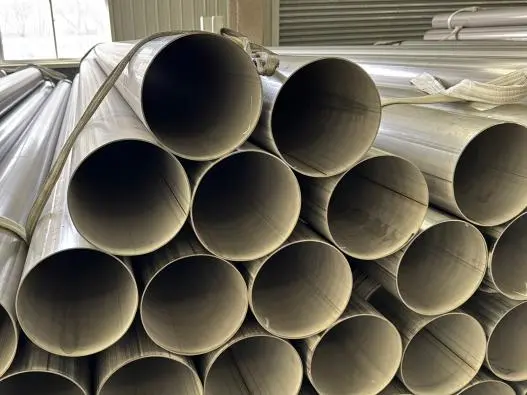
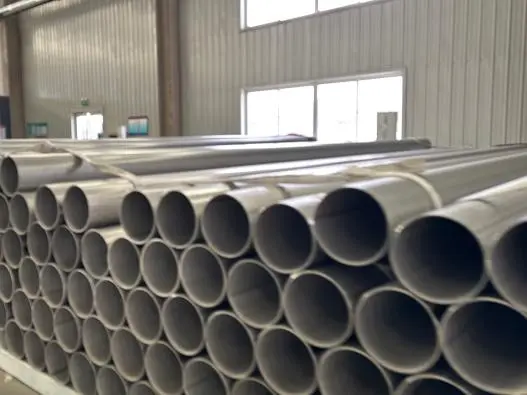
Yes — EN 10217-7 1.4307 TC1 welded steel pipe is well-suited for food and beverage processing lines. As a low-carbon austenitic stainless steel (equivalent to AISI 304L), it carries a maximum carbon content of 0.03%, which prevents intergranular corrosion after welding. Its tensile strength range of 470–670 MPa and minimum elongation of 45% give it the mechanical durability needed for pressure-bearing fluid systems. Backed by mandatory TC1 leak-tightness testing and EN 10204 3.1 certification, this pipe grade delivers traceable, verifiable performance that food-grade piping demands.
|
|
|
Understanding EN 10217-7 1.4307 TC1 Welded Steel Pipes in Food & Beverage Industry
What Does the EN 10217-7 Standard Actually Mean?
European standard EN 10217-7 says how to weld stainless steel tubes that are used in high-pressure scenarios. It talks about the different kinds of materials, how they work mechanically, and the studies that can be done on them. "TC1" stands for "Test Category 1," which is the strictest level of inspection these rules require. It includes tests for longitudinal tension, flattening, and making sure there are no leaks at all using eddy current or hydrostatic methods.
Why Grade 1.4307 Matters for Hygiene Applications?
Grade 1.4307 (X2CrNi18-9) is a type of stainless steel that is low in carbon. Sensitization is a problem that often happens in soldered parts, but its very low carbon content fixes it right away. At this point, chromium carbides form around the edges of the grains. These make the metal less resistant to rust. By keeping carbon below 0.03%, 1.4307 stays stable even after many cycles of welding. This is a useful property for building that is used in food processing.
Manufacturing Controls That Protect Food Safety
These pipes are carefully checked to make sure they are of good quality. EN ISO 1127 is used to check the sizes. There can't be any scale on the surface because it needs to be W1 class. Every weld joint goes through tests that don't damage it. To show that all chemicals can be tracked back to their source, you need a 3.1 inspection certificate under EN 10204. These checks make sure that buying teams have written proof that pipe material meets the standards before it is sent to a production plant.
Key Benefits of Using EN 10217-7 1.4307 TC1 Pipes in Food and Beverage Processing
Corrosion Resistance Where It Counts Most
As part of CIP (clean-in-place) processes, cleaning agents, washing chemicals, and organic acids are often used on pipes in food and drink lines. In 1.4307, the mix of chromium and nickel makes an inactive oxide layer that is very good at keeping these things out. This grade of pipe doesn't let metals into process fluids like carbon steel or lower grades of alloys do. This is a must for businesses that make cheese, beer, or bottles.
Mechanical Performance Under Processing Conditions
If you work with food, these are the main basic perks that matter:
- Pressure durability: With tensile strength up to 670 MPa, these pipes handle pressurized transport lines, including carbonated beverage systems, without dimensional distortion.
- Thermal cycling tolerance: The austenitic structure maintains toughness across a wide temperature range, supporting both hot-fill processes and cold storage piping without brittleness.
- Weld zone integrity: TC1 testing specifically validates the weld seam under cyclic loads — the area most prone to fatigue failure in automated processing lines.
EN 10217-7 1.4307 tc1 Welded Steel Pipe is very resistant to thermal cycling because its austenitic structure stays strong over a wide temperature range. This means it can be used for both hot-fill processes and cold storage pipes without breaking.- Weld zone integrity: TC1 testing checks the weld seam under cyclic loads, which is where automated processing lines tend to break down due to wear and tear.
How It Compares to Similar Grades
The mechanical parts in these plants make it less likely that they will have to shut down without warning. This means that factories can confidently stick to their production plans.
Selecting EN 10217-7 1.4307 TC1 Pipes: What Procurement Managers Should Consider?
Specifications and Dimensional Requirements
Welded EN 10217-7 tubes should have outside sizes that are between 6 mm and 610 mm, based on EN ISO 1127. Food-grade lines should have a surface finish that meets the standards (usually Ra ≤ 0.8 µm on the inside) and end preparations that match the fittings that will be used on-site, whether they are threaded connections, rounded ends, or plain ends.
Supplier Certification and Traceability
Any EN 10217-7 1.4307 tc1 Welded Steel Pipe that comes from a good company must have EN 10204 3.1 material approvals added to it. ISO 9001 certification shows that the process is always the same when it comes to making things. The PED 2014/68/EU directive also says that pressure-bearing parts must be used in projects in the EU or sent to the EU. Before making a big order, procurement managers with a lot of experience will often look at audit records from a third party and ask for sample certificates.
Lead Times, Pricing, and Customization
It takes between two and four weeks to ship most bulk sizes. It takes longer for custom measurements, like wall thicknesses that aren't standard or lengths that aren't standard. Depending on how busy the mill is, it can take anywhere from four to eight weeks. When nickel and chromium prices change, so do prices. This is why a formal purchase agreement protects against price changes and changes in the cost of materials. People can plan their projects better when they can choose between stock production and custom production.
Real-World Applications and Case Studies in Food and Beverage Processing
Dairy Processing Facilities
There are 1.4307 welded pipes, such as EN 10217-7 1.4307 tc1 Welded Steel Pipe, that connect the storage tanks, pasteurizers, and homogenizers in automated dairy lines. You can heat the low-carbon grade many times between 4°C for cold storage and 72°C for processing, and the weld will not break. Companies that use this pipe type say that the joints between the pipes don't need as much upkeep as normal 304 installations.
Brewery and Beverage Production
In breweries, pipes need to be able to handle both high-acid wort and high-acid CIP treatments. Cross-contamination can't happen on the surface of 1.4307 that isn't being used. Over the course of five years, the number of times a medium-sized European brewery had to replace pipes dropped by 30% after switching from standard 304 tubes to 1.4307 TC1 welded tubes. They said this was because the welds were stronger when the pressure changed during the carbonation process.
Practical Maintenance Considerations
It's important to take care of pipe even if it doesn't rust. Maintenance teams should use borescope cameras to check the weld lines once a year. They should pay extra attention to bends and T-junctions, where rough surfaces wear away faster. After any on-site welding, the passivation treatment brings back the protective oxide layer. Surfaces also last a lot longer when the amounts of CIP chemicals used are kept within the manufacturer's guidelines.
How to Procure EN 10217-7 1.4307 TC1 Welded Steel Pipes with Confidence?
Verifying Supplier Credentials
Before you place an order, make sure you have the supplier's ISO 9001 certificate, sample 3.1 material certificates, and the names of other customers who have worked with them on similar food industry projects. You can get these from a reputable company that makes EN 10217-7 1.4307 tc1 Welded Steel Pipe. Find out if the supplier does NDT testing themselves or if they hire someone else to do it. When testing is done in-house, shipping times are usually cut down, and the quality chain stays intact.
Managing Volume Orders and International Logistics
Before you sign a supply agreement for a big project, make sure you know the minimum order quantities, how the caps must be packed (usually all together), and the Incoterms. People from other countries who want to buy stainless steel items should find out from their own governments what the details are for doing so, such as what paperwork and tariffs are needed. People who have shipped goods across borders before can help you with things like commercial invoices, packing lists, and legalization certificates.
Post-Purchase Quality Assurance
When you receive something, you should check the size, look at the surface, and compare it to the certificate. When the package gets there, any changes in wall thickness or flaws on the surface should be written down right away and sent to the seller. Having a clear plan for how to handle non-conformances from a seller shows that they are responsible and helps build long-term relations for procurement.
Conclusion
EN 10217 7 1 4307 tc1 EN 10217-7 1.4307 tc1 Welded Steel Pipe is a good choice for lines that make food and drinks because it works well and has been used before. It doesn't rust when cleaning chemicals and process fluids touch it because it has a low-carbon austenitic structure. Every weld seam also has to go through a TC1 check to make sure it meets standards for efficiency. When compared to standard 304 and other types, it's clean, lasts a long time, and doesn't cost too much. This type of pipe will last a long time and keep things clean as long as the procurement team checks the suppliers' credentials and puts it in the right way.
FAQ
Is EN 10217-7 1.4307 TC1 pipe approved for direct food contact?
For Grade 1.4307, the main rules for food contact, like EU Regulation 10/2011 and FDA instructions for stainless steel food tools, are met. It is safe to come into direct contact with process fluids in lines that make food, drinks, and dairy products because it has a passive surface and is low in carbon.
How does 1.4307 compare to 1.4404 in corrosion resistance?
When you add 2–3% molybdenum to Grade 1.4404 (316L), it makes it more resistant to pitting corrosion in places where there is a lot of salt. For normal food preparation, where CIP chemicals are the main thing that breaks things down, 1.4307 works just as well and costs less. Some uses, like those near the coast or with brine solutions, may need the 1.4404 update.
What are typical lead times for 1.4307 TC1 welded pipes?
It takes between two and four weeks to ship most bulk sizes. From the time the order is confirmed, it usually takes four to eight weeks to get custom-cut lengths or sizes.
What is the minimum order quantity?
Most suppliers set the MOQ at one ton if you need standard sizes. For special needs, MOQs may be higher. Confirming this early on in the sourcing process keeps things from taking too long.
Can these pipes be welded on-site without losing corrosion resistance?
For sure, as long as the right steps are taken during TIG welding and the area is passed through a coolant process afterward. 1.4307 doesn't become sensitive when it's welded because it doesn't have much carbon in it. This keeps the resistance to corrosion in the area that is heated.
Get Your EN 10217-7 1.4307 TC1 Welded Steel Pipe Quote from YOUFA Today
Youfa Stainless Steel Pipe Co., Ltd. has been an approved supplier of stainless steel pipes since 2017. A lot of steel is made there every year—50,000 tons on 15 lines. You can trust YOUFA to give you EN 10217-7 1.4307 tc1 Welded Steel Pipe. They can make unique sizes, test the materials in-house with NDT, and get full EN 10204 3.1 approval for food and drink projects. To start your inquiry, email info@youfass.com or go to youfass.com. This is true whether you need standard stock or supplies that are made just for your project.
Online Message