
Oct 12, 2026
ASTM A928 UNS S31803 CL1 EFW Pipe Meets Demands of Corrosive Environments
Material choice is very important for engineers and procurement managers who work in harsh chemical environments, chloride-filled offshore conditions, or high-pressure fluid systems. The ASTM A928 UNS S31803 CL1 EFW pipe has been used successfully in the past to deal with these issues. This pipe grade is made from duplex stainless steel that has a balanced austenite-ferrite microstructure. It has twice the yield strength of normal 316L austenitic pipe and doesn't pit, crevice, or suffer stress corrosion cracking. It works well in a wide range of demanding industries, from making hydrogen on skids to processing chemicals. This makes it a practical and cost-effective choice for long-service piping systems.
|
|
|
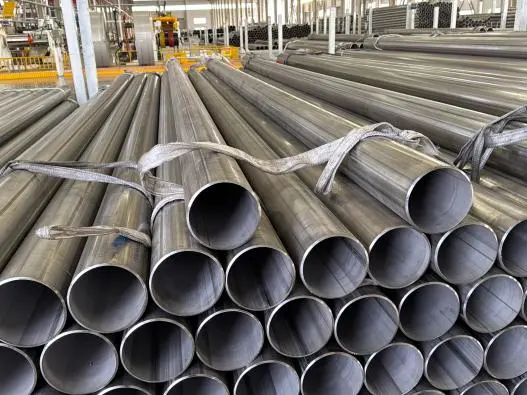
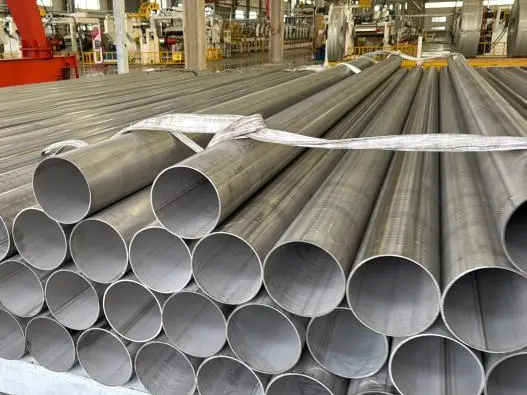
Understanding ASTM A928 UNS S31803 CL1 EFW Pipe: Specifications and Properties
You will save money by getting the right material specs the first time. Later, you will not have to pay as much to fix mistakes. Engineers need to know the following about this pipe's main technical specs:
Chemical Composition and Alloying Elements
UNS S31803 is mostly made up of chromium (22%), nickel (5–6%), and molybdenum (3%). These parts work together to give the metal its unique two-phase microstructure, which is mostly made up of ferrite and austenite. Adding nitrogen (0.08–0.20%) makes the austenite phase even more solid and makes it harder for pits to form. Because of this chemical makeup, duplex 2205 works better in places where 304 or 316 stainless steel would break down more quickly.
Mechanical Properties and Heat Treatment
ASTM A928 says that UNS S31803 EFW pipe needs to have a tensile strength of at least 620 MPa, a yield strength of at least 450 MPa, and an extension of at least 25%. This is about twice as strong as the yield strength of 316L. Youfa makes these pipes with walls that are 3 mm thick up to 50 mm thick and a diameter of 114.3 mm to 2,500 mm. Once they are welded, they need to be solution annealed and water quenched to get rid of any intermetallic phases, such as the sigma phase, that can form during the EFW process and weaken the pipe and make it more likely to rust. You can pick random cuts or cuts that are a certain length. Pickling and annealing are done on the surface, and the ends can be left smooth or rounded off. ISO 9001, PED, ISO 17025 laboratory approval, and TÜV are some of the standards that are held. For MTC/MTR (3.1/3.2), TPI, WPS/PQR, MPS, and UT/RT inspection records, there is paperwork that gives buying teams the proof they need to be in line and keep track of things.
Dimensions, Certification, and Available Documentation
The OD range for these pipes made by YOUFA is from 114.3 mm to 2,500 mm, and the wall thickness ranges from 3 mm to 50 mm. You can choose between random or set cuts for length. The surface is pickled and annealed, and the ends can be left plain or bevelled. Some of the certifications that are held are ISO 9001, PED, ISO 17025 laboratory accreditation, and TÜV. There is paperwork for MTC/MTR (3.1/3.2), TPI, WPS/PQR, MPS, and UT/RT inspection reports, which gives procurement teams the proof they need for compliance and tracking.
Corrosion Resistance and Performance in Challenging Environments
NACE International says that every year, corrosion costs the world 3.4% of its GDP. That risk is directly lowered by picking the right pipe material, such as ASTM A928 UNS S31803 CL1 EFW pipe.
Pitting, Crevice Corrosion, and SCC Resistance
Many times, UNS S31803 has a pitting resistance equivalent number (PREN) of 34 to 36. This is higher than the 25 PREN level that is normally thought to be enough for seawater service. As there is a lot of molybdenum and nitrogen in 316L stainless steel, it doesn't get attacked by chloride, which would quickly form pits in the metal. Also, when the temperature is below 150°C, it is better at stopping stress corrosion cracks than fully austenitic grades.
CL1 vs. CL2: Understanding the Weld Inspection Difference
When you look at ASTM A928, CL1 means a single longitudinal weld that has been fully checked by X-ray (RT) or ultrasound (UT). There is no need for a full-seam X-ray check in CL2. The same weld is used. CL1 is usually used for work that needs to be under pressure, like in oil and gas or chemical processes, because the weld's soundness can be checked without hurting it. The way you follow the rules for ASME B31.3 process plumbing changes because of this difference, not just how it looks.
Real-World Performance in Aggressive Services
For the past 15 to 20 years, remote chemical input lines, hydrogen electrolysis manifolds, and chlor-alkali plant pipes have been made of Duplex 2205 EFW pipe without any problems. As per ASTM A928 CL1 standards, the pipe will fight rust in the field just as well as it did in the lab. This is made possible by controlled heat treatment and checking the quality of the welds.
ASTM A928 UNS S31803 CL1 EFW Pipe vs Market Alternatives: Making the Right Choice
Most of the time, buying teams compare EFW duplex pipe to two other choices: seamless duplex pipe and the S32205 grade, which is very similar. To back up that choice, here's a good reason.
- EFW vs. Seamless for Large Diameters: Above about 8 inches (203 mm) OD, seamless extrusion becomes technically difficult and too expensive to use. As long as the weld is solution-annealed and UT/RT inspected according to ASTM A928 CL1, EFW production can make pipes with a diameter of up to 2,500 mm at a price that is competitive without lowering the quality of the structure.
- This is the difference between S31803 and S32205. UNS S32205 is a limited chemistry version of S31803 that has higher minimum levels of Cr (22%), Mo (3%), and N (0.14%). Most new products are approved as both S31803 and S32205. It is smart to specify the S32205 minimum chemistry within an S31803-compliant pipe for critical applications that need the tightest corrosion allowance.
- Super Duplex 2507 as a Way to Get Better: When the amount of salt is higher than what 2205 can handle, UNS S32750 (Super Duplex 2507) with a PREN above 40 gives the best results. YOUFA makes Super Duplex EFW pipe that is the same size range.
When it comes to big diameters, EFW vs. Seamless: Seamless extrusion is really hard to do and costs too much for diameters bigger than 8 inches (203 mm). The weld only needs to be solution-annealed and UT/RT tested according to ASTM A928 CL1. This way, EFW production can make pipes up to 2,500 mm in diameter at a price that is competitive without lowering the quality of the structure.
S31803 and S32205 are not the same. UNS S32205 is a limited chemistry form of S31803 that has more Cr (22%), Mo (3%), and N (0.14%) than S31803. Most new items are approved as both S31803 and S32205. For important uses that need the lowest rust tolerance, it is smart to define the S32205 minimum chemical in an ASTM A928 UNS S31803 CL1 EFW pipe.
Procurement Guide for ASTM A928 UNS S31803 CL1 EFW Pipes
When you buy duplex stainless steel pipe from someone outside of your country, you need to make sure they are qualified, keep track of your paperwork, and plan how your business will run. These things are very important.
Supplier Qualification and Certifications
A good company that sells ASTM A928 UNS S31803 CL1 EFW pipes should be certified by ISO 9001 for quality management and have its own ISO 17025-accredited lab to check the materials it sells. To prove that pressure equipment is safe, TÜV certification and PED compliance are extra steps. These four awards show that YOUFA is one of China's Top 500 industrial companies. A lot of stuff is made there every year—50,000 tons—on 15 lines.
Minimum Order Quantities and Lead Times
It takes a lot of pipes to start an order with many big mills, but YOUFA only needs one. This helps when you need to buy things for the project or check the quality of the materials. When sizes are in stock, standard delivery from the plant to Tianjin Port takes 7 days. This helps builders meet their tight deadlines.
Documentation and Quality Control
To back up every package, you can use MTC/MTR (3.1/3.2), TPI reports, WPS/PQR records, MPS reports (material process specs), and UT/RT reports (nondestructive examination). Chemical and mechanical tests, hydraulic tests, and RT/UT checks are all part of the standard quality package. To keep the pipe surfaces safe during international shipping, boxes made of wood with steel frames are sometimes used, along with hexagonal binding and woven bags.
Key Benefits of Using ASTM A928 UNS S31803 CL1 EFW Pipes in Your Projects
This type of pipe has more useful benefits than just low corrosion rates. These are the major perks that make the project more valuable:
- Extended Asset Life: When you combine high PREN with confirmed weld integrity under CL1 inspection standards, you get service lives of 15 years or more in chemical and marine settings, which means you don't have to repair things as often and don't have to worry about unplanned shutdowns.
- Lower Total Cost of Ownership: Duplex 2205 costs more per unit than 316L, but its roughly 40% higher yield strength means that wall thickness can be cut in many situations. This saves money on materials while also making the pipe lighter and easier to install.
- Following the rules for green infrastructure: You can recycle all duplex stainless steel. Because it lasts a long time, it doesn't need to be replaced as often. This lowers the carbon footprint of pipe systems, which is becoming an increasingly important factor for projects that have to meet ESG reporting standards.
The total cost of owning it is lower. Even though duplex 2205 costs more per unit than 316L, the wall thickness can often be dropped because it has a 40% higher yield strength. This cuts down on the cost of materials and makes the pipe lighter and easier to put in place.
Conclusion
Duplex stainless steel pipe that meets ASTM A928 UNS S31803 CL1 EFW pipe standards can handle all the issues that make regular stainless steel pipe rust, crack, or wear out quickly when used roughly. With strong mechanical properties, checked weld quality, and a PREN above 34, this type of pipe will last for a long time and won't need much maintenance. With a single-pipe MOQ, 7-day port delivery, and all the paperwork included, it's easy to see why someone would want to buy it. Businesses that can't afford to have their pipelines fail always get this grade.
FAQ
What is ASTM A928 UNS S31803 CL1 EFW pipe?
It is a duplex stainless steel pipe manufactured by Electric Fusion Welding per ASTM A928, using UNS S31803 (Duplex 2205) alloy. The CL1 designation means the longitudinal weld receives full radiographic or ultrasonic inspection, making it suitable for pressure-containing service.
What does CL1 mean in ASTM A928?
CL1 indicates a single-seam EFW pipe with mandatory full-length weld seam radiographic or ultrasonic inspection. This distinguishes it from CL2, which does not require full-seam NDE, and is the standard specification for pressure service applications under codes like ASME B31.3.
Where is S31803 duplex pipe commonly used?
Primary applications include oil and gas gathering lines, chemical process piping, offshore platform manifolds, hydrogen production equipment, seawater handling systems, and chlor-alkali plants—any environment where chloride-induced pitting or stress corrosion cracking presents a risk to austenitic stainless steel.
What is the difference between S31803 and S32205?
S32205 enforces tighter minimum chemistry limits—higher Cr, Mo, and N—than S31803. Most modern production is dual-certified to both designations. For critical corrosion service, specifying S32205 minimum chemistry within an ASTM A928-compliant pipe is a common engineering practice.
Can these pipes be used at low temperatures?
UNS S31803 is generally rated down to -50°C with impact testing. Below that threshold, austenitic grades or specifically impact-tested alloys are preferred.
Partner with YOUFA for Your ASTM A928 UNS S31803 CL1 EFW Pipe Supply
Youfa Stainless Steel Pipe Co., Ltd. has 15 production lines that make 50,000 tons of steel each year. They are certified by ISO 9001, PED, ISO 17025, and TÜV. YOUFA is a maker of ASTM A928 UNS S31803 CL1 EFW pipes. The minimum order quantity (MOQ) is just one pipe, and you can get it at the port in seven days. This gives buying teams both freedom and confidence. Visit youfass.com or email us at info@youfass.com to get a quote or look over our full technical documentation package.
Online Message