Oct 16, 2026
ASTM A928 UNS S31803 CL1 EFW Pipe for Oil and Gas Processing Facilities
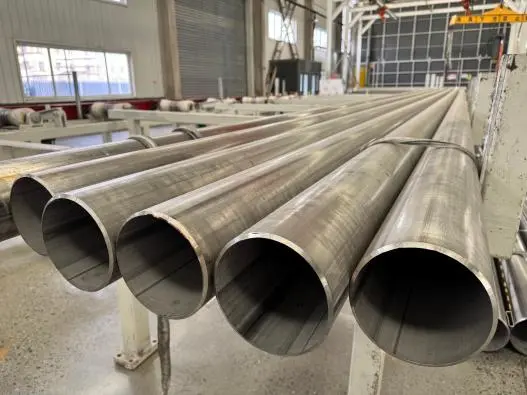
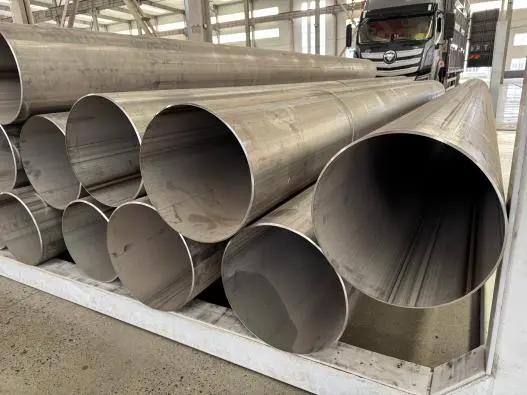
When engineers and procurement teams search for piping solutions that can handle aggressive chloride environments, high pressures, and sour gas conditions, the ASTM A928 UNS S31803 CL1 EFW pipe consistently appears at the top of the shortlist. This duplex stainless steel pipe, manufactured via Electric Fusion Welding and solution annealed plus water quenched, delivers a tensile strength of ≥620 MPa and yield strength of ≥450 MPa — roughly twice that of standard 316L austenitic grades. Its dual-phase microstructure (approximately 50% austenite and 50% ferrite) makes it well-suited for oil and gas processing facilities, offshore platforms, chemical process lines, and heat exchanger systems where corrosion failure is simply not an option.
|
|
|
Understanding ASTM A928 UNS S31803 CL1 EFW Pipe Specifications and Properties
Chemical Composition and Mechanical Performance
There is 21–23% chromium, 4.5–6.5% nickel, 2.5–3.5% molybdenum, and 0.08–0.20% nitrogen in UNS S31803. These parts work together to give it a pitting resistance equivalent number (PREN) of about 34–36, which is a lot better than 316L's PREN of about 24. Mechanically, the pipe can stretch up to 25%, which makes it flexible enough to be shaped without lowering its strength. This grade is very reliable in high-cycle fatigue and high-pressure situations because it has the right mix of properties.
Dimensional Range and EFW Technology
This pipe is made by YOUFA. It has an outside diameter (OD) of 114.3 mm to 2,500 mm and a wall thickness of 3 mm to 50 mm. The surface finish is pickled and annealed. Electric Fusion Welding uses a controlled spark to join heavy-gauge plate together. This lets large-diameter production happen that smooth extrusion can't do at the same cost. To keep the balance of the duplex microstructure after welding, the weld seam uses filling metal that has an over-alloyed chemical, usually more nickel.
Heat Treatment and Certification
S31803 EFW pipes must be annealed with a solution after the welding process and then quickly quenched in water. If you don't do this step, brittle intermetallic phases like the sigma phase can form, which makes the material much less tough and resistant to corrosion. This temperature cycle is built into YOUFA's production process, and the factory has ISO9001, PED, TÜV, and ISO 17025 lab certificates. There is MTC/MTR (3.1/3.2), WPS/PQR, UT/RT inspection reports, and third-party inspection (TPI) records available.
Comparison and Decision-Making: Choosing the Right Duplex Stainless Steel Pipe
CL1 vs. CL2 and Grade Alternatives
According to ASTM A928 UNS S31803 CL1 EFW pipe, CL1 means a single-seam weld with full radiographic inspection, and CL2 means a double-weld pass with more inspection. Most oil and gas process pipes can be made with CL1, which has a lower production cost and good structural stability. When compared to 316L, S31803 has about twice the yield strength and is much more resistant to salt stress corrosion cracks. It doesn't work as well in acidic or salty environments as 304 stainless steel, which has a PREN of about 18–20.
EFW vs. Seamless: A Practical Comparison
For pipe diameters bigger than 200 mm, making seamless pipes is technically hard and too expensive. EFW lines work well to fill this gap, and the strength of the weld can be checked with x-rays or ultrasounds. When it comes to delivery times, EFW large-diameter pipes usually have shorter lead times than seamless pipes that come from rolling mills. This difference is very important for procurement teams that have to work with tight project plans for things like refinery growth or offshore pipe contracts.
S31803 vs. S32205 — Dual Certification Explained
UNS S31803 is the original twin grade. S32205 is a "restricted" form with lower floors for chromium (22%), molybdenum (3%), and nitrogen (0.14%). Most pipes on the market today are dual-certified, which means they meet both S31803 and the stricter S32205 chemical standards. This two-level approval gives buyers more peace of mind about how well the steel will resist corrosion without having to pay more for a different grade with higher alloy content.
Application and Advantages of ASTM A928 UNS S31803 CL1 Pipes in Oil and Gas
Where These Pipes Perform Best?
Duplex S31803 EFW pipes have been used successfully in underwater piping in the ocean, processing lines for sour gas on land, systems for injecting produced water, and heat exchanges in refineries. In places where hydrogen sulfide and chloride ions are present at the same time, which quickly breaks down 316L and carbon steel, this grade keeps its structure for longer service cycles. Compared to austenitic alternatives in similar process duties, several North Sea offshore projects have reported service life improvements of more than 15 years.
When purchase experts use this grade, they usually do one of the following:
- Process piping in refineries and gas plants: This pipe grade is the best choice for bad service lines that need to meet NACE MR0175/ISO 15156 standards because it can handle high pressures and doesn't react with hydrogen sulfide.
- Heat exchanger shell and tube systems: Because it conducts heat better than austenitic steel and comes in thin-wall, large-diameter forms, it can be used in heat transfer shapes that work well in harsh cold water or brine service.
- Offshore and marine structural piping: This material is resistant to both pitting and crevice rust in seawater, so it can be used for topside pipes, risers, and produced water systems without the need for an extra coating.
When compared to carbon steel or standard austenitic grades, these application strengths directly lead to lower total lifecycle costs. This is because there are fewer unplanned shutdowns, replacement cycles, and inspection intervals.
Maintenance and Lifecycle Cost Advantages
Because ASTM A928 UNS S31803 CL1 EFW pipe is much better at resisting localized rust than 316L or duplex 2304, facilities usually report that they can go 20–30% longer between inspections when they switch to this material in harsh service. Over the course of 10 to 15 years, the higher initial cost per unit length is balanced out by less frequent maintenance and lower costs for replacement materials.
Procurement Guide: How to Source ASTM A928 UNS S31803 CL1 EFW Pipes?
Key Sourcing Parameters
Before making an order, procurement teams need to make sure that the following basic conditions are met: the outside diameter (OD) and wall thickness must match the specs of the pipe plan; the heat treatment must be confirmed (solution annealed + water quenched); and there must be full paperwork showing how the material was made. YOUFA can handle orders with a minimum order quantity (MOQ) of just one pipe, which makes it useful for both small-scale projects and large-scale supply contracts.
Evaluating Supplier Credibility
A good provider of ASTM A928 UNS S31803 CL1 EFW pipes should have certifications that can be checked by outside groups. These include ISO9001 for quality management, PED for pressure equipment directive compliance (important for EU export projects), and TÜV certification for production process validation. Ask for the WPS/PQR package to make sure that the supplier's standards for the welding process match the service conditions of your project.
Lead Times and Pricing Strategy
YOUFA has 15 production lines that can make a total of 50,000 tons of goods every year, which means that normal specs can be delivered as quickly as 7 days to Tianjin Port. For large orders, ask for legally binding contracts with fixed-price terms to protect yourself from price changes in stainless steel raw materials, which can range from 10 to 15% in a single quarter depending on the nickel market.
Ensuring Optimal Performance: Installation, Heat Treatment, and Quality Assurance
Welding and Installation Best Practices
For field welding of S31803 pipes, you need filler metals that match the duplex microstructure. For GTAW or GMAW processes, this is usually ER2209. During multi-pass welds, the temperature between passes must stay below 150°C to keep the sigma phase from forming. Instead of just relying on the stiffness of the pipe walls to handle thermal expansion stresses in long pipe runs, expansion loops or flexible joints should be used.
NDT and Inspection Protocols
As usual, YOUFA tests all EFW seam welds with x-rays (RT) and ultrasounds (UT). They also test for hydrostatic pressure, mechanical properties (tensile, yield, and elongation), and chemical makeup per heat. In the final documentation package, you can find these inspection records. Buyers can ask for a third-party inspection (TPI) at the mill before shipping for important remote or bad service uses.
Preventing Common Operational Issues
The two most common reasons why S31803 pipes fail too soon are not getting enough heat treatment after being welded and not cleaning them properly, leaving chloride on the surface of the pipe. If you ask the maker for a pickled and annealed finish, surface chloride risks are eliminated. Checking the solution anneal certificate before installation makes sure that there are no weakening stages in the microstructure.
Conclusion
For oil and gas processing plants that need high-strength, corrosion-resistant pipes with large diameters, the ASTM A928 UNS S31803 CL1 EFW pipe is a technically sound and cost-effective option. Its two-phase metallurgy, along with the right post-weld heat treatment and full NDT paperwork, makes procurement teams feel confident in using it for chemical process, sour service, and marine uses. When you buy from the right seller who gives you full mill approvals and verified manufacturing records, you can manage buying risk and be sure of the performance throughout the lifecycle.
FAQ
What does CL1 mean in ASTM A928?
CL1 means that the pipe has a single-pass weld seam that has been fully inspected by x-ray. This rating shows that the quality of the weld meets the requirements set out in ASTM A928 for pressure-bearing service. This means that it can be used in oil and gas pipes where weld integrity is required by law.
What is the difference between S31803 and S32205?
The minimum amounts of chromium (22%), molybdenum (3%), and nitrogen (0.14%) in S32205 are higher than those in S31803. The vast majority of pipes made today are dual-certified to both designations, meaning they meet both S32205 and S31803 requirements for corrosion performance.
Can S31803 EFW pipes be used in offshore environments?
Yes. With a PREN of about 34–36, S31803 is way above the limit for work in salt water. People often ask for these lines to be used in topside pipework, produced water injection, and underwater manifold systems that have high chloride levels and irregular oxygenation, which are all conditions that cause aggressive rusting.
Is post-weld heat treatment always required?
Yes. After EFW production, the metal has to go through solution annealing and then rapid water quenching. If you skip this step, the sigma phase could form, which makes the pipe less tough and less resistant to corrosion. This could mean that the pipe can't be used for pressure service.
What is the minimum order quantity available?
YOUFA can take orders as little as one pipe, and standard specifications can get them to Tianjin Port in as little as seven days.
Partner with YOUFA for Certified Duplex Stainless Steel Pipe Supply
As of 2017, Youfa Stainless Steel Pipe Co., Ltd. was a reliable ASTM A928 UNS S31803 CL1 EFW pipe maker. It is one of China's Top 500 companies and has 15 production lines that make 50,000 tons of steel every year. Every pipe that is shipped comes with full MTC/MTR, UT/RT records, and a quality certificate backed by TÜV. Visit youfass.com or email our team at info@youfass.com right now to get a quote and look over the project specifications we have available.
Online Message