
Oct 8, 2026
ASTM A928 Super Duplex 2507 Weld Pipe for Offshore Oil Platforms
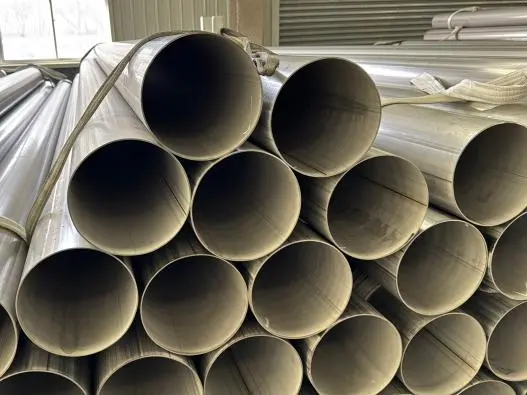
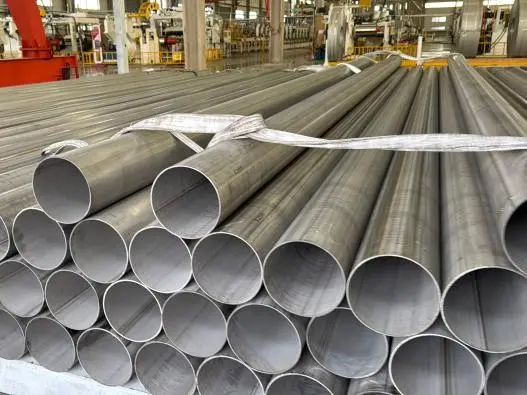
When your piping system sits 200 feet above the North Sea or deep in the Gulf of Mexico, material failure is not an option. ASTM A928 Super Duplex 2507 Weld pipe is purpose-built for exactly these conditions. Manufactured using the Electric Fusion Welded (EFW) process, UNS S32750 grade pipe delivers a PREN (Pitting Resistance Equivalent Number) exceeding 40, making it one of the most corrosion-resistant alloys available for offshore piping. With an OD range of 114.3 mm to 2500 mm and wall thickness from 3 mm to 50 mm, it covers everything from small-bore instrumentation lines to large-diameter subsea pipelines.
|
|
|
Understanding ASTM A928 Super Duplex 2507 Weld Pipe
Chemical Composition and What It Means
About 25% of Super Duplex 2507 (UNS S32750) is chromium, 4% is molybdenum, and 7% is nickel. The balance in question creates a microstructure with two phases: about half austenite and half ferrite. This makes a material that is much better at stopping pitting and stress corrosion cracking than standard austenitic grades like 316L. The high nitrogen level (about 0.27%) makes the austenite phase even more stable and directly leads to higher tensile strength.
Mechanical Properties That Matter Offshore
Tensile strength of 2507 can go up to 800 MPa, and yield strength of 550 MPa is the lowest. Based on these numbers, walls that are smaller can handle the same amount of pressure as heavier austenitic pipe. This means that the total weight of the system is lower, which is very helpful on moving platforms where every kilogram counts. Impact toughness is still good at -50°C, which is cold enough for most offshore working areas in the Atlantic and Pacific oceans.
Heat Treatment and Microstructural Control
For 2507, solution annealing followed by water quenching is a must. Any intermetallic phases that form during welding are broken up by this heat treatment. This is especially true for the sigma phase. If you skip this step, the metal will become brittle and less resistant to corrosion. Every pipe that YOUFA makes goes through this treatment, which has been proven by hardness tests and microstructural examinations according to ASTM A923.
Comparing ASTM A928 with Other ASTM Standards for Offshore Use
ASTM A928 vs. ASTM A790
ASTM A790 covers both seamless and welded duplex stainless steel pipe in grades 2205 and 2507. It does not, however, specifically cover EFW pipe with filler metal. ASTM A928 is for large-diameter EFW pipe with specific weld quality classes (Classes 1 through 5). Each class has its own standards for X-rays and heat treatment. A928 is usually the right standard for ocean risers and big process heads with a diameter of more than 500 mm, since A790 doesn't cover the weld geometry of EFW at that size.
2507 vs. Duplex 2205 for Seawater Service
The PREN for duplex 2205 (UNS S32205) is about 34, while the PREN for ASTM A928 Super Duplex 2507 Weld pipe is over 40. In real life, 2205 works well in places with moderate chloride levels, like brackish water or lines that inject produced water. But in cooling lines, firewater mains, and subsea flowlines that use saltwater directly, the temperature and chloride content are higher than what 2205 can handle. In these situations, 2507 is not only the best choice, but also the technically correct one.
Cost vs. Performance Trade-off
The higher molybdenum and nickel percentage in 2507 makes it more expensive to make than 2205. But buying teams that look at the total cost of ownership over 20 years, including how often the platform needs to be inspected, how much it might cost to fix welds, and any possible downtime, always find that 2507 is a better deal. In order to replace corroded 2205 pipe on a live platform, it costs a lot more than the difference in price at the procurement stage.
Manufacturing and Quality Assurance of ASTM A928 2507 Weld Pipes
The EFW Production Process
YOUFA makes these pipes using Electric Fusion Welding, which involves shaping a plate into a cylinder and using controlled heat to finish the lengthwise seam. Managing the heat input is very important. Too much input leads to sigma phase precipitation, and too little input results in too much ferrite. Both of these things make corrosion resistance and toughness worse. The balanced microstructure is restored by solution annealing after welding at the right temperature range (1040°C–1120°C) and then quickly quenching in water.
Certifications and Documentation
Every pipe YOUFA sends comes with a package of paperwork that can be tracked. For offshore buying, these are the usual forms that can be used:
- MTC/MTR 3.1/3.2 — Mill test certificates showing chemical and mechanical test results, signed by an independent inspector for 3.2 certification.
- WPS/PQR — Welding Procedure Specification and Procedure Qualification Record, confirming the weld process is validated for 2507.
- UT/RT Reports — Ultrasonic and radiographic test results showing weld integrity across the full pipe length.
- Hydrostatic Test Records — Pressure test documentation confirming pipe integrity under rated conditions.
- TPI Reports — Third-party inspection reports available upon request for projects requiring independent verification.
These papers meet the needs of major offshore project specifications, such as those from oil companies and EPC contractors working in the US market.
Supplier Credibility Indicators
The company YOUFA is certified by TÜV, ISO 9001, the Pressure Equipment Directive (PED), and ISO 17025. With 15 production lines and an annual output of 50,000 tons, the facility can handle big project volumes without sacrificing the quality of the inspections. The smallest amount that can be ordered is one pipe, so procurement teams can get sample amounts to try before committing to full project numbers.
Procurement Considerations for ASTM A928 Super Duplex 2507 Weld Pipe
Price Drivers and Lead Times
To find out how much ASTM A928 Super Duplex 2507 Weld pipe costs, you have to look at three main things: the cost of the raw plate, which is based on the spot prices of molybdenum and nickel; the difficulty of making the pipe (which includes choosing the right welding class and heat treatment cycles); and the certification scope (3.2 MTC and TPI add cost but are needed for most offshore projects). For stored sizes, the standard lead time from YOUFA to Tianjin Port is 7 days. For custom diameters between 114.3 and 2500 mm OD, production scheduling is needed. Getting involved early in the procurement cycle keeps the project from being held up.
Sourcing Channels and MOQ Flexibility
One useful benefit of buying from a company like YOUFA is that you can change the MOQ as needed. As long as you have at least one pipe, you can buy in small quantities for replacements, testing, or pilot projects. The boxes are made of wood, but steel frames, hexagonal binding, and woven bags are also available. These boxes can be used for ocean freight to ports on the US Gulf Coast, East Coast, and West Coast. There are two types of ends: plain and curved. These types of ends are directly compatible with field welding needs.
Post-Sales Support
When buying important materials from other countries, procurement teams need more than just a confirmation of the purchase order. YOUFA helps with technical issues like aligning the welding process, finding materials, and looking over paperwork. This cuts down on the back-and-forth that slows down the approval processes for offshore projects.
Benefits and Long-Term Value of ASTM A928 Super Duplex 2507 for Offshore Oil Platforms
Lower Maintenance Costs Over Platform Life
A study by TWI (The Welding Institute) on North Sea operators found that changing seawater pipe systems from 316L to super duplex stainless steel cut yearly repair and inspection costs by more than 30% over a 15-year period. The higher cost of the materials up front was paid for by not having to fix things as often in the first five years of running.
Extended Asset Life and Safety Margins
Stress corrosion cracking doesn't affect 2507. This makes it useful in high-pressure, high-temperature (HP/HT) wells where fluids contain hydrogen sulfide and carbon dioxide. Normal austenitic grades can break in a few months under these conditions. In these service conditions, super duplex materials keep their structural integrity, which lowers the chance of catastrophic pipe failure. This directly affects platform safety ratings and insurance classifications.
Alignment with Evolving Industry Standards
Offshore standards like NORSOK M-630 and API 5LD list duplex and super duplex materials for critical service. As government oversight of offshore infrastructure grows, especially in the US under the Bureau of Safety and Environmental Enforcement (BSEE) guidelines, specifying ASTM A928 2507 pipe puts procurement teams ahead of what they will likely need in the future instead of behind it.
Conclusion
ASTM A928 Super Duplex 2507 Weld pipe made to ASTM A928 is a good choice for offshore oil platform plumbing that is also good for the wallet. Its chemical makeup, mechanical features, and weld quality classes all address the real problems that come up in high-pressure service, seawater corrosion, and keeping assets reliable over time. YOUFA's certified manufacturing process and full documentation package make it easy for procurement teams working on US-based projects to meet qualification standards. If your next overseas project needs large-diameter piping that doesn't rust, you should really think about 2507 EFW pipe before the standard is set in stone.
FAQ
What is the difference between ASTM A928 and ASTM A790 for Duplex 2507?
ASTM A790 covers seamless and standard welded pipe across duplex grades. ASTM A928 specifically governs EFW pipe with filler metal, defining five weld quality classes with different radiography and heat treatment requirements. For large-diameter offshore pipe, A928 is the applicable standard.
Why is heat input control critical during welding of 2507?
Excessive heat input causes sigma phase precipitation, which makes the pipe brittle and reduces corrosion resistance. Insufficient heat input leaves too much ferrite. Both conditions fail to meet the balanced microstructure required by ASTM A928.
How do you verify the PREN of supplied pipe?
PREN is calculated from the MTC chemical analysis using the formula: %Cr + 3.3(%Mo + 0.5%W) + 16%N. For 2507, the result should exceed 40. Procurement teams should request 3.1 or 3.2 MTCs and calculate PREN independently before accepting pipe.
Can ASTM A928 2507 pipe be used in sour service?
2507 performs well in moderate H₂S environments, but sour service qualification should reference NACE MR0175/ISO 15156 requirements. Confirm hardness limits and heat treatment records with your supplier before specifying for sour service.
What weld classes are available under ASTM A928?
Class 1 is double-welded and fully radiographed. Class 2 is double-welded without radiography. Class 3 is single-welded and fully radiographed. Classes 4 and 5 involve varying levels of spot radiography. Offshore projects typically specify Class 1 or Class 3.
Source ASTM A928 Super Duplex 2507 Weld Pipe from YOUFA
Youfa Stainless Steel Pipe Co., Ltd. is a company that makes ASTM A928 Super Duplex 2507 Weld pipes. They are approved by TÜV and ISO 9001 and have 15 production lines that make 50,000 tons of pipe every year. They also offer full paperwork that includes 3.2 MTC, WPS/PQR, and UT/RT reports. The MOQ is just one pipe, and it can be sent to Tianjin Port in as little as seven days. Visit youfass.com or email our expert team at info@youfass.com to get a price or talk about the details of your project.
Online Message