
Oct 14, 2026
ASTM A928 Duplex Stainless Steel EFW Pipes Improve Corrosion Resistance in Process Systems
ASTM A928 Duplex Stainless Steel EFW Pipes are purpose-built for process systems where corrosion is a constant threat. Manufactured through Electric Fusion Welding and available in grades such as Duplex 2205 (UNS S32205/S31803) and Super Duplex 2507 (UNS S32750), these pipes deliver measurably better resistance to pitting, crevice corrosion, and stress corrosion cracking than conventional austenitic grades. With an OD range of 114.3 mm to 2500 mm and wall thickness from 3 mm to 50 mm, they cover a wide spectrum of pressure and flow requirements across chemical, offshore, desalination, and industrial piping systems.
|
|
|
Understanding ASTM A928 Duplex Stainless Steel EFW Pipes
What Defines the ASTM A928 Standard?
ASTM A928 covers ferritic/austenitic stainless steel pipe that has been electric fusion welded and is meant to be used in corrosive or high-pressure environments. The standard calls for filler metal to be used in two-weld seams, and Class 1 requires a full radiographic inspection. This level of quality control makes sure that the weld is strong along the whole length of the pipe. This is very important for marine and chemical processing lines, where a single weld failure can lead to expensive shutdowns.
Chemical Composition and Microstructure
Duplex 2205 has a balanced austenite-ferrite microstructure because it has about 22% chromium, 5% nickel, and 3% molybdenum. Because they have a two-phase structure, duplex grades are much better than 316L stainless steel at resisting stress corrosion cracking caused by chloride. The Pitting Resistance Equivalent Number (PREN) for 2205 is above 34, and for Super Duplex 2507, it is above 42. This is an important number for places with salt water and strong chemicals.
Heat Treatment: Solution Annealing and Water Quenching
Each pipe goes through solution heating and then water cooling after it has been welded. This method gets rid of any intermetallic phases that form during welding. This restores the 50/50 ferrite-austenite ratio and makes the weld zone as corrosion-resistant as the base metal. Without this step, sensitization in the heat-affected zone would shorten service life by a lot, especially for process fluids that are high in chlorides or acids.
Comparing Duplex EFW Pipes with Alternative Pipe Types
Duplex vs. Austenitic Stainless Steel
A lot of people use standard austenitic types like 304 and 316L, but they don't work well in chloride conditions above 60°C, where stress corrosion cracking is a real risk. Duplex 2205 has about twice the yield strength of 316L, at 450 MPa compared to 170 MPa. This means that engineers can ask for thinner walls without affecting the strength of the structure. Thinner walls also lower the total cost of installation for big diameters and make the material lighter.
Duplex EFW vs. Seamless Pipe
Straight pipes are usually the best choice for high-pressure lines, but they get too expensive for big diameters. ASTM A928 Duplex Stainless Steel EFW Pipes fill in this gap by making big pipes (up to 2500 mm OD) with uniform wall thickness that come straight from plate stock. When you use filler metal and full fusion in the EFW method, the welded joint has the same mechanical traits as seamless pipe in most pressure service situations.
Carbon Steel vs. Duplex in Corrosive Service
Carbon steel is still the least expensive choice up front, but it needs to be coated, cathode protected, and replaced on a frequent basis, especially in systems that use seawater or acids. Studies on the total cost of ownership of offshore pipe regularly show that duplex stainless steel lowers lifecycle costs, even though it costs more at first because it needs less upkeep, doesn't break down as often, and needs to be replaced more often, often more than 25 years after the first use.
Manufacturing and Quality Aspects
The EFW Process: Precision from Plate to Pipe
Certified duplex or super duplex plate is used as the starting material for Electric fusing Welding. It is then shaped into a cylinder shape and joined together with filler metal using a controlled fusing process. The joint is fully entered and double-welded, which makes sure that the mechanical features stay the same all the way through. All pipes are solution-annealed and water-quenched after they are welded. The finished pipe surface is pickled and annealed, and the ends can be supplied plain or beveled, depending on the needs of the project.
Testing and Certification Standards
A strict checking process is used for every production batch. Radiographic testing (RT) or ultrasonic testing (UT), hydrostatic pressure testing, and a full chemical and mechanical analysis are all types of testing. ISO 9001 approval for quality management, PED compliance for pressure tools, ISO 17025 laboratory certification, and TÜV manufacturer certification are all things that YOUFA has. There is paperwork available for MTC/MTR in format 3.1 or 3.2, WPS/PQR, TPI reports, MPS, and UT/RT reports, which meet all the standards for traceability in foreign projects.
Corrosion Verification per ASTM A923 and G48
A question that a lot of buying teams have is whether or not every batch is tested for rust. Yes, that's correct. As per ASTM A923 or ASTM G48 standards, samples from each output lot are checked to make sure that the making process hasn't made the pitting resistance worse. The batch-level check is very important for projects that follow NACE MR0175/ISO 15156 for sour service, as hardness limits and phase balance need to be confirmed before the pipe is accepted.
Applications and Advantages in Process Systems
Where These Pipes Perform Best
ASTM A928 Duplex Stainless Steel EFW Pipes are commonly used in three main places: offshore subsea flowlines, where high-pressure hydrocarbons meet saline water with CO2 and H2S; chemical processing and desalination plants, where large-diameter brine piping deals with high chloride concentrations that would quickly damage 316L; and marine scrubbers and pulp/paper bleaching circuits, where acidic condensate and corrosive process fluids need pipes that are both chemically and mechanically strong.
These pipes are good for hard process service because they have the following main performance characteristics:
- Pitting and Crevice Resistance: The high chromium-molybdenum content and PREN above 34 (2205) or 42 (2507) provides reliable protection in seawater and chloride-rich chemical streams where austenitic grades fail prematurely.
- Stress Corrosion Cracking Resistance: The dual-phase microstructure interrupts crack propagation mechanisms that affect single-phase austenitic grades under tensile stress in chloride environments above 60°C.
- Pressure and Structural Capacity: With minimum yield strength approximately 2× that of 316L, duplex pipes allow weight-optimized designs in large-diameter pipelines without compromising pressure ratings.
These features directly lead to fewer unexpected shutdowns, lower inspection frequency, and longer service intervals, all of which have a big impact on plant running budgets over the course of a 20–30 year system lifetime.
Customization and Delivery Options
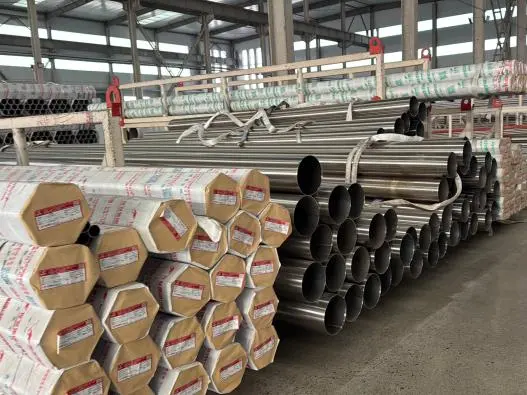
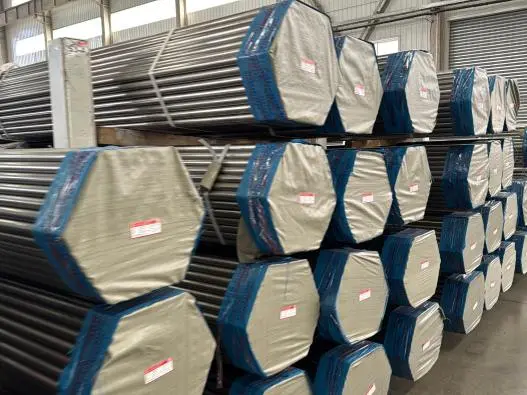
YOUFA sells pipes with ODs between 114.3 mm and 2500 mm and wall thicknesses between 3 mm and 50 mm. The lengths can be random or set. The standard finish for the surface is pickled and annealed. Packaging includes wooden boxes that can have steel frames added if needed, hexagonal binding, and woven bag wrapping that is good for shipping by ocean around the world. The supply chain can handle both urgent replacement orders and big project schedules, since the smallest order is just one pipe and the fastest delivery time is seven days to Tianjin Port.
Procurement Guide for Duplex EFW Pipes
Selecting the Right Grade
Process fluid chemical and working temperature affect the choice of grade. Duplex 2205 can be used for most oil and gas, chemical processing, and purification tasks. When the temperature is high and the chloride content is higher than 1,000 parts per million, or when the project is deep underwater or in an extremely acidic or harsh climate, Super Duplex 2507 is the best choice. By checking with your corrosion engineer about the PREN requirement before sending out a purchase order, you can avoid having to make expensive material changes in the middle of a project.
Verifying Supplier Qualifications
An order for ASTM A928 Duplex Stainless Steel EFW Pipes should only be placed after checking four things: the manufacturer has traceable plate material certifications from known mills; the facility has an ISO 17025 accredited lab for in-house testing; documentation packages include 3.1 or 3.2 MTC; and the WPS/PQR records can be seen. These papers give buyers peace of mind during project checks and reviews by a third party.
Pricing and MOQ
YOUFA has 15 production lines that make 50,000 tons of goods every year. This lets them keep their prices low for both small and large orders. Because the MOQ is just one pipe, it can be used for repair projects or trial purchases. Volume price works best for orders that are placed in bulk. For normal specs, the lead time starts at 7 days to Tianjin Port.
Conclusion
Duplex stainless steel EFW pipes made to ASTM A928 Duplex Stainless Steel EFW Pipes solve a specific and pricey problem in process engineering: materials breaking down in high-pressure, acidic service. These pipes are a good choice for offshore, chemical, desalination, and marine projects because they have a known chemical makeup, are heat treated under strict controls, go through strict testing for each batch, and come with full paperwork. When the true cost of ownership is calculated, the material works better and costs less than carbon steel or other standard austenitic options in harsh conditions.
FAQ
What is the difference between ASTM A928 Class 1 and Class 2?
Class 1 requires cracks to be double-welded with filler metal and the finished weld to be inspected by x-rays 100% of the time. Class 2 is also double-welded with filler metal, but it doesn't need to be x-rayed. Class 1 is what most offshore and chemical process specifications call for.
Can these pipes be used in sour service?
Yes, as long as the pipe meets the standards of NACE MR0175 and ISO 15156. This means making sure that the hardness limits have been met in the weld and heat-affected area and that solution annealing has been done correctly and is recorded.
Why is post-weld heat treatment mandatory?
In the heat-affected zone, welding creates intermetallic phases that make the metal less tough and less resistant to corrosion. Solution annealing gets rid of those stages and restores the normal ferrite-austenite microstructure, which makes the pipe resistant to corrosion again.
Are custom lengths and surface coatings available?
Yes, pipes come in both fixed and random lengths. Based on the needs of the project, special surface processes and coats can be applied upon request.
Is a corrosion test required for every batch?
Yes. YOUFA checks samples from every production batch for ASTM A923 or G48 pitting resistance to make sure that the manufacturing process hasn't made the samples less resistant to rust.
Request a Quote from YOUFA for ASTM A928 Duplex Stainless Steel EFW Pipes
YOUFA makes ASTM A928 Duplex Stainless Steel EFW Pipes and is approved by TÜV and ISO 9001. It has 15 production lines and makes 50,000 tons of steel every year. We help buying teams all over the world, with a MOQ of just one pipe, full paperwork packages, and delivery as early as seven days to Tianjin Port. To get a price right away, email your requirements to info@youfass.com or go to youfass.com.
Online Message