Oct 21, 2026
ASTM A928 Duplex Stainless Steel EFW Pipes for Offshore Chemical Projects
ASTM A928 Duplex Stainless Steel EFW Pipes are always the best choice for offshore chemical facilities that need pipes that can handle chloride-rich seawater, high-pressure process fluids, and acidic media all at the same time. Welded with electricity, these pipes come in grades like Duplex 2205 (UNS S32205/S31803) and Super Duplex 2507 (UNS S32750). Their outside diameters (OD) range from 114.3 mm to 2500 mm, and their wall thicknesses range from 3 mm to 50 mm. Their solution-annealed and water-quenched microstructure gives them about twice the yield strength of normal austenitic grades. They are also much more resistant to pitting, crevice corrosion, and stress corrosion cracking, which is exactly what chemistry projects in the ocean need.
|
|
|
Understanding ASTM A928 Duplex Stainless Steel EFW Pipes
What the Standard Covers?
ASTM A928 sets the rules for electric fusion welding of stainless steel pipe made from plate or strip. It includes structures that are welded together only once or twice, and Class 1 says that the weld seam must always be checked with x-rays. For rust tests, the standard works with ASTM A923 and G48 to make sure that every batch of goods meets the standards before they are sent out.
Duplex vs. Austenitic Grades: Key Differences
Standard austenitic types, like 316L, have a stress strength of at least 170 MPa. With Duplex 2205, that number goes up to about 450 MPa, and with Super Duplex 2507, it goes over 550 MPa. This means that engineers can pick wall parts that are smaller without dropping the pressure loads. This directly makes the materials lighter and lowers the cost of putting them together in big structures out at sea.
EFW Manufacturing and Heat Treatment
The EFW process joins heavy plates with filler metal using controlled electrical energy. This makes a full-penetration weld that can handle pressure. Each pipe goes through solution heating and then rapid water cooling after it has been welded. This step of heat treatment breaks down intermetallic phases and restores the 50/50 ferrite-austenite balance. This makes the weld zone's corrosion resistance match that of the base metal.
Comparing Duplex EFW Pipes with Alternative Materials
To choose the best pipe material for an offshore chemical system, you need to look at how well ASTM A928 Duplex Stainless Steel EFW Pipes resist corrosion, how strong it is, and how much it will cost over its whole life. Here is how duplex EFW pipe stacks up against the most popular options that buying teams look at.
For chemical service at sea, these are the main comparisons that matter:
- Duplex 2205 vs. SS316L: Duplex 2205 carries a Pitting Resistance Equivalent Number (PREN) of approximately 35, compared to roughly 24 for 316L. In chloride environments above 60 °C, 316L is prone to stress corrosion cracking while 2205 retains structural integrity, making it a more defensible choice for seawater-cooled chemical reactors and brine handling lines.
- Duplex EFW vs. Seamless Duplex Pipe: Seamless pipes excel in smaller diameters but become prohibitively expensive above approximately 600 mm OD. EFW technology covers the 600 mm–2500 mm range cost-effectively, with weld quality verified by radiographic and ultrasonic testing — giving large-diameter offshore headers a practical and code-compliant path.
- Duplex vs. Carbon Steel and API 5L: Carbon steel requires continuous external coating and cathodic protection in marine environments. Duplex stainless steel is inherently corrosion-resistant, which removes the recurring cost of coating maintenance and reduces inspection frequency over a 20-to-25-year platform design life.
Duplex steel vs. carbon steel and API 5L: In coastal settings, carbon steel needs to be continuously coated on the outside and given cathodic protection. Because duplex stainless steel doesn't corrode naturally, it doesn't need to be coated or inspected as often over a 20- to 25-year platform design life. This saves money on upkeep costs.
Procurement Guide for ASTM A928 Duplex EFW Pipe
Supplier Certifications to Verify
A reliable supplier has ISO 9001 certification for quality management, PED certification for accessing the European market, and ISO 17025 certification for testing skills in a lab. Getting TÜV approval adds another level of security to the control of the production process. For each weld seam, you should ask for MTC/MTR documents that meet the 3.1 or 3.2 standard, as well as WPS/PQR records and UT/RT reports.
Logistics and Lead Time Expectations
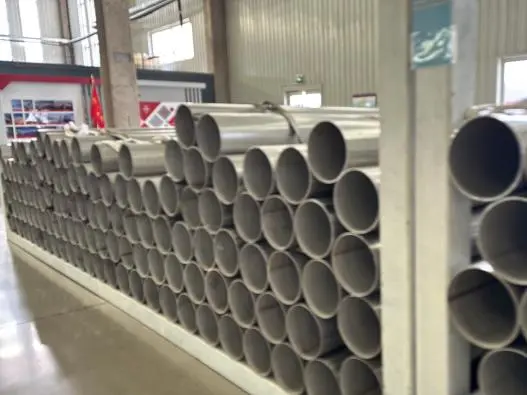
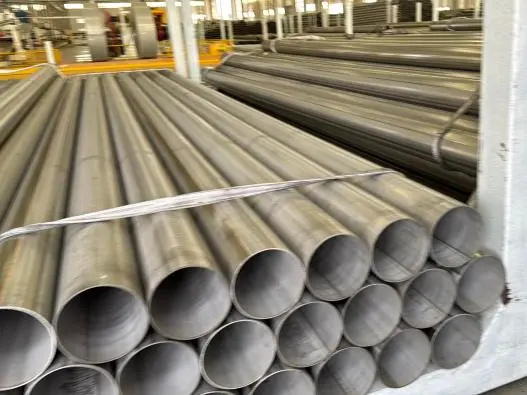
Manufacturers with enough stock can ship regular duplex EFW pipe within seven days from the port. The MOQ for a sample can be as low as one pipe, which allows for trial orders before committing to full project volumes. Putting pipes in wooden boxes with steel frames, hexagonal binding, and woven bags can help protect the ends and finish of the pipes while they are being shipped by ocean.
Evaluating Supplier Credibility
In addition to written certificates for ASTM A928 Duplex Stainless Steel EFW Pipes, you should ask for an audit trail that shows where the steel came from, records of how the RT/UT equipment was calibrated in-house, and references from previous projects in the chemical processing or offshore sectors. A company with more than 200 employees, 15 production lines, and a yearly output of 50,000 tons can keep large-diameter project orders on track without having to take on the risk of subcontracting.
Maintenance, Inspection, and Handling Best Practices
Non-Destructive Testing Requirements
For Class 1 service, each pipe should have RT or UT results that cover the whole weld line before it is installed. Hydrostatic testing shows that the leak is solid at the test pressure that was given. Periodic UT wall thickness measurements done on-site find areas of erosion and corrosion in high-velocity chemical flow areas before they reach a critical level.
Welding and Post-Weld Guidelines
To weld duplex pipe in the field, you need qualified WPS and trained welders who know how to control the heat input for duplex pipe. When replacement welding uses too much heat, sigma-phase precipitation forms. This greatly lowers the hardness and corrosion resistance of the metal. In shops, fabrications must go through post-weld solution annealing, and in cold service settings, NACE MR0175/ISO 15156 hardness limits apply.
Storage and Handling Precautions
Keep pipes on padded cradles, away from carbon steel parts, so that the pickled and annealed surface doesn't get iron on it. Cover all pipe ends to keep the insides clean. Pipes should not be dragged across steel or concrete. If the inactive film on duplex stainless steel is broken, crevice corrosion can start once the pipe is in use. This is why surface protection during yard storage is necessary and will directly increase the service life of the pipe.
Why Choose ASTM A928 Duplex Stainless Steel EFW Pipes for Offshore Chemical Projects?
Offshore chemical projects work in some of the harshest conditions found in industrial work. They are exposed to chlorides, CO₂, H₂S, mechanical vibrations, and cyclic thermal loading all at the same time. Each of these stresses is dealt with by the microstructure of Duplex EFW lines in grade 2205 or Super Duplex 2507. Coatings and inhibitors, which break down over time, are not used.
This is proven by real-life examples: for over 30 years, underwater flowlines in the North Sea have used duplex stainless steel because it has a much lower rate of rusting in seawater while it is in use. In the Middle East, desalination plants often choose large-diameter EFW duplex pipe for brine headers because 316L would need to be replaced every five years. Marine scrubber systems that deal with acidic flue gas condensate depend on 2205's PREN advantage to avoid having to shut down for maintenance over and over again.
In the future, stricter rules about the environment and longer design lives for platforms are pushing purchase requirements toward materials that have a lower total cost of ownership. With a service life of 20 to 25 years and less upkeep needed, duplex EFW pipe works well in that way.
Conclusion
When used in offshore chemical service, ASTM A928 Duplex Stainless Steel EFW Pipes meet the unique performance needs of large-diameter pressure pipes in chloride-rich, high-pressure, and often sour environments. Because they have a high yield strength, are resistant to rust based on PREN, and have been checked for weld quality, they are a technically sound and cost-effective choice over their entire lifecycle. When paired with the right inspection, storage, and skilled field welding techniques, they give offshore chemical plants the service life they need. Buying from a certified manufacturer who can provide full documentation lowers the risk of procurement from the time of the specification to the time the project is finished.
FAQ
Is duplex stainless steel significantly more corrosion-resistant than SS316?
Yes. The PREN for duplex 2205 is about 35, while the PREN for 316L is about 24. This difference is important for operations in chloride-rich offshore settings, especially when it comes to stress corrosion cracking protection above 60 °C.
What are typical lead times for bulk orders?
Standard production runs ship within 7–15 business days from the port of the manufacturer. Orders that are sent quickly can get to Tianjin Port in just 7 days. For project-scale orders, we need to talk about the exact lead time based on the OD, wall thickness, and total tonnage.
Can these pipes be welded onsite?
Yes, as long as the WPS is eligible for the twin grade. To keep intermetallic phases from forming, welders must carefully control how much heat they put in. In sour service, NACE MR0175 hardness standards are used.
What is the difference between ASTM A928 Class 1 and Class 2?
Class 1 needs to be double-welded with filler metal and x-rays must be used to check the whole thing. Class 2 is double-welded, but x-rays are not required. Class 1 is almost always required for offshore chemical projects.
Are custom lengths and coatings available?
Yes, pipes come in both fixed and random lengths. You can ask for surface treatments and special finishes.
Request a Quote from YOUFA — Certified ASTM A928 Duplex Stainless Steel EFW Pipe Supplier
Youfa Stainless Steel Pipe Co., Ltd. has 15 production lines that make 50,000 tons of steel each year. They are certified by ISO 9001, PED, TÜV, and ISO 17025. There is no minimum order quantity (MOQ) for ASTM A928 Duplex Stainless Steel EFW Pipes, and we can help with chemical projects that are far away. We can provide full documentation, such as MTC 3.1/3.2, WPS/PQR, and UT/RT reports. For a competitive project quote, email our team at info@youfass.com or go to youfass.com.
Online Message