
Sep 22, 2026
ASTM A928 Duplex S32205 Stainless Steel Pipe for Petrochemical Equipment
When your process lines carry aggressive chemicals, high-pressure hydrocarbons, or chloride-laden fluids, the pipe material you choose directly affects safety margins, maintenance cycles, and total project cost. ASTM A928 Duplex S32205 Stainless Steel Pipe is a welded large-diameter pipe produced under a specification that governs electric fusion-welded (EFW) duplex and austenitic stainless steel pipe. The S32205 grade combines roughly equal parts austenite and ferrite in its microstructure, delivering twice the yield strength of standard 316L while maintaining resistance to pitting, crevice corrosion, and stress corrosion cracking—properties that make it a frequent material of choice for petrochemical pressure piping, offshore flowlines, and chemical processing headers.
|
|
|
Understanding ASTM A928 Duplex S32205 Stainless Steel Pipe
Chemical Composition and Microstructure
Chromium makes up about 22% of S32205 (UNS S32205 / S31803). Nickel makes up 5–6%, molybdenum makes up 3%, and nitrogen makes up up to 0.2%. The high level of nitrogen keeps the austenite phase stable and makes it much more difficult to pit. The two-phase microstructure that forms, which is about half ferrite and half austenite, stops cracks from spreading in single-phase alloys that are put in media with chloride.
Mechanical Properties Under Pressure
The minimum yield strength for this grade is 65 ksi (450 MPa), and the minimum tensile strength is 95 ksi (655 MPa). This makes it almost twice as strong as 316L austenitic pipe. This lets builders pick wall pieces that are thinner but can still hold the same amount of weight. This makes the materials lighter and cheaper without lowering their safety at temperatures up to about 300 °C.
Heat Treatment and ASTM Fabrication Requirements
ASTM A928 says that EFW lines must be solution annealed and water cooled after they have been welded. Any second phases (sigma or chi) that form during welding are broken down by this heating cycle. This evens out the ferritic-austenitic ratio and makes sure that all weld lines are resistant to rust in the same way. At YOUFA, this controlled heat treatment process is done to every pipe as it comes off the line and is checked for quality and size.
Comparing ASTM A928 S32205 with Other Duplex Stainless Steel Pipes
S32205 vs. 316L and Standard Austenitic Grades
Even though 316L can handle mild chloride environments well, its pitting resistance equivalent number (PREN) is only 24–26. S32205, on the other hand, has a PREN of 34–36, which means it can handle temperatures and chloride concentrations that would cause 316L to corrode quickly in some places. It is important to know the difference in performance between these two types for chemical plant headers and ocean headers where chloride levels are more than 1,000 ppm.
S32205 vs. ASTM A790 S31803
There are two types of duplex pipe in ASTM A790: seamless and welded. It lists S31803 and S32205 as approved grades. The main difference is that S32205 has stricter chemical limits, requiring higher levels of nitrogen (0.14%) and molybdenum (3.0–3.5%). It has a higher PREN and is less likely to crack from stress corrosion in sour service conditions because of these higher amounts. ASTM A928 Duplex S32205 Stainless Steel Pipe is the best choice for most industrial needs that need to be in line with NACE MR0175.
S32205 vs. Super Duplex S32750
This type of steel has a PREN higher than 42 because it has 25% more chromium, 7% more nickel, and 4% more molybdenum added to it. It does a better job than S32205 at desalination with a lot of chlorine and in saltwater input lines that are very rough. But its parts are much more expensive, and the heat that is used to weld them needs to be controlled more precisely. Most coastal petrochemical pipe systems that work in fairly harsh conditions should pick S32205 because it is the best value for money when it comes to performance.
Procurement Considerations for ASTM A928 Duplex S32205 Pipes
When looking for large-diameter duplex pipe for a petrochemical project, you need to think about more than just matching a grade number to a purchase order. Procurement engineers always say that the three things that are most likely to cause project deadlines to be missed are certification tracking, full paperwork, and lead time.
When you're shopping, these are the most important things to check before you buy:
- Certification and documentation package: Confirm the supplier can provide Mill Test Certificates (MTC/MTR 3.1 or 3.2), Third-Party Inspection (TPI) reports, Welding Procedure Specifications (WPS/PQR), and UT/RT test reports. Missing documents create costly hold points during pre-commissioning audits.
- Dimensional range and customization: Verify the supplier's production capability covers your specified OD and wall thickness. YOUFA produces EFW duplex pipes with OD ranging from 114.3 mm to 2,500 mm and wall thickness from 3 mm to 50 mm, accommodating most petrochemical header and vessel nozzle requirements.
- Minimum order quantity and lead time: MOQ flexibility matters at project stage changes. YOUFA accepts orders from a single pipe, with the fastest delivery achievable in 7 days to Tianjin Port—a direct advantage for urgent project schedules.
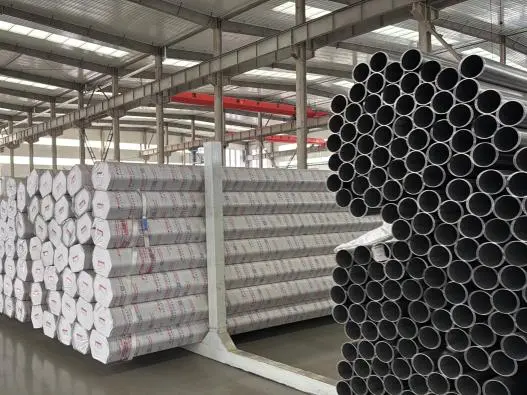
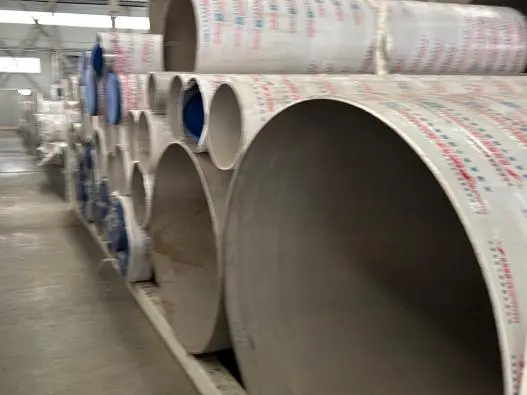
How things are sent out is also affected by how they are packed. YOUFA ships pipes in wooden boxes that can have steel frames, hexagonal binding, and woven bags to protect them while they're being shipped. This lowers the number of pipes that are turned down during the welcome check.
Technical Support and Compliance for Petrochemical Applications
Welding Procedures and Heat Input Control
To avoid intermetallic phase precipitation when welding duplex stainless steel, you need to have the right WPS paperwork and be careful with the heat. YOUFA gives manufacturing shops WPS/PQR forms that are in line with ASME Section IX requirements. This gives them a sure place to begin when they need to make a process better. Most of the time, the interpass temperature should be kept below 150 °C, and matching duplex filler metal should be used to keep the phase balance in the heat-affected zone.
Non-Destructive Testing Protocols
On YOUFA's production line for ASTM A928 Duplex S32205 Stainless Steel Pipe, the seams are checked with both radiographic testing (RT) and ultrasonic testing (UT). After these, there are tests with hydraulic pressure and full mechanical and chemical checks. There is an ISO 17025 lab on site that gives test reports that are accepted by most engineering, procurement, and construction (EPC) companies around the world. These reports don't need any extra testing to be valid.
International Standards Alignment and Traceability
The end product is linked to documents from the plate mill where it was made, with full heat number tracking of each pipe. THE YOUFA Company has been approved by ISO 9001, the Pressure Equipment Directive (PED), and TÜV. So, records made during production can be directly used to check that pressure vessels and pipe systems in North America and Europe are in compliance. A lot less owner-operator risk is there during third-party pre-inspection with this tracking chain.
Why Choose ASTM A928 Duplex S32205 Stainless Steel Pipe for Petrochemical Equipment?
Proven Performance in Aggressive Service
Data from offshore platforms and chemical processing units show over and over that austenitic pipe systems don't work as well as Duplex 2205 systems in places where chloride is present. A study released by NACE International says that stress corrosion cracking failures in austenitic piping are a major cause of unexpected shutdowns in chloride-rich processes. This kind of failure can't happen with S32205 because it has a ferrite phase.
Broad Application Range
In three main high-stakes situations, the ASTM A928 Duplex 2205 EFW pipe is used. How well it fights both CO2 and H2S is important for offshore underwater flowlines that deal with high-pressure fuels in salty environments. Brine goes through big pipes in chemical plants and desalination plants. However, the high salt content and fast flow rate would wear down 316L pipes in months. Water that is corrosive and acidic condensate are dealt with by marine scrubbers and bleaching circuits for pulp and paper. Because S32205 has a higher yield strength, wall shapes can be made thinner. This makes the building lighter and lowers the cost of installation overall.
YOUFA as Your Manufacturing Partner
YOUFA has had 15 production lines running since 2017. Every year, more than 200 people work on each line, which produces 50,000 tons of goods. In China's steel business, YOUFA is one of the Top 500 businesses. They offer a full service for stainless steel plumbing that includes finding supplies, making the pipes using EFW, heating them, testing them, and keeping records. So, a procurement team doesn't have to deal with as many suppliers.
Conclusion
To make chemicals, petrochemicals, and other things overseas, ASTM A928 Duplex S32205 Stainless Steel Pipe is better than standard austenitic types in terms of both technology and cost. Because its microstructure is well-balanced, it has a high yield strength and is less likely to crack or pit due to stress corrosion. It turns into a long-lasting tool when paired with a maker that has valid certifications, full paperwork, and a flexible way of handling orders. YOUFA is a good place for buying teams with short project deadlines to get things done because it can make things, has a good framework, and gets things done quickly.
FAQ
What is ASTM A928 S32205 pipe?
ASTM A928 is the standard for electric fusion welding ductile and austenitic stainless steel pipe that will be used in difficult conditions or under a lot of stress. This standard is met by the duplex grade S32205 (UNS S32205 / S31803). This metal is very strong and doesn't rust because it has a ferritic-austenitic composition with about 22% Cr, 5% Ni, and 3% Mo.
What is Duplex 2205 used for?
A lot of duplex 2205 pipe is used in machinery for processing chemicals, desalination plants, oil and gas pipelines, and structures that are out at sea. Stress corrosion doesn't quickly crack or pit it, so it can be used in places where salt makes normal austenitic grades less useful.
Is duplex S32205 pipe corrosion resistant?
Because it has a PREN of 34–36, S32205 is much stronger than the minimum for chloride-resistant service. Seawater, acidic process streams, and sour gas conditions with H₂S work well with it. This is because H₂S is what quickly breaks down 304 or 316L grades.
How does S32205 compare to super duplex S32750?
There is more alloy in S32750, and its PREN is above 42. This makes it better for very rough uses. But S32205 can be used for most petrochemical pipe systems and is easier to manage during the welding process. It also costs less to make.
Partner with YOUFA for ASTM A928 Duplex S32205 Stainless Steel Pipe Supply
YOUFA sells approved ASTM A928 Duplex S32205 Stainless Steel Pipe that has all the paperwork from the mill and meets ISO 9001 and TÜV standards. You only need to buy one pipe to meet the MOQ. ASTM A928 Duplex S32205 Stainless Steel Pipe is made by the well-known company YOUFA. They help teams that buy petrochemicals by delivering quickly, keeping full records, and giving specialized technical support. If you go to youfass.com or email info@youfass.com with your details or RFQ, you can get a price right away.
Online Message