Oct 16, 2026
ASTM A928 2507 Weld Pipe for High Performance Process Equipment
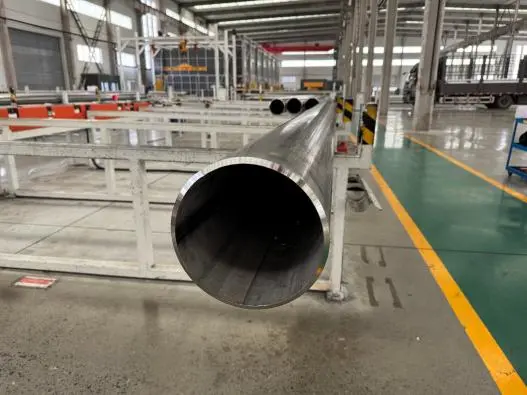
When your process equipment faces chloride-rich fluids, high pressure, or aggressive chemical cycles, the pipe material you choose either protects your investment or quietly drains it. ASTM A928 Super Duplex 2507 Weld Pipe is the specification that engineers in oil and gas, chemical processing, and offshore industries keep returning to — and with good reason. This guide walks through what makes the material worth specifying, how it compares to alternatives, what fabrication demands you should know, and how to source it with confidence.
|
|
|
Understanding ASTM A928 Super Duplex 2507 Weld Pipe
What the Grade Actually Is?
The official make-up of Super Duplex 2507 (UNS S32750) is 25% chromium, 7% nickel, 4% molybdenum, and 0.27% nitrogen. When you put those two things together, the Pitting Resistance Equivalent Number (PREN) goes above 42. This is a lot higher than the 40-point mark that marks "super duplex" performance. Its balanced ferritic-austenitic microstructure gives it tensile strength of more than 800 MPa and good impact toughness, which is something that regular 316L can't do.
How ASTM A928 Differs from A790?
ASTM A790 covers both seamless and regular welding pipe. Electric Fusion Welded (EFW) pipe made with filler metal is governed by ASTM A928. It sets out five weld quality classes, from fully radiographed double-welded joints (Class 1) to single-pass with spot inspection (Class 5). With this system, engineers can directly choose the amount of weld integrity that is right for each service situation.
The Role of Heat Treatment
The pipe is solution annealed and water quenched after it has been welded. This step gets rid of any secondary phases, especially the sigma phase, that form during welding and brings the ferrite-to-austenite balance back to the desired level of about 50:50. One of the most common reasons duplex pipe fails rust tests in service is that this step is skipped or is done too quickly. Proper heat treatment is a must, not a choice.
Performance Advantages of ASTM A928 2507 in Process Equipment
Strength and Pressure Capacity
Most of the time, Super Duplex 2507 has a yield strength of more than 550 MPa, which is about twice as high as standard austenitic grades. This lets wall sections be smaller without lowering the safety margins in pipe systems that handle high-pressure fluids, like remote injection lines, chemical reactor feeds, or hydrogen production manifolds. Thinner walls make things lighter, which can lower the cost of materials per moving meter even if the price of the metal per kilogram is higher.
Chloride and Pitting Resistance
This is where ASTM A928 Super Duplex 2507 Weld pipe proves its worth in chemical and salty environments. Super Duplex 2507 doesn't pit when chloride levels are high, which is what happens quickly to 316L. In normal tests, its critical pitting temperature (CPT) is higher than 75°C, while 316L's is only about 25°C. This is the difference between a five-year replacement cycle and a twenty-year service life for desalination plants, ocean heat exchanges, and chemical plants on the coast.
Real-World Application Performance
In the North Sea, super duplex EFW large-bore pipe has been used for over 20 years on offshore bases for seawater injection systems. There have been no reports of chloride stress corrosion problems during that time. In the Middle East, desalination plants use the same grades of material for their high-pressure feed lines because it can handle both high temperatures and high salinity. These are not just theoretical claims; they are based on operational records from a number of different engineering projects.
ASTM A928 2507 Weld Pipe vs. Competing Materials: A Rational Choice Approach
Against 316L Stainless Steel
Not only does 316L weigh less, but its PREN is only about 24, which is almost half of that of Super Duplex 2507. If there are chlorides above about 200 ppm or temperatures above 60°C in the working area, 316L needs to be inspected and replaced a lot more often. Lifecycle cost modeling regularly shows that 2507 pipe in toxic service pays for itself in three to five years just by needing less upkeep.
Against Nickel-Based Alloys
Nickel alloys like Inconel 625 and others like it are just as resistant to corrosion as or more resistant than 2507. However, they cost three to five times more per kilogram and are much harder to shape and join. Most chemical processes and offshore pipe jobs can be done with super duplex, which has better corrosion resistance and a much lower total fixed cost. Nickel metals are still the best choice only in really harsh situations, like when there are strong acids or temps above 300°C. These are outside of the range of 2507.
Against Standard Duplex 2205
Duplex 2205 (UNS S32205/S31803) works well and has a PREN that is usually between 33 and 36. It's cheaper and can be used in a wide range of moderately hostile environments. However, 2507 offers significantly longer service intervals in remote service areas with a lot of salt or chemical processing lines that carry acidic brines. The one that should be used depends on the specific chemistry of the process—not on a person's personal taste.
Fabrication, Welding, and Quality Assurance for ASTM A928 2507 Weld Pipe
Welding Practices That Protect Microstructure
For root passes on ASTM A928 Super Duplex 2507 Weld pipe, the standard method is TIG (GTAW) welding with super duplex filler wire that matches. Controlling the amount of heat that goes into the material is the most important thing. If you go over about 1.5 kJ/mm of heat, you could cause sigma phase precipitation, which breaks down both hardness and pitting resistance. When the heat input is too low, there is too much ferrite in the weld zone. The temperature between the passes must stay below 150°C. These are not suggestions for being careful; they are process requirements backed by ASTM A928 and industry standards for welding procedures.
Non-Destructive Testing Requirements
Radiographic (RT) and ultrasonic (UT) testing is done on the weld joints of YOUFA's EFW super duplex pipe. It also goes through hydraulic pressure testing and full mechanical and chemical verification per heat. You can get MTC/MTR to 3.1 or 3.2 approval, WPS/PQR records, UT/RT reports, and choices for third-party inspection (TPI). Full traceability from raw materials to finished pipes is supported by this paperwork package. This is a common requirement for pressure equipment in PED and ASME-governed projects.
Certifications That Matter to Buyers
YOUFA has ISO 9001 certification for quality management, PED certification for European pressure equipment, ISO 17025 certification for lab testing, and TÜV approval as a manufacturer. These standards are not self-declared; they are checked and renewed by a third party. These certificates make it easier for procurement teams that work with EPCs or running companies to find qualified candidates and help the approval process directly with vendors.
Procuring ASTM A928 Super Duplex 2507 Weld Pipe: What Buyers Need to Know?
Product Specifications at a Glance
YOUFA makes EFW Super Duplex 2507 pipe that meets these standards:
- Grades: Duplex 2205 (UNS S32205/S31803), Super Duplex 2507 (UNS S32750)
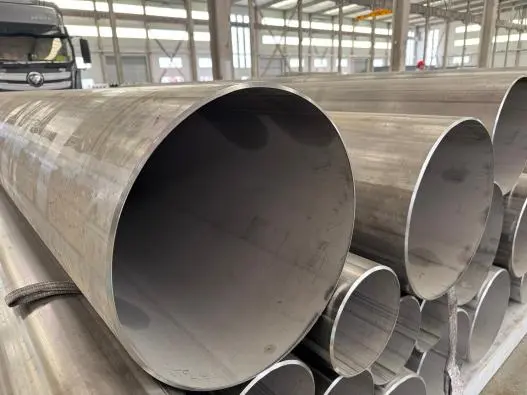
- OD Range: 114.3 mm – 2500 mm
- Wall Thickness: 3 mm – 50 mm
- Surface Finish: Pickled and annealed
- End Finish: Plain end or beveled end
- Heat Treatment: Solution annealed and water quenched
- Testing: RT/UT, hydrostatic, mechanical, and chemical
- Packaging: Wooden box (optional steel frame), hexagonal binding with woven bag
These measurements cover the range of sizes needed for most large-bore industrial and marine pipe jobs. If you need a different length, just let us know.
Supplier Evaluation Factors
When looking for a supplier of ASTM A928 Super Duplex 2507 Weld pipe, buyers should check for independent certifications, different weld quality classes, full paperwork, and the ability to make a minimum order. A minimum order quantity (MOQ) of one pipe is all that YOUFA needs to start working on a project. With 15 production lines and a yearly output of 50,000 tons, it is possible to serve batches on time. Standard delivery from Tianjin Port can happen in as little as seven days for sizes that are in stock.
Conclusion
Standards for ASTM A928 Super Duplex 2507 Weld pipe under ASTM A928 say that it needs to be able to handle high pressure, salt exposure, and a long service life. This is something that standard austenitic and even standard duplex grades can't do cost-effectively. Engineers and buying teams can be sure that the material they choose has a PREN above 42, approved weld quality classes, and a heat treatment that has been checked. That trust is complete when you choose the right supplier—one with independent certifications, full documentation, and the ability to produce. YOUFA gives it all to you.
FAQ
What is the difference between ASTM A928 and ASTM A790 for Super Duplex pipe?
A790 includes both regular welded and seamless pipe. A928 sets clear rules for EFW pipe made with filler metal and describes five weld quality classes based on the needs of x-ray inspection. A928 Class 1 is the best way to make sure that the weld on large-diameter pressure pipes is completely solid.
Why is heat input control so important when welding 2507?
When too much heat is applied, the sigma phase precipitates, which greatly lowers the hardness and pitting resistance. Ferrite-heavy weld zones are made when there isn't enough heat input. Both of these things make the rust resistance of this grade worse, which is why it's important to mention in the first place.
How is PREN verified on delivered pipe?
The certified chemical composition on the Mill Test Certificate is used to figure out PREN. The formula is: %Cr + 3.3(%Mo + 0.5%W) + 16%N. PREN should be more than 42 for Super Duplex 2507.
Can ASTM A928 2507 pipe be used in cryogenic service?
Most of the time, super duplex grades are rated to -50°C. Austenitic types are usually used for uses that need to be really cold, below -100°C. Talk to your materials engineer about the service temperature needs before you define.
What industries most commonly specify this pipe?
The main markets for this equipment are oil and gas, offshore platforms, chemical processing, desalination, pulp and paper, and hydrogen production. This standard can be used for any service that involves liquid containing chloride that are under pressure.
Partner With YOUFA for Certified Super Duplex 2507 Pipe Supply
Youfa Stainless Steel Pipe Co., Ltd. is one of the 500 largest companies in China, and they are certified by TÜV, ISO 9001, PED, and ISO 17025 to make ASTM A928 Super Duplex 2507 Weld pipes. We can help you with your project from the moment you ask for information until the pipe is delivered. Our fastest delivery time to Tianjin Port is 7 days, and we provide full documentation such as MTC, WPS/PQR, and UT/RT reports. To get a price right away, email your requirements to info@youfass.com or go to youfass.com
Online Message