
Sep 18, 2026
ASTM A789 UNS S32750 Welded Steel Pipe Ensures Reliable Seawater Transport
When your seawater transport system faces relentless corrosion, pressure fluctuations, and chloride exposure, super duplex piping materials become non-negotiable. ASTM A789 UNS S32750 welded steel pipe delivers exceptional corrosion resistance paired with mechanical strength that significantly outperforms conventional stainless steel grades. This super duplex solution combines a balanced microstructure—roughly equal portions of austenite and ferrite phases—that provides remarkable durability in marine and offshore environments while supporting cost-effective, long-term infrastructure performance.
|
|
|
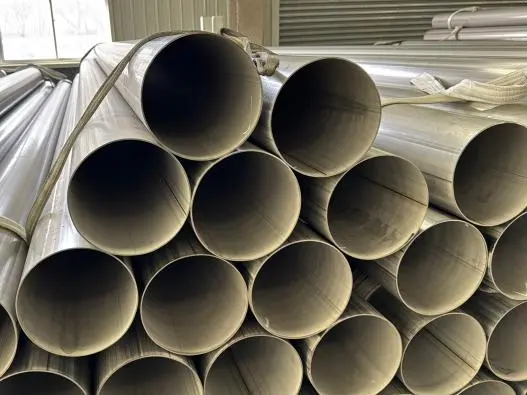
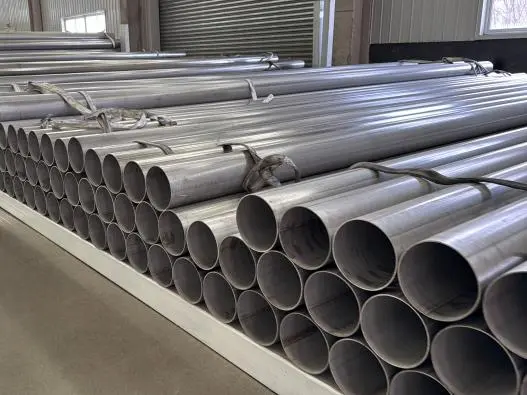
Understanding ASTM A789 UNS S32750 Welded Steel Pipe
Super duplex stainless steel is a big step forward in metalworking for fields that need both strength and resistance to corrosion. The UNS S32750 grade, which is also known as Super Duplex 2507, gets this balance by using advanced production methods and carefully controlling the chemicals that are used.
Metallurgical Composition and Structure
About 25% of UNS S32750 is chromium, 7% is nickel, 4% is molybdenum, and 0.27% is nitrogen. Together, these alloying elements stop specific corrosion processes from happening. Chromium creates a protective oxide layer, molybdenum makes the metal less likely to pit, and nitrogen makes the austenite phase stronger while also making it less likely to rust. The duplex microstructure that is made has a tensile strength of over 116,000 psi and a yield strength of over 80,000 psi, which is about twice as strong as austenitic grades like 316L.
Manufacturing Process and Heat Treatment
Electric fusion welding (EFW) can make pipes with an outer diameter of 114.3 mm to 2,500 mm. The wall thickness depends on the plate specifications. After being welded, pipes go through solution annealing, which involves heating them to about 1,900°F and then quickly cooling them in water. This heat treatment gets rid of any dangerous intermetallic phases that could form during welding and brings back the right balance of ferrite and austenite. YOUFASS has 15 specialized production lines that can handle 50,000 tons of metal every year. This makes sure that the metallurgical qualities of every batch are the same.
Certification and Quality Standards
The ASTM A789/A789M standard sets size tolerances, chemical composition limits, and mechanical property requirements for welded duplex stainless steel tubing and pipe products. For projects requiring ASTM A789 UNS S32750 welded steel pipe, manufacturers with ISO 9001, PED (Pressure Equipment Directive), and TÜV certifications can demonstrate established quality-control systems. Complete documentation packages for ASTM A789 UNS S32750 welded steel pipe may include Material Test Reports (MTR 3.1/3.2), Welding Procedure Specifications (WPS/PQR), Manufacturing Process Sheets (MPS), and ultrasonic or radiographic testing reports. These records provide procurement teams with the traceability needed for compliance-critical projects. Proper documentation and inspection records for ASTM A789 UNS S32750 welded steel pipe also help verify material quality and manufacturing consistency. By selecting a qualified supplier and maintaining complete records for ASTM A789 UNS S32750 welded steel pipe, buyers can improve quality assurance throughout the project lifecycle.
Key Benefits and Performance in Seawater Transport
About 35,000 parts per million of liquid salts are found in seawater. Chloride ions attack passive layers on weak materials very vigorously. These problems are dealt with directly by super duplex piping, which improves performance and directly saves money on operations.
Superior Corrosion Resistance Mechanisms
The Pitting Resistance Equivalent Number (PREN) measures how well a material can stop localized corrosion. Using the formula: PREN = %Cr + 3.3(%Mo) + 16(%N), we can see that UNS S32750 has a PREN value higher than 40. This puts it well above the level (PREN > 40) needed for safe service to seawater. Compared to carbon steel or lower-grade stainless metals, this material has a much longer service life because it doesn't pit, crevice, or crack from stress rust.
According to ASTM G48 Method A testing, the material is resistant to ferric chloride attack at temperatures higher than 104°F, which is similar to rough conditions found offshore. When it's hard or expensive to do upkeep, like with systems underwater, this built-in durability comes in very handy.
Real-World Applications and Case Studies
Super duplex pipe is used for intake systems, brine release lines, and high-pressure reverse osmosis feeds in desalination plants that handle millions of gallons of water every day. Offshore oil and gas platforms use UNS S32750 in firewater networks, seawater injection systems, and the handling of produced water. One North Sea operator said that their repair costs went down by 40% after they switched their saltwater cooling loops from 316L to super duplex piping.
People who run subsea pipelines like how well the material works in deep water, where the temperature drops and the pressure rises. The controlled microstructure keeps the hardness even at -58°F, which is important for projects in the Arctic and deep water. Chemical ships that carry dangerous goods use super duplex for their ballast water systems because less durable materials would break down quickly when exposed to both seawater and chemical leftovers.
Total Cost of Ownership Analysis
The cost of materials for ASTM A789 UNS S32750 welded steel pipe is about two to three times higher than that of austenitic stainless steel, but this initial premium can be offset by the longer service life, reduced repair frequency, and lower risk of premature failure. A lifecycle cost analysis comparing ASTM A789 UNS S32750 welded steel pipe with 316L in seawater applications can show the financial benefits of choosing a more corrosion-resistant material. In many cases, the higher initial investment may be recovered within several years through savings on maintenance and replacement. Over a 20-year design life, ASTM A789 UNS S32750 welded steel pipe can provide substantial lifecycle cost advantages when its corrosion resistance and durability match the service conditions. By reducing unexpected repairs and early replacements, ASTM A789 UNS S32750 welded steel pipe can help improve long-term project economics and operational reliability.
Comparison with Alternative Pipes and Grades
To choose the best materials for pipes, you need to know how the different choices affect performance. The final choice is based on the properties of the material, how it will be made, and the cost of ownership over its whole life.
UNS S32750 versus UNS S31803 and S32205
Standard duplex grades S31803 and S32205 have PREN numbers around 35 because they have lower molybdenum amounts (about 3% vs. 4% in S32750). These materials work well in salty water or mildly corrosive places, but they don't have the chloride resistance needed for direct contact with seawater in warm places. The higher alloy content of S32750 makes up for its higher price in critical marine applications where failure risks are greater than material savings.
Welded (ASTM A789) versus Seamless (ASTM A312) Variants
Not duplex types, but austenitic stainless steel pipes that are seamless or welded are covered by ASTM A312. Seamless manufacturing gets rid of weld seams, but it limits the diameters and wall thicknesses that can be used. When the right welding techniques and heat treatment are used after the weld, duplex pipes made to ASTM A789 standards have the same level of rust protection. Eddy current checking, ferrite measurement, and mechanical tests are all used to make sure the weld zone is solid. For pipes with a diameter of 12 inches or more, welded construction is more useful because it is easier to find and costs less.
Super Duplex versus Nickel Alloys and 904L
The high nickel (25%) and molybdenum (4.5%) content of alloy 904L, a super-austenitic stainless steel, makes it very resistant to corrosion. But its yield strength is only about 44,000 psi, which is only about half of UNS S32750's. This means that walls have to be thicker to hold the same amount of pressure, which raises the cost of materials and fitting. Nickel-based metals, such as Alloy 625, are more resistant to rust than super duplex, but they cost 5 to 8 times more. For most seawater transfer uses, S32750 is the best balance of efficiency and cost.
Procurement Guide for ASTM A789 UNS S32750 Welded Steel Pipe
When looking for high-performance piping materials, you need to pay attention to what the seller can do, how reliable the approval is, and how to get the materials to you. Well-thought-out procurement strategies lower the risks of a project and guaranty delivery on time and according to the specs.
Supplier Selection Criteria
Give priority to producers who have knowledge with super duplex production. YOUFASS Stainless Steel Pipe Co., Ltd. was founded in 2017 and has ISO 17025-accredited testing labs that can check the mechanical qualities, chemical makeup, and resistance to corrosion. Third-party inspection (TPI) services check things outside of the shipper before they are sent out. This adds an extra layer of quality guarantee for important projects.
Ask the mill for test papers that show the heat-specific makeup and mechanical test results. Certificates should include a reference to the specific ASTM standard and a unique heat number so that they can be tracked. Welding procedure qualifications (PQR) show that the manufacturer has tested their welding parameters in a destructive way to make sure that the quality of every weld is the same.
Understanding Lead Times and MOQ
The cost of materials for ASTM A789 UNS S32750 welded steel pipe is about two to three times higher than that of austenitic stainless steel, but this initial premium can be offset by the longer service life, reduced repair frequency, and lower risk of premature failure. A lifecycle cost analysis comparing ASTM A789 UNS S32750 welded steel pipe with 316L in seawater applications can show the financial benefits of choosing a more corrosion-resistant material. In many cases, the higher initial investment may be recovered within several years through savings on maintenance and replacement. Over a 20-year design life, ASTM A789 UNS S32750 welded steel pipe can provide substantial lifecycle cost advantages when its corrosion resistance and durability match the service conditions. By reducing unexpected repairs and early replacements, ASTM A789 UNS S32750 welded steel pipe can help improve long-term project economics and operational reliability.
Best Practices for Technical Inquiries
When asking for prices, be sure to include the full details, such as the outer diameter, wall thickness, length needs, quantity, relevant codes (like ASME B31.3, ASME B31.1, etc.), and any extra testing that goes beyond the normal requirements. Make it clear how the ends should be prepared (plain, cut for welding, or threaded), as well as your choice of surface finish. Early on, talk about where the heavy pipes will be delivered because the cost of freight can have a big effect on the overall project budget. Before placing a big order, it's helpful to look at sample certifications from earlier production runs to see how good the documentation is.
Ensuring Quality and Trustworthiness
In addition to the properties of the materials, quality assurance includes the dependability of the suppliers, the strictness of the tests, and the ability to provide long-term support. Careful consideration of suppliers during the review process protects project schedules and operational purity.
Verification of Certifications and Testing
Getting ISO9001 certification means that you manage quality in a planned way, but the scope of your audits is important. It is important to make sure that the certification includes both sales and manufacture. PED approval shows that the equipment meets European safety standards, which is important for projects that will be sold in the EU or that use European building standards. For TÜV approval, independent German inspectors do regular checks, which gives quality claims more weight.
Ask for pictures of the certificates that prove that the testing tools used to check the material is accurate. Spectroscopy devices that look at the make-up of chemicals need to be calibrated against approved standards on a frequent basis. Tensile testing machines need to be calibrated once a year in a way that meets national standards. These details show whether a provider has strict internal standards or just meets the bare minimum.
Assessing Company Reputation and Track Record
Tenure in the industry shows how stable a seller is. YOUFASS is one of China's Top 500 companies and has a history of being financially stable and running its business smoothly. Referrals from customers who have used similar services on offshore platforms, desalination plants, and chemical processing facilities show that the person has the right experience. You can get unbiased opinions from online reviews and industry sites, but they shouldn't be used instead of direct reference checks.
Ask possible providers about their biggest projects and the kinds of customers they usually work with. When suppliers work with big EPC contractors and end users in tough industries, they learn skills that help all of their clients. Full-service partners are different from transactional sellers because they offer technical support services like metalworking advice, welding instructions, and help with failure analysis.
Post-Sales Support and Custom Fabrication
Projects don't always go exactly as planned. Suppliers who give on-site setup help, help with developing welding procedures, and help with fixing problems are very valuable. Custom manufacturing services, like making parts in odd lengths, widths, or with fittings built right in, make buying things easier and cut down on field welding. YOUFASS offers full technical help for the whole project lifecycle, from choosing the first materials to starting up the business. They do this by building relationships that go beyond single transactions.
Conclusion
When made to ASTM A789 specifications, super duplex stainless steel welded piping with a UNS S32750 composition, including ASTM A789 UNS S32750 welded steel pipe, can provide reliable performance in demanding seawater transport applications where lower-alloy materials may experience premature corrosion. The balanced austenite-ferrite microstructure gives ASTM A789 UNS S32750 welded steel pipe a strong combination of mechanical strength and corrosion resistance under chloride exposure, temperature variations, and changing pressure conditions. Although ASTM A789 UNS S32750 welded steel pipe may require a higher initial investment, its durability and corrosion resistance can contribute to favorable lifecycle economics when supplied by qualified manufacturers that follow strict quality standards. Checking supplier credentials, verifying material certifications, and working with partners that provide responsive technical support are important when procuring ASTM A789 UNS S32750 welded steel pipe. With proper material selection, documentation, and quality control, ASTM A789 UNS S32750 welded steel pipe can support dependable long-term performance in demanding marine piping systems.
FAQ
What is ASTM A789 UNS S32750 welded steel pipe?
ASTM A789 UNS S32750 is a super duplex stainless steel pipe that is made by electric fusion welding, solution annealing, and water quenching to get a balanced microstructure. The name mixes the production standard (ASTM A789) with the specific alloy grade (UNS S32750). It shows that the metal is made up of about 25% chromium, 7% nickel, and 4% molybdenum. In chloride-rich environments like seawater, this material is very resistant to pitting, crevice corrosion, and stress corrosion cracking.
How does quality control ensure weld integrity in super duplex pipes?
Weld seam strength is checked by strict inspection methods that use non-destructive tests like eddy current examination and hydrostatic pressure testing at 1.5 times the design pressure. Using ASTM E562 point counting to look at the microstructure shows that the ferrite-austenite phase balance is between 40 and 60 percent. The ASTM G48 Method A ferric chloride pitting tests show that the material is resistant to rusting at temperatures higher than 104°F. Flaring, flattening, and reverse bend tests are used for mechanical validation. They are used to target weld zones to make sure they are flexible and find fusion flaws before they are shipped.
Which performs better in seawater applications: S32750 or S31803?
S32750 works better in situations where it comes into direct contact with seawater, especially in warm places or for long periods of time. Because it has more molybdenum (4% vs. 3% in S31803), its PREN value is higher than 40 compared to about 35 for S31803. This means that it will be less likely to pit or corrode in cracks. The higher strength comes from the higher alloy makeup. This could mean that the walls can be smaller while still holding the same amount of pressure, which would balance out the higher cost of the material.
Get Your Super Duplex Piping Solution from a Trusted ASTM A789 UNS S32750 Welded Steel Pipe Supplier
YOUFA wants people who work in buying to talk to our engineering team about your needs for seawater pipes. We are a manufacturer that is ISO9001, PED, and TÜV approved, and the super duplex welded pipes we sell come with full paperwork and quality guaranties. We can make things for any size job, from single prototype pipes to multi-ton industrial setups, and we can get them to Tianjin Port in as little as seven days. You can email us at info@youfass.com or go to youfass.com to get detailed specifications, certification samples, and suggestions that are made just for your project. The metallurgical experts at our company are ready to help you choose the best materials for your tough naval uses.
Online Message