
Aug 6, 2026
ASTM A358 TP304 CL1 Stainless Steel Pipe Ensures Reliable Welded Pipe Solutions
When industrial projects demand unwavering structural integrity under pressure, the ASTM A358 GR TP304 CL1 Stainless Steel Pipe emerges as a proven solution. This specification covers electric fusion welded (EFW) stainless steel piping designed for high-temperature and corrosive service conditions. Class 1 designation mandates 100% radiographic or ultrasonic testing of the longitudinal weld seam, ensuring zero-defect quality for critical applications across petrochemical plants, power generation facilities, and hydrogen production systems. We specialize in delivering these reliable welded pipe solutions tailored to diverse industrial needs.
|
|
|
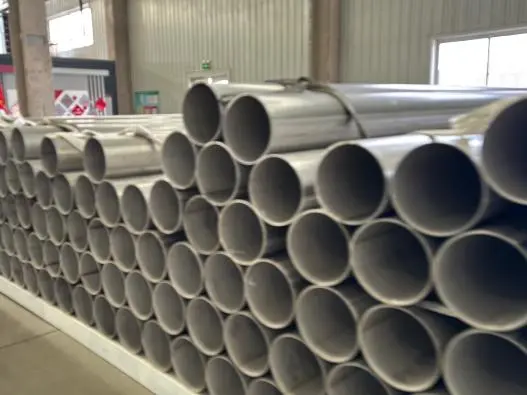
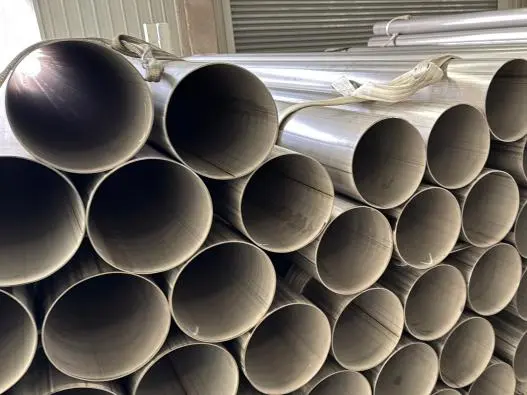
Understanding ASTM A358 TP304 CL1 Stainless Steel Pipe Specifications
Chemical Composition and Its Role in Performance
The balanced chemical make-up of TP304 is what makes it reliable. This austenitic stainless steel has at least 18.0% chromium and 8.0% nickel. This makes a passive oxide layer that is resistant to chemical and oxidation attack. The carbon content is between 0.08% and 0.08% at most, which gives it enough strength while still letting it be welded. Manganese and silicon help remove oxygen during the manufacturing process. Trace elements like phosphorus and sulphur are tightly controlled to keep the material from becoming too weak.
Because of its precise chemistry, the material can withstand being exposed to acids, alkalis, and chloride-containing environments that are common in chemical processing and seawater uses. Our work with fuel cell makers shows that this makeup supports long-cycle stability in hydrogen-rich environments, where other materials fail before they're supposed to.
Mechanical Properties Defining Durability
The minimum tensile strength of TP304 material is 515 MPa (75 ksi), and the minimum yield strength is 205 MPa (30 ksi). This means that it can withstand changes in internal pressure without breaking. The elongation capacity, which is usually 35% or higher, lets the material handle heat expansion loads without breaking easily. This is especially useful in pipe systems that are subject to changing temperatures.
Hydrostatic testing and mechanical testing methods are used to make sure that these mechanical properties are correct for Class 1 pipes. The weld zone gets extra care because limited heat input is needed to keep the qualities of the base material during the electric fusion welding process. After welding, solution annealing fixes the microstructure that was changed by the high temperatures. This makes sure that the corrosion resistance is the same all the way along the pipe.
Dimensional Tolerances and Standard Sizes
Tight size tolerances are required by ASTM A358 for industrial installations. Outside widths range from 114.3 mm to 2500 mm, so they can fit transfer lines with modest flow rates to lines with high volumes. Wall thicknesses ranging from 3 mm to 50 mm allow for pressure values that are suitable for a range of service conditions. In petrochemical transfer systems, thicker walls allow for higher working pressures.
Length parameters for ASTM A358 GR TP304 CL1 Stainless Steel Pipe allow buyers to choose between random lengths and fixed lengths, providing greater flexibility during project planning and installation preparation. Our 15 production lines use precision forming equipment and continuous monitoring systems to maintain consistent dimensions for every ASTM A358 GR TP304 CL1 Stainless Steel Pipe product. This strict control of dimensional tolerances ensures accurate fitting during field installation, reducing welding difficulties and improving overall construction efficiency. For industries such as power battery manufacturing and electrolytic cell production, where delivery schedules are often demanding, ASTM A358 GR TP304 CL1 Stainless Steel Pipe helps shorten project timelines by providing reliable dimensions, stable quality, and efficient installation performance. By maintaining strict production standards, ASTM A358 GR TP304 CL1 Stainless Steel Pipe delivers the consistency and reliability required for advanced industrial applications.
Key Advantages and Applications of ASTM A358 TP304 CL1 Pipes
Exceptional Corrosion Resistance in Harsh Environments
The main reason TP304 is so popular is that it is better at resisting oxidising and mildly reducing environments. The chromium-nickel matrix creates a passive film that repairs itself when it gets damaged. This film keeps protecting even after being scratched or worn down by mechanical means. This quality is very useful in marine settings where saltwater spray is always a threat to the purity of the materials.
TP304 is resistant to nitric acid, phosphoric acid, and organic acids, which is good for places that process chemicals. Working with electroplating plants showed us how these lines keep their shape even though they are exposed to acidic cleaning solutions every day, which would destroy carbon steel alternatives in just a few months. The stability of the material makes it possible to extend service intervals and cut down on unplanned maintenance shutdowns that cause delays in production.
Heat Treatment and Welding Characteristics
Solution annealing at temperatures above 1040°C followed by fast quenching is still the usual way to treat metals to make them resistant to corrosion after welding. This method breaks down carbides that form during welding, stopping the sensitisation that causes intergranular corrosion. The EFW way of making things uses controlled addition of filler metal, which makes weld parts that are as strong as or stronger than the base material.
To keep the nanoscale from being distorted by too much heat, the welding factors need to be carefully managed. Argon backing gas keeps the inactive layer continuous by keeping the weld root from oxidising. These methods are in line with ASME Section VIII standards for pressure tanks and pipes. They give medical device makers the quality guarantee they need when making surgical tools and electrode probes, where failure could have serious effects.
Industry-Specific Applications and Real-World Performance
TP304 CL1 pipes are used in many different areas that have different performance needs. When oil and gas are being worked, these lines move high-temperature produced water and processed products. They are used by petrochemical complexes to move process fluids that have small amounts of chlorides in them that would damage lower grades of stainless steel. They are put in cooling water systems and steam condensate return lines in power plants, where they are constantly being heated and cooled.
These lines are very important to the new energy business for making hydrogen and fuel cells. Manufacturers of electrolysis equipment choose them because they are stable in environments with very pure water that has dissolved oxygen in it. Suppliers of battery modules like how clean we keep our products—the pickling and annealed finishes on the surfaces get rid of contaminants that hurt electrical performance. One tier-1 automotive supplier said that system failures dropped by 40% after switching from carbon steel to TP304 for coolant distribution manifolds in battery packs for electric vehicles.
Comparing ASTM A358 TP304 CL1 with Alternative Stainless Steel Grades
TP304 Versus TP304L and TP316
Knowing the changes between grades helps you choose the best materials for each application. TP304L has less carbon (0.035% maximum) than regular TP304, which lowers the risk of sensitisation during welding without the need for heat treatment afterward. Because of this, TP304L is better for thick-section welded structures where solution annealing isn't possible because of size restrictions or worries about warping.
TP316 adds 2 to 3 percent molybdenum to the composition, significantly improving resistance to pitting and crevice corrosion in chloride-rich environments. This enhancement makes TP316 a suitable choice for marine and coastal applications, especially systems that handle brackish water. Compared with TP304, however, TP316 typically costs around 20 to 30 percent more. For applications where chloride exposure is limited, ASTM A358 GR TP304 CL1 Stainless Steel Pipe provides reliable performance with a more economical cost structure. Industries such as semiconductor manufacturing using pure water systems and facilities with steam piping often choose ASTM A358 GR TP304 CL1 Stainless Steel Pipe because it offers sufficient corrosion resistance, durability, and cost efficiency. With its balanced combination of mechanical performance and affordability, ASTM A358 GR TP304 CL1 Stainless Steel Pipe remains a practical solution for many industrial piping applications where extreme chloride resistance is not required. By selecting ASTM A358 GR TP304 CL1 Stainless Steel Pipe, companies can achieve dependable service life while maintaining better control over project budgets.
Based on test results from power generation projects, TP304 remains strong after 15 years of use in demineralised water. On the other hand, TP316 lasts longer in cooling towers where chloride levels are higher than 200 ppm. This method is based on facts and helps purchasing managers make choices that are both cost-effective and in line with real environmental exposure.
Stainless Steel Versus Carbon Steel: Cost-Benefit Analysis
The original cost of buying carbon steel pipes is usually 40 to 60 percent less than buying stainless steel pipes of the same size. When lifetime costs are taken into account, this price benefit goes away. To keep corrosion under control, carbon steel needs coatings on the outside, cathodic protection systems, and regular inspections. In mildly corrosive settings, parts are usually replaced every 8 to 12 years.
TP304 stainless steel gets rid of the need for coatings and increases the service life to 25 to 30 years with little maintenance other than regular checks. Because the material is resistant to both internal and external rust, leaks that cause lost production and high costs to clean up the surroundings happen less often. One chemical processing client estimated that switching from coated carbon steel to TP304 for sulphuric acid dilution lines would pay for itself in three years, when taking into account the time and money saved on repairs and replacements.
Budgeting is still important, but knowing the total cost of ownership changes how you look at things. Stainless steel is more expensive up front, but it pays off in the long run for projects with long operating plans, like wastewater treatment plants and industrial chemical facilities. We work closely with companies that make aerospace parts and advanced material processors that understand this value proposition and put lifecycle performance ahead of initial bid price.
Procurement Guide for ASTM A358 TP304 CL1 Stainless Steel Pipes
Sourcing from Certified and Reputable Manufacturers
Choosing qualified providers is the most important part of buying. Manufacturers should keep their ISO 9001 quality management certification, which shows that they have systematic controls over their processes. Pressure Equipment Directive (PED) approval shows that the pressure-bearing equipment meets European safety standards. This is necessary for projects that need CE marking. Accreditation by TUV and ISO 17025 for testing labs makes sure that measurements are accurate and can be tracked.
We have all the necessary certifications and run 15 dedicated production lines that can produce 50,000 tonnes of goods every year. This makes us one of China's Top 500 companies in this field. Our ISO 17025 laboratory does all of its own chemical analysis, mechanical testing, and non-destructive examination. This way, we don't have to rely on outside facilities that can cause schedule delays. This vertical integration shortens the time it takes to send goods and keeps the chain of control for tracking materials.
Evaluating Supplier Reliability and Documentation
Suppliers you can trust give you a lot of paperwork to back up the material's history and quality. Material Test Certificates (MTC) that meet the requirements of EN 10204 3.1 or 3.2 show how the chemical make-up and mechanical properties are linked to specific heat numbers. Procedure Qualification Records (PQR) and Welding Procedure Specifications (WPS) list the approved welding conditions that are used during production.
The real production factors, such as forming temperatures, welding current, and heat treatment cycles, are written down on Manufacturing Process Sheets (MPS). Reports from Ultrasonic Testing (UT) and Radiographic Testing (RT) show visually how good the weld is; for Class 1 status, all welds must be inspected 100% of the time. Third-party inspection (TPI) certificates are a way to get independent proof when the project requirements call for more control.
As part of our normal business, we provide all of these documents at no extra cost. IC packaging companies and precision medical coating makers often need a lot of paperwork for their projects. Our systems create these records instantly during production, so there is no need for last-minute juggling that slows down shipping. Understanding the paperwork needs early on in the buying process helps avoid confusion and makes sure the project runs smoothly.
Pricing Dynamics and Logistics Considerations
The price of ASTM A358 GR TP304 CL1 Stainless Steel Pipe depends on factors such as raw material costs, manufacturing complexity, and current market conditions. Nickel prices have a significant influence on the cost of austenitic stainless steel grades, so monitoring London Metal Exchange quotations can help buyers understand market trends and anticipate price changes. Bulk purchasing of ASTM A358 GR TP304 CL1 Stainless Steel Pipe often provides cost advantages, with larger orders typically receiving better pricing benefits, especially when quantities exceed 20 tonnes. Customised dimensions or special surface finishes for ASTM A358 GR TP304 CL1 Stainless Steel Pipe may involve additional costs because they require extra production processes and quality controls. By evaluating material prices, order volumes, and specification requirements, buyers can achieve better cost management while ensuring that ASTM A358 GR TP304 CL1 Stainless Steel Pipe meets their application needs. Choosing a reliable supplier of ASTM A358 GR TP304 CL1 Stainless Steel Pipe also helps maintain stable quality, predictable pricing, and efficient project planning.
Lead times depend on how complicated the order is and how much of the production capacity is being used. Standard sizes in stock can be shipped to Tianjin Port within seven days, meeting the needs of an urgent project. Delivery takes three to four weeks if you have specific needs like bevelled ends, specific length cuts, or special wrapping. With a minimum order quantity of just one pipe, sample needs and small-scale projects can be met. This makes it easier for new energy companies to try designs.
Logistics for delivery involve making sure that factories, goods forwarders, and places of arrival all work together. We package big pipes in wooden boxes that can be reinforced with a steel frame if needed. This keeps the pipes safe from damage during foreign shipping. Hexagonal binding and weaving bag wrapping keep the surface from getting scratches that make it look bad and could also be places where rust starts. Clear communication about Incoterms and insurance duties stops disagreements and makes sure that everyone in the supply chain is responsible.
Ensuring Quality and Reliability in Welded Pipe Solutions
Verification Methods for Genuine Material
Industrial supply lines are plagued by fake and low-quality materials, which is why verification procedures are so important. Real TP304 pipes have fixed markings that show they meet standards, the grade, the maker, and the heat number. These marks can be compared to the MTCs that come with the items to make sure they are real. Portable XRF analysers quickly check the chemical makeup during receiving inspection and can find replacement grades in a matter of seconds.
A visual inspection should check the weld bead's appearance for evenness, even penetration, and the lack of surface flaws like cracks, holes, or undercuts. When you use borescopes or ultrasonic methods to look inside something, you can see breaks that you can't see from the outside. By measuring the dimensions, we can be sure that the OD, wall thickness, and ovality are all within the allowed ranges. This keeps installation problems from happening during the fit-up process.
We use traceability tools that connect each piece of pipe to records of output, approvals of raw materials, and quality test results. This fine-grained tracking feature meets the needs of the aerospace business, where part history must be kept safe throughout the part's service life. Suppliers of battery modules that do failure analyses can connect returned parts to specific dates and process factors that were used during production. This lets them find the root cause and take corrective action.
Manufacturing Process Overview and Quality Controls
The first step in the EFW method is to check the plate material for surface quality and chemistry conformance. Forming equipment that is controlled by a computer rolls plates into cylinder shapes with very accurate control over the diameter. To get the right bevel shape for welding, edges are prepared by milling or cutting them. Automated welding equipment keeps the travel speed, current, and voltage the same along the length of the seam, which reduces the amount of variation caused by people.
Post-weld heat treatment takes place in controlled-atmosphere ovens that keep solution annealing temperatures within specific ranges. Carbide doesn't form when cooling is stopped by quickly quenching with water spray or forced air. Pickling the surface gets rid of heat tint and oxide scale, restoring the passive layer and giving it a clean look. In hydrostatic testing, each pipe is put under forces higher than its rated working pressure. This makes sure that the structure is solid.
At every stage of production, there are quality control checks. New materials are checked for chemistry and size when they come in. Real-time sensors are used for in-process tracking to keep an eye on forming factors and the integrity of the weld. The final inspection checks the weld seams for 100% UT or RT, does hydrostatic testing, and confirms the dimensions. Statistical process control methods find patterns before they become problems. This keeps the quality of the output consistent across production runs.
Maintenance Recommendations for Extended Service Life
When fitted correctly, TP304 pipes don't need much care, but they should be checked every so often. Every year, places that can be reached should be visually checked for signs of external rust, mechanical damage, or leaks at the joints. Ultrasonic thickness measurement used for internal checking can find erosion or rust thinning in high-speed service or abrasive media settings.
After building up pollution or mechanical damage, passivation processes bring back the protective oxide layer. Iron particles that are lodged in carbon steel tools or supports can be broken down by nitric acid or citric acid solutions. These particles cause surface discolouration and possible pitting. Cleaning gets rid of the buildup of deposits that cause crevice rust. This is especially important in parts that don't move or branches that don't connect to anything else.
Maintenance needs are affected by the choices made when designing a system. When there is good drainage, water doesn't build up in low spots, where it can cause microbiologically influenced rusting. Thermal shielding stops condensation from forming on the outside, which causes chloride to build up and stress corrosion cracks to form. Vibration dampening lowers the stresses that lead to fatigue at support points and nozzle connections. These safety steps make the 25–30 year working life that comes with good stainless steel piping systems last even longer.
Conclusion
It has been demonstrated that ASTM A358 GR TP304 CL1 Stainless Steel Pipe performs well in demanding industrial environments where corrosion resistance, structural stability, and long service life are essential. The Class 1 designation of ASTM A358 GR TP304 CL1 Stainless Steel Pipe requires 100% non-destructive examination, ensuring reliable quality and making it suitable for critical pressure service applications. Understanding the material properties, operational requirements, and appropriate procurement strategies of ASTM A358 GR TP304 CL1 Stainless Steel Pipe helps project teams make informed decisions that improve overall performance and efficiency. Working with qualified manufacturers that provide complete documentation, technical expertise, and professional support reduces project risks and ensures that ASTM A358 GR TP304 CL1 Stainless Steel Pipe delivers consistent and dependable performance throughout the entire lifecycle of the piping system. By selecting ASTM A358 GR TP304 CL1 Stainless Steel Pipe from trusted suppliers, companies can achieve better reliability, improved safety, and long-term value for industrial applications.
FAQ
What distinguishes ASTM A358 from ASTM A312 piping standards?
ASTM A358 covers electric fusion-welded pipe made from plate material. It allows for large diameters up to 2500 mm and thick walls that are good for high-pressure uses. Most of the time, ASTM A312 talks about seamless or smaller-diameter welded pipe that is made using continuous processes. When welding A358 requires adding filler metal, which makes joints that are as strong as or stronger than the base material. Because of this, A358 is better for large-diameter headers, transfer lines, and pressure tank links in power plants and petrochemical plants.
Can TP304 handle high-temperature applications safely?
Even when used occasionally at temperatures up to 870°C, TP304 keeps its power and resistance to rust. If you keep running it above 425°C for a long time, carbide may form and make it sensitive if you don't solution anneal it. For long-term use at temperatures above 540°C, TP304H grade with limited carbon content (0.04-0.10%) has better creep strength. Our technical team helps you choose the right grade based on the operating temperature range and service duration you need.
How do you make sure that a supplier's credentials are real and stay away from fake goods?
Before you place an order, make sure you have all the paperwork you need, such as ISO 9001, PED, and laboratory approval papers. Compare the lines on the pipes to the MTC heat numbers and use independent tests to make sure the chemistry is correct when you receive the material. Reliable providers let third parties check their facilities and are open about who can do so. We keep the lines of communication open and allow full tracking. Customers are welcome to check our processes and see the testing methods that back up our quality claims.
Partner with YOUFA for Premium Stainless Steel Piping Solutions
With certified ASTM A358 GR TP304 CL1 Stainless Steel Pipe delivered on expedited schedules, YOUFA is ready to support your next project. As a reliable stainless steel pipe manufacturer with 15 production lines and an ISO 17025 laboratory, we include all the necessary paperwork with every shipment. This includes MTR 3.1/3.2 certificates, WPS/PQR records, and UT/RT reports. Our technical experts can help you with the selection of materials, application advice, and project planning, all of which will make your supply chain run more smoothly. Send us an email at info@youfass.com to talk about your unique needs and get quotes within 24 hours. We get rid of the problems that slow down important projects by letting you order as little as one pipe and having it delivered to Tianjin Port in seven days. Welded pipe solutions that are reliable for your application can come from our years of experience working with new energy, automotive, and chemical processing industries.
Online Message