
Aug 5, 2026
ASTM A358 Grade 321 EFW Steel Pipe Manufacturing Standards for Industrial Buyers
When industrial buyers search for reliable piping solutions that withstand extreme conditions, ASTM A358 Grade 321 Class 1 EFW Steel Pipe consistently emerges as a trusted specification. This electric fusion welded stainless steel pipe features titanium stabilization, offering exceptional resistance to intergranular corrosion and high-temperature oxidation up to 1500°F (816°C). Grade 321 Class 1 pipes incorporate double welding with filler metal and undergo 100% radiographic examination, ensuring a joint efficiency factor of 1.0—making them indispensable for critical pressure services across petrochemical, power generation, and hydrogen production industries.
|
|
|
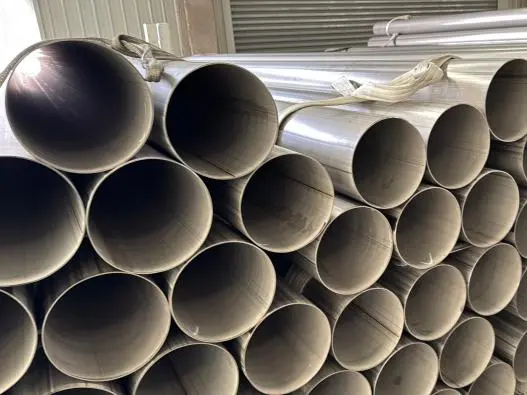
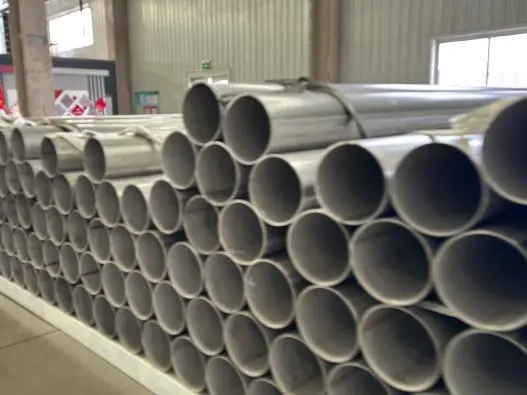
Understanding ASTM A358 Grade 321 Class 1 EFW Steel Pipe Specifications
Chemical Composition and Material Characteristics
Grade 321 stainless steel has at least five times as much titanium as carbon. This keeps chromium carbide from forming when the steel is heated or welded. This stabilisation process keeps the resistance to corrosion even at high temperatures, which is a huge benefit for companies that make fuel cells and tools for making hydrogen. The metal is usually made up of 17–19% chromium, 9–12% nickel, and carbon levels that are kept below 0.08%. This gives it the right amount of strength and flexibility.
When compared to other austenitic grades, the titanium added to Grade 321 keeps the structure strong in places where temperatures change quickly. Suppliers of battery modules for new energy vehicles like this stability because it cuts down on maintenance times and increases the life of parts in demanding electrochemical systems.
Pipe Classification and Dimensional Standards
The ASTM A358 standard divides pipes into five groups based on how they are welded and how they must be inspected. Class 1 pipes are made with full radiographic testing and two layers of welding, so they can handle the highest pressures. Outside sizes we can make range from 114.3 mm to 2500 mm, and wall thicknesses from 3 mm to 50 mm. This means we can meet the needs of a wide range of projects in chemical and industrial processing plants.
When a weld is given the Class 1 label, it means that it will be carefully checked without damaging it. This checking process makes sure that there are no flaws at all, which is very important for companies that make electrolytic cells and copper electrolysis that work in harsh, high-pressure environments. Tier 1 automotive suppliers can't skimp on quality or safety, so the precision manufacturing method fits their needs.
Mechanical Properties and Performance Ratings
At room temperature, Grade 321 has a minimum tensile strength of 515 MPa and a minimum yield strength of 205 MPa. At higher temperatures, it can handle the stress levels that are present. The material is great for power generation superheater uses because it doesn't creep or wear down easily at high temperatures. Companies that make PCBs and IC packages benefit from the alloy's stability during thermal processing, which is important because consistent dimensions directly affect product yield rates.
After welding, the solution-annealed state returns the best corrosion resistance. This makes sure that companies that make surgical tools and electrode probes get materials that meet biocompatibility and surface finish standards. This heat treatment breaks down any chromium carbides that may have formed, bringing the microstructure back to a fully austenitic state where the properties are the same all the way through the pipe wall.
Manufacturing Process and Industry Standards for ASTM A358 Grade 321 EFW Pipes
Electric Fusion Welding Process Overview
The first step in our manufacturing process is getting high-quality stainless steel plate from approved mills that can be fully tracked. The plate goes through forming steps to get to the right diameter, and then the edges are carefully prepared to make sure they fit up correctly. The controlled heat input and qualified filling metal that matches or exceeds the properties of the base metal are used in electric fusion welding to make a uniform join zone that is resistant to corrosion and mechanical stress.
We have strict process controls that keep an eye on the welding settings, the environment, and the rate of cooling throughout the whole production process. Manufacturers of hydrogen production equipment depend on this level of consistency because even small changes can hurt the performance of electrolysis systems that are working at high pressures. The double-welded design with full penetration gets rid of any possible leak tracks. This is something that companies that make aircraft parts can't forget to ask for when they're ordering pipes for hydraulic systems or fuel supply networks.
Quality Control and Testing Protocols
Before leaving our building, every pipe goes through 100% acoustic testing and an x-ray examination, and for ASTM A358 Grade 321 class 1 EFW Steel Pipe, these non-destructive testing methods find internal breaks, gaps in the fusion, or holes that can't be seen with the naked eye, and hydrostatic testing checks the integrity of the pressure at levels higher than the design specifications, and this gives chemical processing companies that work with aggressive media an extra safety margin. These non-destructive testing methods find internal breaks, gaps in the fusion, or holes that can't be seen with the naked eye. Hydrostatic testing checks the integrity of the pressure at levels higher than the design specifications. This gives chemical processing companies that work with aggressive media an extra safety margin.
Chemical research and mechanical tests are done on representative samples from each production batch in our ISO 17025-accredited lab. The paperwork comes with Material Test Certificates that meet EN 10204 3.1 or 3.2 standards, as well as Welding Procedure Specifications (WPS), Procedure Qualification Records (PQR), and full tracking through heat numbers. Medical device makers really like this detailed paperwork trail because following the rules requires them to show proof of the material's history and test results.
Compliance with International Standards
Our pipes meet more than just ASTM A358 standards. They also meet the requirements of the ASME B31.3 process piping code and the Pressure Equipment Directive (PED) for European markets. TÜV approval backs up our quality management system and manufacturing controls, which eases the minds of foreign buyers who are worried about consistency and dependability. The fact that these pipes have been approved in multiple regions makes managing the global supply chain easier for automotive suppliers who use them in battery thermal management systems.
Adhering to several international frameworks shows that we are dedicated to making pipes that work reliably no matter where they are installed or who is in charge of the regulations. Standardisation helps precision plating and conductive material suppliers who work in different countries because they don't have to keep track of different sets of rules for each facility.
Comparative Analysis: ASTM A358 Grade 321 vs Other Stainless Steel Pipes
Grade 321 Versus 304 and 316 Alloys
Even though Grade 304 is very good at resisting rust in general, it is not as stable at high temperatures as Grade 321, which is stabilised with titanium. Power battery makers often work with temperatures where 304 would become sensitive and then attack other particles inside the battery. Molybdenum is added to Grade 316 to make it more resistant to chlorides, but Grade 321 is better in thermal cycling uses and places where sulfur-containing chemicals are present.
The difference in price between these grades is due to the cost of raw materials and the work that needs to be done to make them. The price of grade 321 is usually a little higher than grade 304, but it lasts a lot longer in high-temperature situations. Manufacturers of motor and sensor components know that investing in materials up front pays off in the long run by lowering the number of times they need to be replaced and the cost of maintenance.
EFW Manufacturing Versus Seamless Pipe Production
Electric fusion welding makes it possible to make pipes with bigger sizes and thicker walls than is possible with seamless making. The plate-based method also gives you more control over the chemical makeup and mechanical qualities. This is especially useful for electroplating plants that need specific alloying elements or trace element limits. In some high-vibration situations, seamless pipes are better, but with today's EFW techniques, welds are so strong and resistant to corrosion that they can't be told apart from the base metal.
EFW production is flexible enough to allow for custom sizes and quick prototype development, which helps fuel cell companies test out new stack designs or bipolar plate setups. This ability to adapt to changes in engineering cuts down on project timelines and allows iterative optimisation that lead times for smooth pipes can't match.
Class 1 Versus Class 2 Pipe Specifications
Class 1 pipes are checked with full x-rays, while Class 2 pipes are checked with spot x-rays, which are chosen by the manufacturer, and for ASTM A358 Grade 321 class 1 EFW Steel Pipe, the difference in inspection results leads to differences in joint efficiency factors, which in turn affect the allowable design stresses, and Class 1 achieves 1.0, while Class 2 usually rates at 0.85, and companies that process chemicals in factories that work close to the highest allowed working pressures always choose Class 1 to get the most out of their systems in terms of capacity and safety. The difference in inspection results leads to differences in joint efficiency factors, which in turn affect the allowable design stresses. Class 1 achieves 1.0, while Class 2 usually rates at 0.85. Companies that process chemicals in factories that work close to the highest allowed working pressures always choose Class 1 to get the most out of their systems in terms of capacity and safety.
The better inspection protocol also gives high-temperature coating suppliers peace of mind, since their reputation depends on their products working perfectly in important aerospace applications every time. When you look at what could happen if there are weld flaws in service, the small cost increase for Class 1 standard doesn't seem like much.
Procurement Considerations for ASTM A358 Grade 321 Class 1 EFW Steel Pipes
Pricing Dynamics and Cost Factors
Prices for Grade 321 pipes on the market change depending on the cost of nickel and titanium, the supply and demand balance for stainless steel around the world, and the production capacity of each area. When buyers buy more than 20 tonnes, they usually get better prices because they don't have to pay as much for handling and shipping. Setting up outline deals that lock in prices for yearly needs is good for advanced material processing companies because it protects budgets from changes in the market.
A big part of the cost of large-diameter, heavy-wall pipes is the transportation of them. Because we are close to Tianjin Port, we can deliver urgent orders in seven days and offer low freight rates for international shipments. Companies that make electronic parts like this transportation efficiency because it helps them manage just-in-time inventory tactics that keep working capital from getting stuck in material stocks.
Supplier Qualification and Certification Verification
Choosing a company with strong quality systems and foreign certifications greatly lowers the chance of buying something. Our ISO 9001 certification, PED approval, and TÜV validation show that we follow the best manufacturing and testing practices around the world. Companies that make precision medical coatings and do supplier audits find that our clear rules on quality paperwork and building access make the qualification process go quickly.
Checking material test reports against real pipe markings and heat numbers stops the spread of fake materials, which is a problem in fields where material failure can have terrible effects. Aerospace companies that use high-temperature coatings keep an approved vendor list based on these licensing and tracking standards. They do this because they know that accurate paperwork protects the safety of end users.
Order Management and Delivery Logistics
Our minimum order quantity of one pipe lets customers order prototypes and replacements in case of emergencies without having to keep too much inventory on hand. Lead times get longer as the order gets more complicated. Standard sizes ship in seven days, but custom sizes that need special mill runs take four to six weeks. Copper electrolysis companies that are looking to grow want delivery schedules that are reliable and work with building goals and the order in which equipment is installed.
Pipes are kept safe during international shipping and rough handling at transshipment points when they are packed in wooden crates with optional steel frames, and for ASTM A358 Grade 321 class 1 EFW Steel Pipe, the hexagonal binding and weaving bag wrapping protect the surface from damage that could weaken the resistance to rust or the way the installation looks in public places, and surgical equipment makers who receive pipes that will be used in cleanrooms like this packaging because it keeps the pipes clean and prevents damage from being handled. The hexagonal binding and weaving bag wrapping protect the surface from damage that could weaken the resistance to rust or affect the way the installation looks in public places. Surgical equipment makers who receive pipes that will be used in cleanrooms like this use packaging because it keeps the pipes clean and prevents damage from being handled.
Benefits and Industrial Applications of ASTM A358 Grade 321 Class 1 EFW Steel Pipe
Performance Advantages in Demanding Environments
The titanium-stabilized microstructure stops intergranular rust in welded parts that are heated to 800°F to 1500°F. Grades that aren't stabilised would fail quickly at those temperatures. This quality is very important for petrochemical refineries that want to run catalytic reformers and hydrocracker units as efficiently as possible. Manufacturers of hydrogen production equipment choose Grade 321 for electrolysis systems because it stays strong even when exposed to high-purity hydrogen at high temperatures and pressures for a long time.
Oxidation resistance increases the useful life of tubes in power generation boilers, where tube failures cause operations to stop and big losses in income. The metal creates a protective chromium oxide layer that grows back if it is broken physically. This gives it self-healing properties that carbon steel alternatives don't have. The FDA and USDA regulations say that food processing plants must use stainless steel because it has a clean surface and is easy to clean.
Sector-Specific Applications
These pipes are used in battery thermal management loops, fuel cell balance-of-plant systems, and hydrogen storage sites by the new energy businesses. The material can be used with different heat transfer fluids and is resistant to thermal shock, so it can handle the heavy-duty cycles that these applications require. Manufacturers of electrolytic cells use Grade 321 pipes in chlorine production trains and systems that move brine. This is because the material is resistant to chloride and can handle high temperatures.
Automotive companies are asking for more and more stainless steel pipes to be used in coolant distribution in electric vehicle battery packs and for exhaust gas recirculation systems, and turbocharger interconnects on internal combustion engines. The rust resistance handles condensation and salt spray, and the ability to go through temperature cycling makes sure that it will work reliably in harsh climates.
Emerging Applications and Future Trends
As the world moves toward infrastructure for hydrogen energy, there is a greater need for pipes made of materials that have been tested and proven to work with high-purity gases at high pressures. Grade 321 has a good track record for processing chemicals and making electricity, which makes it a good choice for moving, storing, and dispensing hydrogen. Green hydrogen production through water electrolysis gains a lot from the alloy's ability to prevent damage from oxygen and hydrogen.
For amine treatment systems and CO2 compression trains, carbon capture and storage projects call for pipes that don't rust. Because Grade 321 is stable with chemicals and can handle high temperatures, it can handle the rough conditions that these systems are put through. The performance range and cost-effectiveness of stainless steel piping systems are always growing thanks to new manufacturing techniques like additive manufacturing and hybrid welding processes.
Conclusion
ASTM A358 Grade 321 Class 1 EFW Steel Pipes are a tried-and-true option for businesses that need reliable performance in harsh, high-temperature environments. Titanium stabilisation, strict manufacturing standards, and thorough testing methods provide the material stability needed for high-pressure applications in a wide range of fields. Procurement experts can make choices that balance performance, cost, and long-term dependability by knowing the specifications, manufacturing methods, and application needs. As the world moves toward more advanced manufacturing and renewable energy systems, the need for high-performance pipe materials continues to grow. This makes Grade 321 an excellent choice for organisations that want to stay ahead of the curve.
FAQ
What distinguishes Class 1 from Class 2 in ASTM A358 specifications?
Class 1 pipes are welded twice with filler metal and go through a full X-ray test, which gives them a joint efficiency factor of 1. Class 2 pipes also use double welding, but they only get spot radiography, which means the joint efficiency rate is lower. This difference changes the design forces that can be used and whether the weld is suitable for vital services where it must remain strong.
Can Grade 321 pipes serve in cryogenic applications?
Grade 321 is tough enough at moderately low temperatures, but it's not the best choice for cryogenic applications below -196°C. Impact strength at low temperatures is best in grades like 304L or 316L that have less carbon in them. Buyers who need performance at freezing temperatures should look at info on the material's properties and do tests that are specific to their needs.
What certifications show that a supplier can be trusted?
Manufacturers with a good reputation have ISO 9001 quality management certification, PED approval for European markets, and often TÜV validation. If a product has a Material Test Certificate that meets the requirements of EN 10204 3.1 or 3.2, it can be tracked, and its chemical and mechanical traits can be checked. For extra peace of mind, third-party checking services can do checks before shipping.
How should field welding be approached?
To weld in the field, you need to use skilled techniques and filler metals that are the right makeup for the base material. Controlling the preheat and interpass temperatures stops the material from cooling too quickly, which could cause cracks. Depending on the code and the service conditions, a heat treatment after the weld may be needed. Talking to experienced welding engineers ensures that joints are made according to the plans.
Partner with YOUFA for Premium Grade 321 EFW Steel Pipe Solutions
YOUFA is ready to help you with your buying needs by providing you with high-quality ASTM A358 Grade 321 Class 1 EFW Steel Pipes that are made to strict international standards. Every year, our 15 production lines deliver 50,000 tonnes, and our ISO 9001, PED, and TÜV certifications show that we are dedicated to quality excellence. Our flexible MOQ and seven-day expedited shipping make sure that your plans stay on track, whether you need a single prototype pipe or a lot of them for big projects.
We are a reliable ASTM A358 Grade 321 Class 1 EFW Steel Pipe provider that works with new energy and aerospace. We offer full documentation, such as MTC/MTR 3.1/3.2 certificates, WPS/PQR records, and detailed test results. Our expert team can help you choose the right materials and put them in the best way possible for your needs through application engineering.
Contact our specialists today at info@youfass.com to discuss your project specifications and receive a detailed quotation. Experience the dependability and excellent service that have made YOUFA a preferred partner for industrial buyers all over the world.
Online Message