
Aug 6, 2026
ASTM A358 Grade 321 Class 1 EFW Steel Pipe for High Temperature Applications
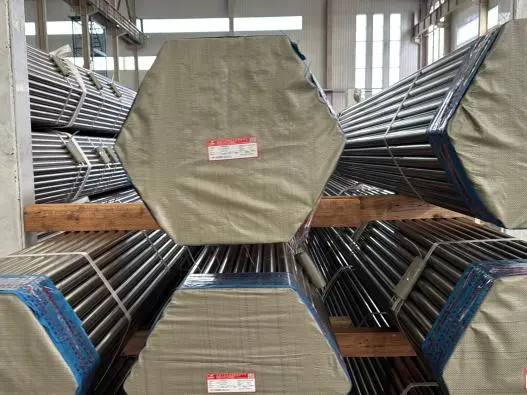
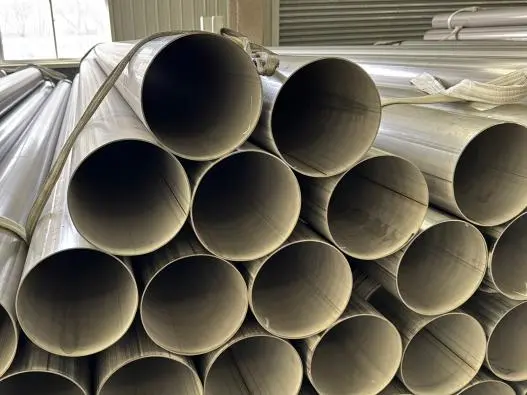
When selecting piping for extreme thermal conditions, ASTM A358 Grade 321 class 1 EFW Steel Pipe stands out as an engineered solution trusted across demanding industries. This titanium-stabilised austenitic stainless steel pipe, manufactured through the Electric Fusion Welded process, provides exceptional performance in environments where temperatures exceed 800°F. The unique chemical composition of ASTM A358 Grade 321 class 1 EFW Steel Pipe helps prevent intergranular corrosion during prolonged heat exposure, making it an ideal choice for chemical refineries, power plants, and hydrogen production facilities where operational reliability is critical. With its excellent thermal stability, oxidation resistance, and structural durability, ASTM A358 Grade 321 Class 1 EFW Steel Pipe supports long-term performance in high-temperature applications. Industries that require dependable pressure piping solutions can benefit from the consistent quality and advanced engineering of ASTM A358 Grade 321 Class 1 EFW Steel Pipe throughout their service lifecycle.
|
|
|
Understanding ASTM A358 Grade 321 Class 1 EFW Steel Pipe
The specification describes a type of large-diameter welded ASTM A358 Grade 321 Class 1 EFW Steel Pipe that is designed to work under high pressure and temperatures. Knowing how it works technically helps buying teams make smart choices.
What Makes Class 1 EFW Construction Superior
To get a Class 1 designation under ASTM A358, you have to do two welding operations, add filler metal, and X-rays must be used to check every longitudinal weld seam. This strict checking process makes sure that the joint efficiency factor is 1.00, which means that the welded joint is as strong as the base plate material. When YOUFA makes something, they use advanced X-ray inspection technology to find even the tiniest flaws. They keep track of this by sending full UT/RT reports with every shipment as proof. The EFW process can make pipes with outside diameters from 114.3 mm to 2500 mm and wall thicknesses from 3 mm to 50 mm, so it can be used for a wide range of projects.
Chemical Composition and Titanium Stabilization
Grade 321 has about five times as much titanium as carbon. This is an important alloying strategy that keeps chromium carbide from forming at the edges of the grains during welding and service contact between 800°F and 1500°F. This way of stabilising it makes it different from regular 304 grades. The mixture usually has 17–19% chromium, 9–12% nickel, and titanium additions that form carbides more easily while protecting the availability of chromium for corrosion resistance. This chemistry stays steady during solution annealing heat treatment, which is an important part of our manufacturing process that makes sure the pipes have the best mechanical qualities before they leave our building.
Mechanical Strength Parameters
The guideline calls for a minimum tensile strength of 515 MPa and a minimum yield strength of 205 MPa. Standardised tests must also show stretch values higher than 35%. These mechanical properties stay reliable even after being exposed to high temperatures for a long time. This is proven by protocols for creep-rupture testing. Our ISO 17025-certified lab tests each output lot mechanically in every way. They then make Material Test Certificates that show the complete chain of custody from raw materials to produced goods. Testing includes checking the structure's stability under operating stresses by applying hydrostatic pressure at levels higher than what was specified in the design.
Performance and Applications in High Temperature Environments
To choose the right materials for pipes under temperature stress, you need to know how the makeup of an alloy affects its stability in the real world.
Preventing Sensitization Through Titanium Addition
Sensitisation occurs when chromium carbides form along grain boundaries during welding or prolonged heat exposure, creating chromium-depleted areas that become vulnerable to intergranular corrosion. The titanium stabilisation in ASTM A358 Grade 321 class 1 EFW Steel Pipe prevents this issue by forming stable titanium carbides instead of chromium carbides, helping preserve the chromium content required to maintain the protective passive oxide layer. This stabilisation mechanism makes ASTM A358 Grade 321 class 1 EFW Steel Pipe particularly effective in applications involving frequent temperature fluctuations, where repeated thermal cycling could weaken non-stabilised stainless steel grades. During manufacturing, controlled heat treatment processes for ASTM A358 Grade 321 class 1 EFW Steel Pipe ensure that carbide structures remain stable before delivery, improving resistance to high-temperature degradation. In many applications, the excellent stabilised performance of ASTM A358 Grade 321 class 1 EFW Steel Pipe can reduce or eliminate the need for additional post-weld heat treatment, providing greater efficiency, reliability, and long-term service performance in demanding industrial environments.
Critical Industry Applications
In power plants, these pipes are used in the superheater and reheater areas, where steam pressures and temperatures can hit over 2000 psi and 1000°F, respectively. The material stays structurally sound and doesn't rust when burnt byproducts are released. Grade 321 is used by chemical processing plants to move acidic fluids at high temperatures. It is especially useful for nitric acid service and organic chemical synthesis. More and more, companies that make equipment for making hydrogen choose this grade for electrolyser systems and high-temperature hydrogen pipes, because the stability of the material affects the safety and efficiency of operations. It is used in hydrocracker units and catalytic reformer pipes at petrochemical plants, where it is subjected to both high temperatures and hydrogen attack potential. New companies that make parts for hydrogen fuel cells in the auto industry know how useful it is in high-temperature exhaust systems and reformer units.
Thermal Performance Characteristics
At room temperature, the metal has a thermal conductivity of about 16.3 W/m·K, and it only slightly increases as the temperature rises. This feature makes it easier for heat to move through heat exchangers while still providing enough thermal resistance for insulation reasons. Pressure rates are based on ASME B31.3 standards, and allowed stress values stay high throughout the service temperature range. At 800°F, the maximum allowed stress is about 15,900 psi, and it slowly drops to 13,100 psi at 1200°F. This lets engineers safely set pipe schedules for high-pressure, high-temperature situations.
ASTM A358 Grade 321 Class 1 EFW vs Other Stainless Steel Pipes
When you look at the different types of materials, you can see where ASTM A358 Grade 321 Class 1 EFW Steel Pipe is better than other specifications.
Grade 321 Compared to 304 and 316 Variants
304 is a good general rust-resistant steel that is also very cheap. However, it is not stabilised for high-temperature service and can become sensitised above 800°F. Adding molybdenum to Grade 316 makes it more resistant to chloride corrosion, but it still needs to be stabilised before it can be exposed to high temperatures for a long time. This is where Grade 321 comes in. It has the same level of corrosion resistance as 304 and the same level of thermal stability as some high-temperature alloys, but it doesn't cost as much as 316L or 321H. The 321H change raises the carbon percentage to improve creep strength, but most industrial uses below 1200°F don't need it.
EFW Versus Seamless and ERW Construction
Due to production limitations, seamless pipe manufacturing can only make sizes up to about 660 mm. This makes using big diameters too expensive. Electric Resistance Welded pipes are cheaper in smaller sizes, but they don't have the weld penetration and filler metal reinforcement that EFW pipes do, so the joint efficiency ratings are lower. Our EFW method starts with controlled plate chemistry, which lets us make alloys with specific ratios and improve wall thickness in a way that isn't possible with seamless production. The longitudinal weld is fully penetrated, and compatible filler is added. This is followed by internal and external bead conditioning and required non-destructive testing. The joints that are made are then indistinguishable in performance from the base material.
Benchmarking Against ASTM A312 Standard
ASTM A312 covers austenitic stainless steel pipes with smaller diameters that are available in seamless or welded forms. These pipes are commonly used for general corrosive service applications and do not always require the strict weld quality verification standards applied to ASTM A358 Grade 321 class 1 EFW Steel Pipe. For larger diameters above 200 mm and applications that require complete weld integrity verification through radiographic testing, ASTM A358 Grade 321 class 1 EFW Steel Pipe provides a higher level of quality assurance. The standard places strong emphasis on documentation, including Welding Procedure Specifications (WPS) and Procedure Qualification Records (PQR), giving procurement teams greater control over manufacturing quality. Compared with general A312 options, ASTM A358 Grade 321 class 1 EFW Steel Pipe offers enhanced traceability, inspection requirements, and production control for critical applications. Projects that must comply with PED or ASME Section VIII pressure vessel requirements often select ASTM A358 Grade 321 class 1 EFW Steel Pipe because it helps meet strict regulatory and safety expectations. With reliable welding performance and comprehensive quality documentation, ASTM A358 Grade 321 Class 1 EFW Steel Pipe is a preferred solution for demanding industrial pressure systems.
How to Source and Procure ASTM A358 Grade 321 Class 1 EFW Steel Pipes
Strategic sourcing strikes a balance between technical needs and business concerns, which guarantees the reliability of the supply chain for ASTM A358 Grade 321 Class 1 EFW Steel Pipe.
Evaluating Manufacturer Qualifications
Suppliers with approved quality management systems, such as ISO 9001 and industry-specific certifications like PED for European markets, should be given the most attention. Quality control is shown by checking that the company has the right in-house testing facilities, especially approved labs that meet ISO 17025 standards. YOUFA has 15 dedicated production lines that can make up to 50,000 tonnes of goods every year. They are backed by more than 200 experienced workers and a TÜV-certified testing infrastructure. Our site offers full paperwork packages that include Material Test Reports that meet EN 10204 3.1 and 3.2 standards, coordination of Third Party Inspections, and full tracking through production process sheets.
Commercial Considerations and Lead Times
The price of Grade 321 on the market changes a lot depending on how much nickel it has, which makes it more expensive than lower-alloy options. Knowing this relationship helps you get fair prices while still meeting quality standards. Unit economics are affected by minimum order quantities, but flexible manufacturers like YOUFA can meet needs starting with a single pipe. This lets prototypes and small-scale projects be developed without having to commit to unreasonable minimums. Depending on the diameter and wall thickness, standard delivery times range from four to eight weeks. However, for urgent needs, expedited production can get the goods to Tianjin Port within seven days. International transportation planning, which includes optimising containers and preparing paperwork, makes it easier for buyers from around the world to clear customs.
Quality Assurance During Procurement
Material Test Certificates with full chemical analyses, mechanical test results with tensile and hardness values, and copies of radiographic or ultrasound inspection reports should be clearly stated in the procurement requirements. Independent proof can be achieved by requiring witness testing or third-party inspection by well-known companies like SGS or Bureau Veritas. Welding Procedure Specifications and Procedure Qualification Records are available to show that the manufacturing process is being controlled and help producers plan welding procedures that will be done in the field. As part of our commitment to openness, we provide full MPS documentation and welcome customer facility audits. This way, we can build trust through direct verification rather than just documentation.
Installation, Maintenance, and Technical Guidance
The longest life and most reliable operation of an asset are increased by careful handling during installation and regular upkeep of the ASTM A358 Grade 321 Class 1 EFW Steel Pipe system.
Welding Best Practices
When welding Grade 321 pipes in the field, you need to use filler metals that are compatible, usually ER321 or ER347 types, which have the same corrosion resistance and mechanical properties. Austenitic stainless steels don't usually need to be heated up first, but keeping the minimum interpass temperature above 60°F stops flaws caused by moisture. Heat-damaged areas get their protective oxide layer back when they are cleaned after the welding process with pickling paste or electrochemical passivation. Our expert team gives manufacturers advice on the best welding parameters based on the thickness of the wall and the shape of the joint. This way, they can get the best results without having to go through a lot of trial-and-error.
Maintenance and Inspection Protocols
Regular visual inspections of ASTM A358 Grade 321 class 1 EFW Steel Pipe should focus on identifying surface discolouration that may indicate overheating, oxidation, or early corrosion in weld areas and sections exposed to repeated vibration or thermal cycling. Routine ultrasonic thickness monitoring for ASTM A358 Grade 321 class 1 EFW Steel Pipe can detect internal corrosion or erosion before wall thickness reduction affects pressure performance and system safety. Periodic radiographic testing of critical welds helps identify fatigue cracks and potential defects, especially when ASTM A358 Grade 321 class 1 EFW Steel Pipe is used in applications involving continuous or repeated operating cycles. Maintaining proper support spacing prevents excessive stress caused by thermal expansion, which is a common factor behind premature failures in high-temperature piping systems. Recording inspection results for ASTM A358 Grade 321 class 1 EFW Steel Pipe creates valuable baseline data for trend analysis, predictive maintenance planning, and long-term reliability management. Through proper inspection and maintenance practices, ASTM A358 Grade 321 class 1 EFW Steel Pipe can continue to provide stable performance, durability, and safety in demanding industrial environments.
Dimensional Compatibility Considerations
When choosing a flange, it's important to make sure that it fits the pipe schedule and pressure class, and that the gasket material is suitable for the service temperature. The dimensions of flanges are set by ASME B16.5 and B16.47 standards, but custom configurations can be made to fit the needs of specific equipment interfaces. End preparation, whether it's plain or bevelled, should match the requirements of the welding process. For shop-prepared ends, bevel angles are usually set at 37.5 degrees. We can make unique lengths so that there aren't any butt welds in key places during installation, and we work with engineering teams to find the best piece lengths for installation while keeping the structure strong through proper support distribution.
Conclusion
ASTM A358 Grade 321 class 1 EFW Steel Pipe is a proven solution for manufacturing high-temperature industrial piping systems where failures can create consequences beyond financial losses, including safety risks and environmental impacts. The titanium-stabilised chemistry of ASTM A358 Grade 321 class 1 EFW Steel Pipe, supported by extensive testing and complete documentation, provides procurement professionals with confidence when selecting materials designed for decades of reliable service. The EFW manufacturing process used for ASTM A358 Grade 321 class 1 EFW Steel Pipe supports large-diameter production while delivering weld performance comparable to seamless pipe, together with comprehensive quality records that meet international standards. By choosing qualified manufacturers that provide transparent production processes, technical expertise, and reliable support, purchasing ASTM A358 Grade 321 class 1 EFW Steel Pipe becomes more than a simple material transaction; it develops into a strategic partnership that supports operational excellence, long-term reliability, and improved industrial performance. With its combination of thermal stability, quality assurance, and manufacturing flexibility, ASTM A358 Grade 321 Class 1 EFW Steel Pipe remains a dependable choice for demanding high-temperature applications.
FAQ
What distinguishes Class 1 from other ASTM A358 pipe classes?
To get a joint efficiency factor of 1.00 for Class 1, you have to double-weld with filler metal and do a full X-ray study of the lengthwise welds. Classes 2 and 3 use single-welding techniques with lower joint efficiency ratings and lower allowed pressure ratings for the same wall thicknesses. Classes 4 through 5 use double-welding techniques with required radiographs.
Can Grade 321 pipes be used instead of seamless ones in current plans?
The substitution depends on what the code says and what the engineers say. For pressure uses that follow ASME B31.3 or similar standards, Class 1 EFW pipe has the same allowable stress levels as seamless pipe as long as the paperwork is in order. The longitudinal weld direction should be thought about in terms of how stress is distributed, but in most applications, Class 1 quality doesn't make a difference in how well it works.
How does titanium content affect welding procedures?
Titanium stabilisation makes welding easier than with unstabilized grades because it gets rid of worries about sensitisation and the need for heat treatment after the weld in many situations. ER321 or ER347 filler metals are used in standard austenitic stainless steel welding procedures. The stabilised chemistry keeps the corrosion resistance across the heat-affected zone without any extra steps that aren't needed for normal austenitic stainless steel.
What paperwork should go with the arrival of the goods?
Specifications for buying things should include at least EN 10204 3.1 Material Test Certificates, which should have a heat number that can be tracked, full chemical analysis, mechanical test results, and copies of reports from non-destructive tests. Procedure Qualification Records and Welding Procedure Specifications show that the production process is qualified. If buyers ask for them or local laws require them, third-party inspection records from separate companies can be used as extra proof.
Partner with YOUFA for Reliable Grade 321 EFW Steel Pipe Supply
YOUFA brings decades of experience with stainless steel piping to your high-temperature projects. They combine factory scale with technical help to make procurement problems easier to solve. As a well-known ASTM A358 Grade 321 Class 1 EFW Steel Pipe manufacturer, we keep a wide range of popular sizes in stock and can also make pipes to your exact specifications without having to wait for longer lead times. Our ISO 9001, PED, and ISO 17025-certified businesses provide full paperwork packages that include MTC, WPS/PQR, and inspection records, meeting the strictest project needs. You can talk to our technical sales team at info@youfass.com about your application needs and find out how our all-in-one stainless steel pipe solutions can help you reach your business goals with quality you can trust and delivery times you can count on.
Online Message