
Aug 5, 2026
ASTM A358 GR 316 316L CL1 Pipe Solutions for Marine and High Chloride Environments
When your project demands piping that can withstand relentless saltwater exposure and aggressive chloride attack, the choice of material becomes mission-critical. ASTM A358 GR 316 316L CL1 WLD Steel Pipes represent a proven solution for marine infrastructure, desalination plants, and offshore facilities where failure is not an option. These electric fusion welded (EFW) stainless steel pipes combine the superior corrosion resistance of molybdenum-bearing 316L grade with the structural integrity of Class 1 construction—featuring double-welded longitudinal seams subjected to 100% radiographic testing. This dual certification delivers the reliability of seamless pipe at a fraction of the cost, addressing the industry pain point of sourcing large-diameter, heavy-wall piping for high-pressure chloride environments without compromising safety or longevity.
|
|
|
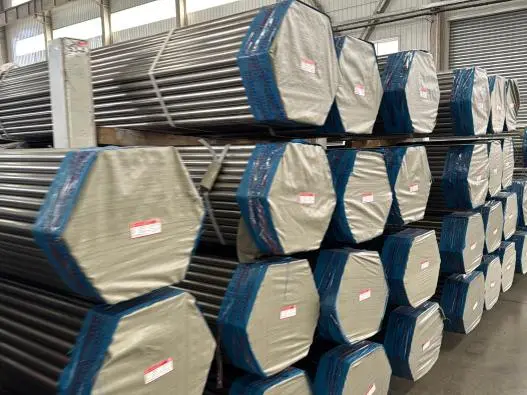
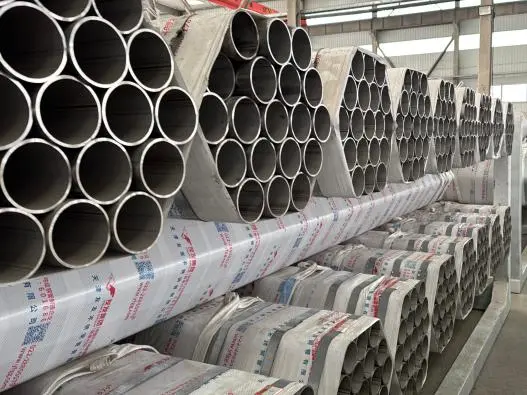
Understanding ASTM A358 GR 316 and 316L CL1 Pipe Specifications
To choose the right pipe specification, you need to know what makes these materials different from other choices. The ASTM A358 standard covers austenitic chromium-nickel stainless steel pipe that is electric fusion welded and is meant to be used in high-temperature and corrosive environments. The low carbon content (usually less than 0.03%) of Grade 316L makes it stand out. This low carbon content stops carbide formation during welding, which stops intergranular rust in heat-affected zones.
Chemical Composition and Mechanical Properties
The 316L grade has between 16 and 18% chromium, 10 to 14 % nickel, and 2 to 3 % molybdenum. This molybdenum addition makes the metal very resistant to pitting and crevice corrosion in places where chloride is present in large amounts. 316L is easier to weld than standard 316 grade because it has less carbon. It still has tensile strength above 515 MPa and yield strength above 205 MPa. This balance keeps the structure strong under pressure without lowering its ability to resist rust.
Class 1 Construction and Quality Assurance
The best quality level in ASTM A358 is Class 1, which requires construction that is double-welded with filler metal and a 100% radiographic review in accordance with ASME Section VIII standards. This strict testing method finds any flaws in the weld—such as holes, inclusions, or a lack of fusion—that could weaken the pipe's integrity. Pipes made to these standards have a weld joint efficiency factor of 1.0, which is the same as the performance of a seamless pipe. As part of our manufacturing process, we test our products hydrostatically at pressures that are estimated to hit 90% of their yield strength. This makes sure that they are leak-proof across outside diameters from 114.3 mm to 2500 mm and wall thicknesses from 3 mm to 50 mm.
Heat Treatment and Surface Finishing
Solution annealing at temperatures between 1040°C and 1150°C followed by rapid quenching makes the corrosion resistance best by making sure that all of the carbides are dissolved. After welding, this heat treatment process returns the material's austenitic structure, which stops it from becoming sensitised. Surface finishes include pickled and annealed, solution annealed, and plain or bevelled ends to fit the needs of the application. These requirements make sure that the dimensions and quality of the surface are consistent, which makes it easier to install in the field for complicated pipe systems.
Corrosion Resistance and Application Areas in Marine and High Chloride Settings
Many common piping materials can't be used in marine environments because of the unique problems they cause. About 3.5% of the saltwater in it is dissolved, which makes it an active environment for metal to rust through electrochemical attack.
Superior Chloride Resistance Mechanisms
The molybdenum in 316L grade forms an oxide layer that keeps the metal from breaking down in chloride solutions, and for ASTM A358 GR 316 316L CL1 WLD Steel Pipes, this passive film stays strong even when it comes in contact with seawater, brackish water, or industrial salt solutions, and the low carbon chemistry stops chromium carbide from forming at the edges of grains, which would make chromium-poor areas open to attack from between grains, and this advantage in metalworking is very important for welded structures, since high-carbon grades can become less resistant to damage during the welding process. This passive film stays strong even when it comes in contact with seawater, brackish water, or industrial salt solutions. The low carbon chemistry stops chromium carbide from forming at the edges of grains, which would make chromium-poor areas open to attack from between grains. This advantage in metalworking is very important for welded structures, since high-carbon grades can become less resistant to damage during the welding process.
Real-World Marine Applications
These pipes are used for saltwater intake systems and reverse osmosis feed lines in desalination plants that process millions of gallons of water every day. Offshore oil platforms use them in firewater systems and ballast lines where they will be exposed to saltwater all the time for decades. For reactor cooling circuits and brine concentration systems, chemical plants that work with chlorinated compounds ask for these materials. One case study from a petrochemical plant on the Gulf Coast showed that high-chloride wastewater treatment lines that worked at temperatures up to 80°C had no pitting erosion after 15 years of constant service.
Stress Corrosion Cracking Resistance
Stress corrosion cracking (SCC) caused by chloride is a very bad way for austenitic stainless steels to fail when they are under tensile stress. When stress is eased through the right heat treatment, the 316L makeup is better at resisting SCC than the 304 grades. Long-term durability in naval service is improved even more by keeping surface temperatures below 60°C and using the right stress-relief annealing after production.
Comparison and Choosing the Right Stainless Steel Pipe for Your Project
When making decisions about what to buy, it helps to clearly compare the different material options that are available. There are different types of stainless steel that are used for pipes in industry, and each has its own pros and cons when used in sea environments.
Grade 316L Versus Standard 316
Standard 316 grade has carbon levels of up to 0.08%, which is fine for many uses but can cause problems when heavy sections are welded together. The extra carbon makes the high-temperature strength a little better, but it also raises the risk of sensitisation. Even though it costs a little more, 316L is a better choice for naval use where there is a lot of welding and carbide precipitation is not acceptable. The lower carbon standard is especially important for pipes with diameters bigger than 600 mm, where high-carbon types may become sensitised even if the cooling rates used during fabrication are high.
Welded Versus Seamless Construction
Beyond a diameter of about 600 mm, it's not possible to make seamless pipes because the equipment needed is limited and the costs keep going up and up. For large-diameter uses, electric fusion-welded pipe is a cost-effective alternative. Class 1 construction gives the same performance thanks to strict quality controls. The 100% radiography inspection of the double-welded seam makes sure that the strength of the weld meets the strength of the base material. With this way of making things, projects that need lines with a width of 1200 mm or 2000 mm can be done at a price that can be supported by the business world.
Lifecycle Cost Analysis
The initial cost of materials is only one part of the total costs of ownership, and for ASTM A358 GR 316 316L CL1 WLD Steel Pipes, an in-depth analysis looks at things like installation costs, upkeep times, and how often things need to be replaced, and even though 316L CL1 pipes cost more than 304 types, the longer service life in chloride environments—often 25 to 30 years compared to 8 to 12 years for inferior materials—saves a lot of money, and avoiding unplanned shutdowns and emergency repairs adds more value to the economy, which procurement analysis needs to take into account. An in-depth analysis looks at things like installation costs, upkeep times, and how often things need to be replaced. Even though 316L CL1 pipes cost more than 304 types, the longer service life in chloride environments—often 25 to 30 years compared to 8 to 12 years for inferior materials—saves a lot of money. Avoiding unplanned shutdowns and emergency repairs adds more value to the economy, which procurement analysis needs to take into account.
Practical Procurement Considerations
Most of the time, the smallest amount you can buy is just one pipe. This works for both big jobs and routine replacements. Lead times depend on the specification. Standard sizes can be delivered to major ports in seven days, but custom sizes that need a wall thickness of 30–40 mm or a certain length may take up to four to six weeks. Framework agreements with qualified suppliers make sure that production schedules are prioritised and that prices stay the same for projects that have more than one phase.
Procuring ASTM A358 GR 316L CL1 Welded Steel Pipes: Best Practices
A successful buying process includes more than just comparing price quotes. It also includes procedures for qualifying suppliers and checking their work to protect the integrity of the project.
Certification Verification and Documentation
Manufacturers with a good reputation give full paperwork packages that include Material Test Reports (MTR) that are certified to EN 10204 3.1 or 3.2 and list the chemical makeup and mechanical test results for each production heat. The Welding Procedure Specifications (WPS) and Procedure Qualification Records (PQR) show that the manufacturing methods follow the rules set by the code. Independent confirmation of tolerances in dimensions, quality of surface finish, and non-destructive testing results can be found in inspection records from third-party agencies that hold ISO 17025 laboratory approval. By asking for these documents during the quotation phase, you can tell which suppliers have strong quality systems and which ones don't.
Evaluating Manufacturing Capabilities
Suppliers with 15 or more production lines and a yearly capacity of more than 50,000 tonnes show that they have the scale and investment to deliver on time. The company's dedication to international standards is shown by its ISO 9001 quality management, PED (Pressure Equipment Directive) compliance for European projects, and TÜV testing processes. Instead of depending only on external testing, manufacturers with ISO 17025-accredited testing labs do their own quality checks in-house. This speeds up quality confirmation and cuts down on lead times.
Managing Custom Requirements and Lead Times
When a project needs non-standard sizes, special end preparations, or specific lengths, involving the supplier early in the design phase is helpful, and for ASTM A358 GR 316 316L CL1 WLD Steel Pipes, clear communication of dimensional requirements, including outside diameter, wall thickness tolerance bands, length specifications (random vs. fixed), and end finish details, helps avoid costly misunderstandings, and setting delivery dates that work with building milestones and adding extra time for customs clearance and inland transportation makes sure that supplies arrive on time without demurrage fees or project delays. Clear communication of dimensional requirements, including outside diameter, wall thickness tolerance bands, length specifications (random vs. fixed), and end finish details, helps avoid costly misunderstandings. Setting delivery dates that work with building milestones and adding extra time for customs clearance and inland transportation makes sure that supplies arrive on time without demurrage fees or project delays.
Building Strategic Supplier Relationships
Having partnerships with makers that offer professional support and help with application engineering is more valuable than just buying goods. Suppliers who are willing to look at the conditions of the service, suggest the best specifications, and give advice on the best ways to install become partners instead of just suppliers. Quality partners are different from transactional suppliers because they communicate clearly, answer questions, and are ready to make sensible changes.
Why Choose YOUFA for ASTM A358 GR 316L CL1 Pipes?
YOUFASS Stainless Steel Pipe Co., Ltd. is an expert at making electric fusion-welded stainless steel pipe systems that are designed to work in the toughest naval and industrial settings. Our facility has 15 dedicated production lines that can make 50,000 tonnes of pipes every year. They are backed by a team of over 200 skilled professionals who are dedicated to making sure that every pipe we make is the best it can be.
We make pipes that are in line with ASTM A358 in all grades, such as TP304/304L, 316/316L, 317L, 321, and 347H, and we can build them in Class 1 through Class 5 ways. Our size range includes outside diameters from 114.3 mm to 2500 mm and wall thicknesses from 3 mm to 50 mm, so we can meet the needs of both standard and custom projects. Our processes are built around quality verification. Our ISO 17025-certified lab does a full range of tests, such as full mechanical and chemical analysis, 100% ultrasound and radiographic examination, and hydraulic pressure testing. Each pipe comes with a Material Test Certificate according to EN 10204 3.1 or 3.2, full UT/RT records, and WPS/PQR paperwork that proves the quality and allows for full tracking.
We have ISO 9001, PED, and TÜV approvals, which means we meet international standards for quality management and pressure equipment. Because of this, we can work on projects in North America, Europe, and other places around the world where strict rules require detailed paperwork and approved supplies. Our service approach is unique because we offer project support. We have a low minimum order number of just one pipe, so we can handle both emergency replacements and large-scale installs. Standard specs ship to Tianjin Port within seven days, and urgent needs can get faster transportation planning. Our engineering team gives expert advice on choosing the right material, helps with custom size requirements, and gives application advice to make sure the best performance in your individual service conditions.
Youfas provides pipe solutions that last a long time because they are highly resistant to rust and maintain their structural integrity for clients in the desalination, offshore energy, chemical processing, and marine engineering industries. We've worked well with fuel cell manufacturers who needed precise systems for transporting electrodes, petrochemical plants that needed pipes for high-pressure processes, and power plants that needed circuits for steam and cooling water that would work for decades.
Conclusion
When choosing pipes for marine and high-chloride areas, it's important to think carefully about the properties of the materials, the quality of the manufacturing, and the supplier's abilities. Welded ASTM A358 GR 316 316L CL1 WLD Steel Pipes have been shown to work well thanks to their low carbon content, molybdenum-enhanced corrosion protection, and Class 1 quality guarantee. Pipe systems that protect important infrastructure investments from failing too soon are made by putting them through rigorous testing, the right heat treatment, and precise manufacturing. When purchasing professionals put certified materials, detailed documentation, and working with qualified manufacturers at the top of their list of priorities, their projects are more likely to be successful in the long run, even in tough service environments.
FAQ
What distinguishes Grade 316L from standard 316 in marine applications?
Grade 316L has no more than 0.03% carbon, while normal 316 has up to 0.08%. This keeps welded buildings from intergranular corrosion. This low carbon chemistry stops carbide precipitation during thermal cycling, keeping corrosion resistance in heat-affected areas next to welds. This is especially important for large-diameter pipes where it might not be possible to heat treat them after the welding process.
How does Class 1 construction ensure weld integrity?
For Class 1 designation, longitudinal seams must be double-welded with filler metal and then fully X-rayed according to ASME standards. This inspection protocol finds any problems with the welds before the pipe is put into service. This makes sure that the joint works as well as a seamless pipe and has a reliability factor of 1.
Can these pipes handle desalination plant service conditions?
In fact, the molybdenum in 316L grade makes it very resistant to pitting and crevice corrosion in seawater and concentrated salt solutions. With the right specifications and construction methods, reverse osmosis and thermal desalination systems have been shown to last more than 20 years.
What documentation should buyers request to verify quality?
Ask for Material Test records (MTR) that follow EN 10204 3.1/3.2, full UT/RT inspection records, WPS/PQR welding paperwork, and inspection certificates from a third party. Suppliers with an ISO 17025 laboratory accreditation provide test results that have been checked by a third party to confirm the chemical composition, mechanical properties, and accuracy of the dimensions.
Partner with YOUFA for Premium Marine-Grade Piping Solutions
YOUFASS has approved ASTM A358 GR 316 316L CL1 WLD Steel Pipes that are made to the highest quality standards and are ready to help you with your important building projects. We are an experienced ASTM A358 GR 316 316L CL1 WLD Steel Pipes supplier that serves markets around the world. We offer high-quality products, helpful customer service, and technical know-how. Our engineering team will look over your requirements, suggest the best solutions, and send you full documentation packages that make the approval process go more quickly. You can email us at info@youfass.com to get full quotes, talk about your specific needs, or set up a technical meeting. Our low minimum order quantity (MOQ) of just one pipe and fast delivery to major ports make it easy and safe to order high-quality marine-grade stainless steel piping.
Online Message