
Jul 30, 2026
ASTM A358 321 Class 1 EFW Steel Pipe Performance in Heat Resistant Systems
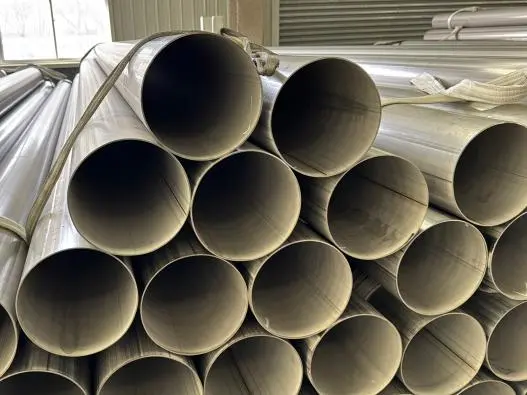
When operating high-temperature industrial systems, selecting the right piping material isn't just a technical decision—it's a commitment to safety, efficiency, and long-term profitability. The ASTM A358 Grade 321 Class 1 EFW Steel Pipe stands out as a proven solution for heat-resistant applications, combining titanium-stabilized austenitic stainless steel with precision electric fusion welding. This pipe type delivers exceptional resistance to intergranular corrosion at elevated temperatures, making it indispensable for power generation facilities, petrochemical refineries, and hydrogen production equipment where temperatures routinely exceed 800°F. Class 1 designation ensures complete radiographic inspection of longitudinal welds, providing a joint efficiency factor of 1.00 and meeting the rigorous demands of pressure service in corrosive, high-heat environments.
|
|
|

Understanding ASTM A358 321 Class 1 EFW Steel Pipe Specifications
To build a heat-resistant system that works, you need to know what makes titanium-stabilized stainless steel Grade 321 perfect for harsh conditions. At YOUFASS, we've witnessed how the right choice of materials has a direct effect on operational uptime in a wide range of fields.
Chemical Composition and Mechanical Properties
Heat Treatment and Manufacturing Standards
In electric fusion welding, a flat-rolled stainless steel plate is shaped into a cylinder, and then the edges are joined by adding filling metal under controlled conditions. After being welded, Class 1 pipes go through a heat treatment process called solution annealing, which gets rid of any leftover carbides and returns the pipes' best rust resistance. After this, there is rapid cooling to stop sensitisation. Our production lines strictly follow the ASTM A358 dimensional tolerances, making pipes with an outer diameter of 114.3 mm to 2500 mm and a wall thickness of 3 mm to 50 mm. Every pipe is tested with ultrasonic waves and X-rays to make sure there are no flaws in the welds and that they meet ASME Section VIII standards for pressure tanks and plumbing systems.
Quality Assurance and Certification Requirements
Tough quality control rules tell the difference between sources you can trust and those you shouldn't. We keep our quality management systems up to date with ISO 9001, our PED certification for European markets, and our ISO 17025-accredited laboratory for independent testing verification. There is a lot of paperwork that goes with each shipment of pipes. There are Material Test Certificates that meet EN 10204 3.1 or 3.2 standards, Third Party Inspection reports, Welding Procedure Specifications with Performance Qualification Records, and full UT/RT inspection reports. This ability to track down documents protects procurement teams during project audits and makes sure that rules are followed in all international jurisdictions.
Comparative Analysis of ASTM A358 321 Class 1 EFW Pipes and Alternatives
Knowing the differences between the ways pipes are made and the grades that are available helps you make better purchasing choices that fit the needs of your project and your budget. ASTM A358 Grade 321 Class 1 EFW Steel Pipe provides unique benefits compared to alternative manufacturing methods.
ASTM A358 Versus ASTM A312 Specifications
ASTM A312 covers seamless and automatically welded stainless steel pipes with sizes usually less than 8 inches. ASTM A358 covers large-diameter electric fusion welded pipes made from plate material. Plate-forming lets you control the chemistry in a way that fits your needs, and it can also make walls that are thicker for high-pressure uses. A312 pipes work best in smaller distribution systems, but when projects need diameters bigger than 300 mm or wall thickness greater than 25 mm, the A358 specification is the better choice. When filler metal is added to EFW joints, the weld strength is equal to or greater than the qualities of the base metal. This is especially useful in areas of thermal expansion where stress builds up.
Class 1 Versus Class 2 Pipe Categories
According to ASTM A358, all lengthwise welds on Class 1 lines must be X-rayed, which means ASTM A358 Grade 321 Class 1 EFW Steel Pipe can be used without any restrictions at any pressure or temperature. Class 2 pipes are treated with double welding but don't go through a radiographic check. This means that the joint efficiency factors and allowed stress values are lower. When a system fails and could put people in danger or damage the environment, like in nuclear power support systems, hydrogen sulphide service, or high-pressure steam distribution, procurement workers should use Class 1. The extra cost of Class 1 imaging is a small price to pay for a lot less risk than the costs of failure in serious situations.
Grade 321 Compared to Alternative Stainless Grades
Grade 304 stainless steel is resistant to corrosion at normal temperatures, but it becomes sensitive when exposed to temperatures between 800°F and 1500°F for long periods of time. This causes intergranular corrosion in areas where it has been welded. Titanium stabilisation in Grade 321 gets rid of this weakness, making it the best choice for systems that need to be immune to heat. Grade 347, which is stabilised with niobium instead of titanium, works just as well but costs more in materials. Grade 316 works great in salt settings, but when it's dry and hot, it's not as thermally stable as Grade 321. We tell our clients to use 321 when the need for high temperature resistance is greater than the risk of heavy halide exposure.
Performance Optimization and Benefits in Heat Resistant Systems
Titanium-stabilized EFW pipes offer clear operating benefits in demanding industrial settings, as shown by real-world performance data.
Structural Integrity at Elevated Temperatures
Grade 321 keeps its yield strength and creep resistance at temperatures where carbon steel options would need walls that are too thick or need to be replaced too often. Our Class 1 EFW pipes have been used in petrochemical hydrocracker units at 950°F for more than 15 years without breaking down. This is in contrast to carbon steel systems, which need to be replaced every 5 to 7 years because they need to be constantly checked for rust. The austenitic structure stays steady even when the temperature changes, which keeps it from becoming rigid like ferritic materials do. This stability immediately leads to fewer repair shutdowns and better measures for plant uptime.
Corrosion and Oxidation Resistance
Surface oxide layers quickly form on ASTM A358 Grade 321 Class 1 EFW Steel Pipe that is exposed to oxidising conditions at high temperatures. These layers form a protective chromium-rich shield that fixes itself when it gets damaged. This passive film doesn't change when exposed to steam, combustion gases, or oxygen in the air up to temperatures that can reach 1600°F. Manufacturers of fuel cells that use our lines in systems that make hydrogen say that there is almost no rust after 10,000 hours of use. This means that the hydrogen stays pure, which is important for the performance of the proton exchange membrane. Titanium stabilisation stops chromium loss at grain boundaries, so rust resistance stays strong even in areas affected by heat next to welds.
Long-Term Cost Effectiveness
Grade 321 Class 1 EFW pipes have higher initial material costs than carbon steel alternatives by about three to four times. However, a lifecycle analysis shows that they have much lower total costs of ownership. When corrosion allowances are taken away, the required wall thickness goes down by 25–40%, which helps to balance out material premiums. A longer service life means that the item doesn't need to be replaced as often, which saves money on installation labour, production breaks, and dumping fees. When a power production client compared Grade 321 systems to carbon steel with corrosion inhibitors and cathodic protection over a 20-year planning window, they found that Grade 321 systems had 62% lower lifecycle costs. These savings are especially noticeable in sites that are hard to get to and where the cost of replacement labour is high.
Procurement Considerations for ASTM A358 321 Class 1 EFW Steel Pipes
For strategic sourcing to work, you need to pay attention to the skills of the suppliers, the authenticity of their certifications, and the logistics of the supply chain to make sure that projects are delivered on time and to the highest standards of quality. Finding a reliable supplier of ASTM A358 Grade 321 Class 1 EFW Steel Pipes is essential for meeting rigorous project deadlines.
Supplier Qualification and Certification Verification
Reliable suppliers have quality management systems that are certified and show that they control the manufacturing process by having third parties audit it on a regular basis. We suggest that buying teams check the validity of the ISO 9001 certification, make sure that the PED modules work with installations in Europe, and ask for TÜV inspection records that show what the production line can do. YOUFASS has 15 dedicated production lines that can make more than 50,000 tonnes of goods every year. This makes sure that big projects can get what they need without having to wait for long lead times. Our ISO 17025-certified lab does independent proof tests, so you don't have to rely on mill certificates alone to make sure the quality.
Pricing Factors and Minimum Order Quantities
The price of materials for ASTM A358 Grade 321 Class 1 EFW Steel Pipe changes depending on nickel and chromium alloy fees, size standards, and testing needs. Class 1 radiographic examination raises the cost of base pipes by 8–12% compared to Class 2 options, and solution annealing heat treatment adds another 5–7% to the total cost. We can handle single-pipe orders because we know that repair jobs and pilot installs don't always make sense when buying in bulk. When you buy more than 10 tonnes, you can get volume savings, and standard measures that get the most material out of plate stock also help you save money.
Lead Times and Logistics Coordination
We keep standard-sized pipes in common grades in stock at our site so that they can be delivered to Tianjin Port in seven days for foreign shipping. Custom specs that call for non-standard wall thickness or length tolerances usually need 3–4 weeks to plan for production. We plan the filling of containers so that they can be shipped as quickly and efficiently as possible. Heavy-wall pipes are packed in wooden boxes that can be reinforced with a steel frame if needed. The hexagonal binding and woven bag protection keep the surface from getting damaged while it's being shipped. Full documentation packages are sent at the same time, so customs clearance can go ahead without having to wait for material test certificates or inspection reports.
Why Choose ASTM A358 Grade 321 Class 1 EFW Pipes for Your Heat Resistant Systems?
Strategic advantages go beyond technical details and include things like a reliable supply chain, following the rules, and partnership value that supports long-term operational excellence. ASTM A358 Grade 321 Class 1 EFW Steel Pipe offers the structural stability required for the most demanding environments.
Proven Performance in Critical Applications
New energy sector clients who use our pipes in electrolysis systems report 3-5% higher hydrogen production efficiency. This is because our pipes have less surface contamination and keep their thermal conductivity over long working periods. Manufacturers of automotive battery modules like how EFW processes keep the dimensions of their modules consistent. For example, they can keep the diameter tolerances to ±0.5mm across 6-meter lengths. Aerospace companies that work on parts for aeroplanes choose our Grade 321 pipes for use in heat treatment furnaces where corrosion of the pipes would make it harder to do tight tolerance cutting. These successful applications show that the technology works in the real world, not just in a lab.
Comprehensive Documentation and Traceability
Each pipe has a heat number that lets you fully trace it back to the original melt chemical, inspection data, and rolling records. Material Test Certificates show the chemical analysis results for each element, the mechanical test values from samples from the production lot, and proof that the manufacturing process followed the right steps. Third-party inspection coordination with customer-designated agencies makes sure of independent proof when project requirements call for more control. In the pharmaceutical, nuclear, and aircraft industries, where material pedigree is part of permanent installation records, this level of paperwork meets the strictest quality assurance standards.
Commitment to Innovation and Continuous Improvement
The engineering team at our company works closely with research centers that are looking into new ways to repair, treat surfaces, and plan for future upkeep needs. Recent investments in automated ultrasonic scanning systems have made it 40% easier to find defects than with traditional manual inspection methods. As a member of an ASTM International group, we help make the next generation of specs that will control future piping standards. Our dedication to technological progress means that our clients can take advantage of new best practices and industrial improvements that make products work better and last longer.
Conclusion
ASTM A358 Grade 321 Class 1 EFW Steel Pipe is an investment in the operational reliability of heat-resistant systems in a wide range of industries. The austenitic structure stabilised by titanium is very resistant to corrosion at high temperatures and keeps its mechanical integrity even after decades of thermal cycling. Electric fusion welding with full radiographic inspection makes sure that the quality of the weld is the same as the performance of the base metal. This gets rid of the weak spots that threaten the integrity of the system. Lifecycle costs, regulatory compliance, and operating uptime are all things that should be taken into account when buying pipes. Grade 321 Class 1 pipes clearly have clear benefits over other materials and manufacturing methods.
FAQ
What differentiates EFW pipes from seamless alternatives in high-temperature applications?
Electric fusion welding lets you make pipes with bigger diameters and thicker walls than seamless manufacturing can do at a reasonable cost. Plate-forming lets you precisely control the chemistry and gets rid of the centerline segregation that can happen when making seamless pipes. A Class 1 radiographic check confirms the stability of the weld and gives joint efficiency factors of 1.00, which are the same as grades for seamless pipes.
Can Grade 321 pipes handle sudden changes in temperature when they are heated and cooled?
The austenitic structure keeps the material's flexibility even when the temperature changes, and it doesn't break easily as ferritic materials do. The right way to design a system should include expansion loops or flexible connections to account for thermal expansion coefficients. However, the material can handle sudden changes in temperature without breaking down.
What certifications should procurement teams look at?
Ask for up-to-date ISO 9001 certificates, proof that the PED module meets the requirements for European markets, and proof that the lab is ISO 17025-certified. Check that the Material Test Certificates meet the requirements of EN 10204 3.1 or 3.2, and make sure that full WPS/PQR documentation for welding procedures is available.
Partner with YOUFA for Reliable Heat Resistant Piping Solutions
You can count on YOUFASS Stainless Steel Pipe Co., Ltd. to make your most difficult heat-resistant system projects with precision and skill. As a reliable ASTM A358 Grade 321 Class 1 EFW Steel Pipe provider, we offer both advanced production skills and quick, helpful technical support that is suited to your needs. Our team of more than 200 people runs 15 dedicated production lines that meet strict quality standards that are backed up by ISO 9001, PED, and ISO 17025 certifications. Our flexible minimum order quantities and seven-day expedited delivery to Tianjin Port help you stay on schedule with your projects, whether you need a single pipe for maintenance work or a full system supply for new construction. Email our engineering team at info@youfass.com to talk about your needs for heat-resistant pipes and get full technical specs that are right for your environment.
Online Message