
Aug 10, 2026
ASTM A358 316L CL1 Welded Steel Pipes Deliver Superior Corrosion Resistance
When selecting piping for corrosive and high-pressure environments, durability and reliability are non-negotiable. ASTM A358 GR 316 316L CL1 WLD Steel Pipes represent a proven solution for industries facing extreme chemical exposure, elevated temperatures, and demanding service conditions. These electric fusion welded (EFW) pipes combine the low-carbon advantage of 316L stainless steel with Class 1 welding standards that mandate 100% radiographic testing, ensuring weld integrity equivalent to seamless pipe performance. The result is a cost-effective, large-diameter piping option that meets the stringent requirements of petrochemical plants, desalination facilities, power generation systems, and hydrogen production equipment.
|
|
|
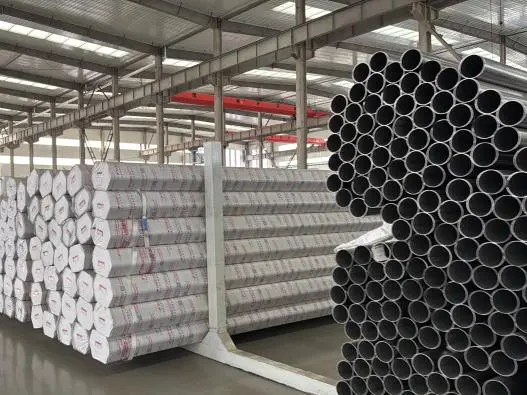
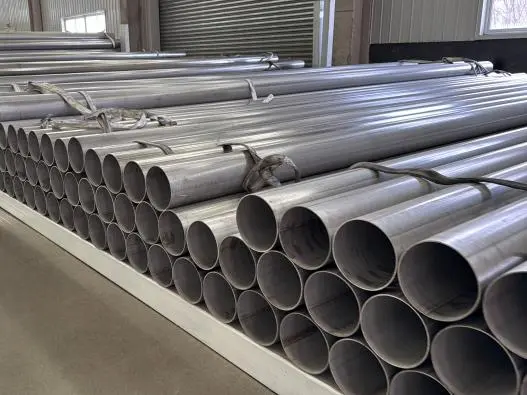
Understanding ASTM A358 316L CL1 Welded Steel Pipes
Electric fusion welded austenitic chromium-nickel stainless steel pipes made for high-temperature and corrosive service must follow the ASTM A358 standard. Grade 316L stands out in this standard because it has a very low carbon content (usually less than 0.03%), which lowers the risk of carbide precipitation during welding. This quality is very important for keeping intergranular corrosion from happening in areas that are heated, which is a common way for traditional 316 grade materials to fail.
Chemical Composition and Mechanical Properties
Grade 316L has chromium (16–18%), nickel (10–14%), and molybdenum (2–3%). It is very resistant to cracking and pitting caused by chloride in chemical and marine environments. Adding molybdenum makes it work better in acidic environments, so it can be used in situations with sulphuric acid, phosphoric acid, and seawater. Mechanical properties usually include a minimum tensile strength of 515 MPa and a minimum yield strength of 205 MPa. These properties make sure that the structure stays strong when it is under pressure.
Solution annealing at temperatures between 1040°C and 1120°C is one way to improve the microstructure by breaking down carbides and making the austenitic phase more uniform. This process makes the metal more flexible and resistant to corrosion while keeping the mechanical strength needed for industrial pipe systems. YOUFASS uses strict heat treatment methods to make sure that every pipe meets ASTM standards and always works well.
Manufacturing Standards and Class 1 Welding
Class 1 under ASTM A358 means that ASTM A358 GR 316 316L CL1 WLD Steel Pipes are manufactured with longitudinal joints that are double-welded with filler metal and undergo 100% radiographic examination in accordance with ASME Section VIII, Division 1 requirements. This strict quality control process ensures that ASTM A358 GR 316 316L CL1 WLD Steel Pipes have weld seams free from porosity, inclusions, cracks, and other defects that could reduce pressure containment performance. Radiographic testing confirms a joint efficiency factor of 1.0, meaning the welded joint provides performance equivalent to seamless pipe under specified conditions. For critical applications where safety and reliability are essential, ASTM A358 GR 316 316L CL1 WLD Steel Pipes offer dependable weld integrity, consistent quality, and strong pressure resistance. The advanced inspection requirements of ASTM A358 GR 316 316L CL1 WLD Steel Pipes make them suitable for demanding industries that require long-term durability and secure operation.
Electric fusion welding makes it possible to make pipes with diameters from 114.3 mm to 2500 mm that would be too hard or too expensive to make without joining the pieces together. The wall thickness can be anywhere from 3 mm to 50 mm to meet different service needs and pressure ratings. There are different surface finishes, such as pickled and annealed, solution annealed, and plain or bevelled end finishes to make installation easier in the field.
Corrosion Resistance and Application Advantages
The 316L grade, which contains molybdenum, works especially well in places with high temperatures, salt exposure, and acidic conditions. Compared to 304 stainless steel, which includes no molybdenum, 316L shows better pitting and crevice corrosion resistance. In some situations, duplex stainless steels may be stronger than austenitic grades, but they are not as easy to weld or as stable at high temperatures.
Real-World Applications in Harsh Environments
Class 1 welded pipes move corrosive hydrocarbons at temperatures above 400°C in petrochemical refining. The low-carbon chemistry stops sensitisation, which ensures long-term dependability in places where shutting down for maintenance is expensive. Fuel cell makers use these pipes in systems that make hydrogen, and high-purity hydrogen streams need materials that are very stable electrochemically and don't pose a lot of contamination risk.
316L pipes are used for brine processing lines and seawater intake lines in desalination plants and marine engineering projects. The molybdenum percentage is very important for protecting against stress corrosion cracking caused by chloride, which is a way that structures can fail in salty settings. These pipes are used in cooling water circuits and steam condensate systems at power plants. They have to work well in systems where the temperature and chemistry of the water change often.
Heat Treatment and Welding Best Practices
The most suitable post-weld heat treatment for ASTM A358 GR 316 316L CL1 WLD Steel Pipes depends on factors such as wall thickness, operating conditions, and application requirements. Stress-relief annealing may be beneficial for ASTM A358 GR 316 316L CL1 WLD Steel Pipes with wall thicknesses greater than 19 mm because it can reduce residual stresses and improve dimensional stability after welding. Proper welding practices, including accurate heat input control, suitable shielding gas selection, and compliance with qualified Welding Procedure Specifications (WPS), are essential for maintaining the weld quality of ASTM A358 GR 316 316L CL1 WLD Steel Pipes. These measures help prevent weld degradation, preserve corrosion resistance, and ensure that ASTM A358 GR 316 316L CL1 WLD Steel Pipes continue to deliver reliable performance in demanding industrial environments. Through effective heat treatment and controlled welding processes, ASTM A358 GR 316 316L CL1 WLD Steel Pipes can achieve improved durability, structural integrity, and long-term service reliability.
YOUFASS provides a lot of paperwork, like Welding Procedure Qualification Records (PQR) and Manufacturing Process Sheets (MPS), to help with installation in the field and following the rules. Our ISO 17025-certified lab does chemical and mechanical tests on all of our pipes to make sure they meet project requirements and that the materials are consistent.
Comparing ASTM A358 316L CL1 Welded Pipes with Alternatives
When making decisions about what to buy, people often have to balance performance, cost, and availability. Knowing the differences between grades and ways of making things helps engineers and buying managers choose the best materials for each job.
316 vs. 316L: Cost and Performance Trade-offs
The standard 316 grade has a higher carbon content (up to 0.08%), which gives it slightly better tensile strength but makes it more likely to become sensitised when welding. The 316L type gives up some strength to be easier to weld and less likely to rust, which makes it the best choice for critical piping systems. Lifecycle cost analysis always favours 316L because it needs less upkeep and lasts longer in settings that are corrosive.
Welded vs. Seamless Pipe Considerations
Seamless ASTM A358 pipes have a consistent wall thickness and no longitudinal seams, but they are hard to get in large diameters and thick wall thicknesses because of production issues. Stringent testing procedures show that electric fusion welded pipes have the same mechanical performance as other types of pipes. They also have a wider range of sizes and faster wait times. When Class 1 welding standards are met, mechanical behaviour and corrosion resistance are about the same. This means that welded pipes are a good choice for most industrial uses.
Positioning Against Other Stainless Steel Standards
For general service, ASTM A312 covers both seamless and welded stainless steel pipes. ASTM A358 covers welded pipes for high-temperature corrosive service. This difference is important for situations where code compliance and material traceability are needed, like with pressure tanks, heat exchanges, and process pipes. YOUFASS makes products to a number of different standards, so customers can choose the material that best fits the needs of their project.
Procurement Guidance for ASTM A358 316L CL1 Welded Pipes
To choose a good manufacturer, you need to look at their professional skills, quality processes, and how reliable their supply chain is. Suppliers with a good reputation keep certifications like ISO 9001 for quality management, PED compliance for European markets, and TÜV inspection approvals.
Certification and Quality Assurance Protocols
Mill Test Certificates (MTC) that are in line with EN 10204 Type 3.1 or 3.2 show where the material came from and the results of chemical and mechanical tests. Third-party inspection (TPI) services make sure that the dimensions and tests are correct before the goods are shipped. Full sets of paperwork, like ultrasonic test results, radiography examination records, and hydrostatic test certificates, are needed for regulatory approval and project proof.
YOUFASS has 15 production lines that can make more than 50,000 tonnes of goods every year. They are supported by more than 200 employees and an ISO 17025-certified lab that is located on-site. Our systems for controlling raw materials make sure they come from reputable steel mills, and special inspection tools and methods make sure the quality of the products at every stage of production.
Pricing Dynamics and Lead Time Considerations
Prices for ASTM A358 GR 316 316L CL1 WLD Steel Pipes depend on factors such as raw material costs, manufacturing complexity, required specifications, and order volume. Minimum orders of ASTM A358 GR 316 316L CL1 WLD Steel Pipes can be arranged from as little as one pipe for prototypes, testing, and small-scale projects, while larger orders can achieve cost advantages through volume savings and more efficient transportation arrangements. Lead times for ASTM A358 GR 316 316L CL1 WLD Steel Pipes vary depending on specification requirements, production workload, and inspection procedures. For urgent applications, accelerated delivery options are available, and YOUFASS can arrange shipment to Tianjin Port in as little as seven days for standard configurations. This efficient supply capability allows projects using ASTM A358 GR 316 316L CL1 WLD Steel Pipes to maintain schedules without compromising product quality, reliability, or performance.
Total landing costs are affected by market factors such as nickel prices, freight rates, and customs policies. Working with experienced providers who keep an eye on the market and keep strategic stock on hand can help keep prices stable and prevent supply chains from breaking down.
Why Choose ASTM A358 316L CL1 Welded Steel Pipes?
Because they are resistant to rust, have a strong structure, and are affordable, these pipes are the best choice for tough industrial uses. Longer service life and resistance to common failure modes like pitting, crevice corrosion, and stress corrosion cracking lead to lower maintenance costs.
Future-Proofing and Supplier Support
Long-term project viability depends on being able to adapt to changing safety standards and environmental laws. Choosing materials that are better than the bare standards in the code leaves room for future changes in service conditions and new rules. Throughout the lifetime of a project, professional support from the supplier, such as on-site commissioning help and engineering advice, adds value.
A recent case study from a petrochemical plant in the Midwest showed that this material saved more than 40% in lifecycle costs compared to other materials. The Class 1 welded pipes stopped unexpected shutdowns caused by corrosion failures, kept their shape through thermal cycles, and made installation easier in the field by using standard welding methods. These real results show that choosing ASTM A358 GR 316 316L CL1 WLD Steel Pipes for key infrastructure is a good idea for both performance and cost.
Conclusion
When industries work in places with high temperatures, high pressures, and corrosion, choosing ASTM A358 GR 316 316L CL1 WLD Steel Pipes helps them deal with these problems. Intergranular corrosion is stopped by the low-carbon 316L chemistry, and 100% radiographic examination under Class 1 welding standards makes sure the stability of the join. These pipes work as well as seamless pipes but come in big diameters that would be hard to make with traditional methods. The material's high resistance to chloride attack, temperature stability, and mechanical strength make it useful in petroleum processing, power generation, desalination, and hydrogen production. Working with certified manufacturers who keep up-to-date quality systems and offer full documentation support is the best way to make sure that a project runs smoothly and meets all regulations.
FAQ
What distinguishes 316L from standard 316 grade in ASTM A358 pipes?
The main difference is the amount of carbon present. Grade 316L has no more than 0.03% carbon, while normal 316 has 0.08%. This makes it much less likely that carbides will form during welding. This keeps intergranular rust from happening in areas that are heated, which is why 316L is the best material for welded pipe systems that will be used in acidic environments.
How does Class 1 welding affect corrosion resistance?
As a Class 1 title, all lengthwise weld lines must be X-rayed to make sure they are free of flaws that could cause corrosion. Using the right procedures and proper welding techniques keeps the corrosion resistance of the base material through the weld joint, protecting the whole pipe evenly.
What criteria should guide supplier selection?
Check for certifications like ISO 9001 and PED compliance, make sure the lab is approved for testing, look over documentation options like MTC/MTR and WPS/PQR, and figure out how much can be made and how long the lead time is. Ask for references from similar projects and make sure that the methods for tracking where the raw materials come from work.
Partner with YOUFASS for Reliable ASTM A358 GR 316 316L CL1 WLD Steel Pipes Supply
YOUFASS Stainless Steel Pipe Co., Ltd. uses cutting-edge production techniques and strict quality control to make sure that their piping solutions are reliable for important industry uses. Our 15 production lines and 50,000-ton annual capacity can handle projects of any size. Our ISO 17025 laboratory and many other international certifications make sure that our materials are compliant and that they work well. Get in touch with our expert team at info@youfass.com to get personalised quotes, engineering support, and specs that are made just for your corrosive service needs. As a reliable ASTM A358 GR 316 316L CL1 WLD Steel Pipes supplier, we offer full documentation, fast shipping choices, and ongoing expert support to help your project succeed.
Online Message