
Jul 14, 2026
ASTM A312 vs A358: Choosing the Right Stainless Steel Pipe Standard
When procurement teams have to pick between ASTM A312 and ASTM A358 stainless steel pipes, they need to know what makes each one different. To be used in hard places with high temperatures and acids, ASTM A312 Welded Stainless Steel Pipes are made. When it comes to austenitic types, like TP304, TP316, and TP316L, they come in both seamless and bonded forms. ASTM A358 only covers large-diameter pipes that are electric-fusion-welded and are meant to be used in hard or hot places where smooth production isn't worth the money. What you choose has a direct impact on the reliability of operations in many areas, from handling petrochemicals to making energy. It also has an impact on the quality of installations and their costs over their lives. Check that the products you pick are right for your business by comparing their technical details, how well they work, and the different ways you can buy them.
|
|
|
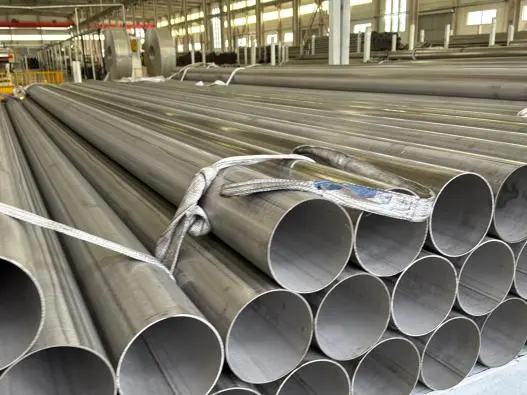
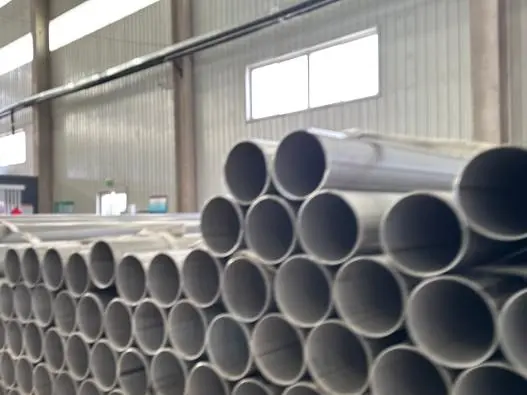
Understanding ASTM A312 and A358 Stainless Steel Pipe Standards
Stainless steel lines are regulated to ensure consistency, safety, and performance in many tasks. Both ASTM A312 and ASTM A358 are relevant, although they address various manufacturing methods and project demands.
What ASTM A312 Covers
ASTM A312/A312M governs seamless, soldered, and cold-worked austenitic stainless steel pipes. This standard includes popular kinds like TP304, TP304L, TP316, TP316L, TP321, TP347, and high-temperature varieties like TP309S and TP310S. The standard might be seamless, welded, or substantially cold-worked. Manufacturers may select from NPS 1/8" to NPS 48" and Sch 5S to Sch XXS wall schedules. The chemical composition must contain the proper amount of chromium (16–18%) and nickel (8–10%) to prevent corrosion, and most grades must have at least 75 ksi tensile and 30 ksi yield strengths. Heat treatment includes solution annealing at least 1900°F. Soon after, the metal is quenched in water to prevent carbide formation during welding and corrosion.
What ASTM A358 Specifies
Manufacturing Process Distinctions
These restrictions vary greatly, affecting what individuals purchase. The longitudinal seam of ASTM A312 welded pipes is automatically soldered without filler metal. In the suitable heat, this provides a narrow melting zone that preserves parent material qualities. Solid billets are hot-pierced and rolled or pushed through a die for A312 seamless variants. This eliminates weld holes but limits the size prices. For ASTM A358 pipes, electric-fusion welding joins a flat plate to large-diameter cylinders. Mechanical and rust protection are determined by subsequent heat treatment classes. Understanding these process variances helps buyers plan for delivery schedules, pricing structures, and performance attributes that matter to them. Welded constructions usually provide faster wait times and cheaper foot costs for big diameters. However, seamless designs maintain properties across the pipe wall. Safety and high-cyclic load applications benefit from this.
Key Differences Between ASTM A312 and A358 Pipes for Procurement
Procurement specialists must weigh several technical and financial issues while choosing these criteria. This ensures project and supply chain success.
Dimensional Ranges and Availability
ASTM A312 pipes vary in diameters from NPS 1/8" to NPS 48" (DN6 to DN1200, Ø10.3 mm to Ø1219 mm) with wall thicknesses from Sch 5S to Sch XXS. When standard diameters work, A312 is the most common pipe specification. For ASTM A312 and NPS 16", seamless versions are cheaper, but ASTM A312 Welded Stainless Steel Pipes may be utilized for bigger diameters. ASTM A358 is for large diameters (NPS 12" and higher) when seamless manufacture is impossible. Bonded width may be practically any size. This makes ASTM A358 ideal for large transmission lines, process tanks, and industrial buildings, where pipe diameters larger than those of seamless pipes can be handled.
Wall thickness limitations vary per standard. The pipe layout and construction of A312 enable +15% to +22.5% above nominal width and 12.5% under nominal. Teams must utilize actual supplied measurements instead of expected specifications to determine capacity when ordering. Due to tolerance bands, materials cost and retain pressure differently. Knowing what a provider can achieve within these physical boundaries helps you prevent design mismatches that may stall projects or require expensive job site revisions.
Temperature and Pressure Performance
Both standards can take high temperatures, but their construction affects how they manage pressure. Since ASTM A312 seamless pipes have uniform walls, weld gaps aren't needed. The material's entire strength may be utilized to calculate its pressure capacity when the joint efficiency factor is 1. This allows for larger operating forces with the same wall thickness as linked options. For ASTM A312 Welded Stainless Steel Pipes, weld joint efficiency factors are commonly 0.85 (normal examination) to 1.0 (100% radiographical inspection). Because they are not as smooth as seamless pipes, joined pipes have lower predicted pressures.
Heat and inspection of ASTM A358 pipes solves this issue. Fully heated and x-rayed Class 4 A358 pipes have a weld joint efficiency of 1.0, ensuring smooth operation. Lower inspection classes may necessitate lower design pressures or larger walls to correct weld errors. Temperature limitations depend more on metal type than on average. The requirements for A312 and ASTM A358 are identical. TP304 and TP316 can work at 1500°F for brief periods. Because TP321 and TP347 stable kinds don't rust between grains, they can withstand greater temperatures. Heaters and other heat-handling equipment require high-temperature grades like TP309S and TP310S under any standard to prevent oxidation up to 2000°F.
Corrosion Resistance Considerations
To match marks, chemicals must be the same for both categories. This keeps the same at the base to prevent corrosion. Air, organic solvents, and various food preparation conditions seldom rust TP304 and TP304L. TP316 and TP316L have 2%–3% more molybdenum. This reduces chloride-induced cracking in coastal locations, water treatment systems, and halogen-using chemical processes. L-grade (TP304L and TP316L) carbon cannot exceed 0.035%. Joining prevents the metal from softening and rusting between layers.
Supplier Quality and Certification Requirements
Reliable companies supply testing and material tracking records regardless of order standard. ISO 9001 for quality management, ISO 17025 for lab testing, and PED compliance for European markets are significant licenses. EN 10204 3.1 or 3.2 requires material test reports (MTRs) to comply. They should contain chemical, mechanical, and heat treatment test results for particular output batches.
YOUFA always has the proper permits and equipment, such as 15 manufacturing lines that can produce 50,000 tons each year. This allows them to immediately satisfy urgent demands and maintain commodities for multi-stage projects. More than basic MTRs are available. Third Party Inspection (TPI), Welding Procedure Specifications (WPS), Procedure Qualification Records (PQR), Manufacturing Process Specifications (MPS), and ultrasound or radiographic studies may provide weld stability reports. Because the documentation is so thorough, you can be confident that the goods you get will satisfy requirements and last.
The buying manager must ensure the supplier meets standards. High-tech tools cut and roll A312 pipes. For welded pipes, you require automated welding equipment and meticulous edge preparation. To create ASTM A358 big-diameter pipes, you must roll plates, employ electric-fusion welding instruments, and have ovens large enough for the pipes. When qualifying a supplier, make sure their manufacturing skills are demonstrated to minimize delays caused by subcontracting or inadequate plant facilities.
How to Choose the Right Standard for Your Project Needs
Consider the project's demands and each standard's strengths before picking ASTM A312 or A358. You should also consider cost and scientific efficacy.
Application-Specific Decision Frameworks
Each industry and usage has various performance objectives and maintenance demands, hence standards vary. When rust prevention and pressure control are more critical than cost, plants that use strong acids, caustics, or chlorine prefer ASTM A312 Welded Stainless Steel Pipes in the TP316L or TP317L kinds. Smooth A312 pipes are suitable for reactor inlet/outlet temperature cycling. However, steady-state distribution heads and transfer lines benefit from welded A312 pipes.
Power businesses utilize both standards to ensure compatibility. Boiler feed lines, steam distribution, and wastewater return employ smaller A312 seamless pipes (NPS 2" to NPS 12"). These lines are constantly heated and pressed; they must be strong. Large-diameter cold water lines utilize ASTM A358 pipes. Low pressure and temperature make welding cheaper. Most heat exchanger tube bundles must satisfy A312. They require thin-walled, small-diameter tubes to transport heat fast and effectively.
Pressure, Temperature, and Environment Matching
Petrochemical plants blend ASTM A312 Welded Stainless Steel Pipes and ASTM A358 usage depending on process unit demands. Hydrotreaters and reformers that utilize high-pressure hydrogen require sturdy A312 seamless pipes like TP321H or TP347H to prevent hydrogen corrosion. In crude distillation column overhead systems with sour streams, A312 TP316L welded pipes are the most cost-effective solution to prevent rust if the pressure is low. In low-pressure flare heads and storage tank vapor recovery systems, ASTM A358 pipes are too large (NPS 24" and higher) to be smooth.
Design pressure, temperature fluctuations, and environmental exposure must be considered to match pipe specifications to operating circumstances. First, determine the wall thickness using ASME B31.3 for process piping and B31.1 for power piping. Consider how much stress the material can withstand at design temperature. Choose the next larger schedule to allow for rust and prevent machine damage when comparing predicted thickness to normal schedules.
Smooth or welded shapes depend on pressure and temperature. Smooth A312 pipes function best at design pressures over 70% of their room-temperature yield strength. Weld joint efficiency losses are avoided, and the entire material strength is exploited. Soldering A312 or ASTM A358 pipes is inexpensive below 600 psi. Especially if an X-ray reveals the weld quality is excellent enough for 1.0 joint efficiency.
Setting affects the standard and grade within it. To avoid chloride in coastal areas, the air must include TP316 or TP316L, specified in A312 or ASTM A358. Burying anything requires consideration of the soil. Salty or chloride-rich soils should utilize TP316L or higher metals. Consider how water may enter beneath insulation around outside lines. Rust is worse for TP304 grades. Despite its higher initial cost, TP316L is superior.
Fabrication and Installation Considerations
The kind of pipe and its standard impact how much fieldwork is needed and how much it costs to recruit workers. ASTM A312 pipes feature straight ends for socket welding (lower diameters) or curved ends for buttwelding (NPS 2" and higher). Welding requires the proper filler metal (ER308L for TP304/304L and ER316L for TP316/316L), heat control, and material treatment if needed.
Big and heavy ASTM A358 large-diameter pipes may need particular equipment and procedures to connect. Training and thick-wall considerations, like preheating and many passes, are needed to field weld ASTM A358 pipes to matched parts. A312 pipes are simpler to inspect and maintain due to their larger bores. The pipe's lifetime repairs may offset the cost of materials and installation.
Due to product difficulty and seller stock management, delivery timeframes vary across standards. Standard-size ASTM A312 Welded Stainless Steel Pipes in common grades (TP304L, TP316L) up to NPS 12" ship from stock and arrive at major ports in seven days. Producing custom sizes, thick-wall schedules, or rare grades may take four to eight weeks. Most orders for ASTM A358 large-diameter pipes are custom-fabricated and take six to twelve weeks to produce. YOUFA can satisfy urgent demands by speeding up production scheduling and stocking common A312 specifications, so procurement lead times don't affect project timelines.
Inspection, Quality Assurance, and Compliance of ASTM A312 Welded Stainless Steel Pipes
These quality control procedures help distinguish trustworthy consumers from rule-followers in the field of ASTM A312 Welded Stainless Steel Pipes. This affects long-term pipe performance and project success.
Non-Destructive Testing Methods
Different non-destructive examination (NDE) techniques are used to assess weld integrity based on importance and specification. Radiographic testing (RT) uses X-ray or gamma radiation to photograph internal discontinuities such as porosity, slag inclusions, partial fusion, and cracking in welded pipe sections. RT documents quality and precisely discovers volumetric flaws across the weld cross-section. Radiographic inspection is optional in ASTM A312, important applications need 100% RT to calculate pressure with a weld joint efficiency of 1.0.
For ASTM A312 Welded Stainless Steel Pipes, ultrasonic testing (UT) analyzes reflection patterns to find internal defects. UT equipment is portable and radiation-free, making it suitable for field verification and manufacturing line integration. Modern phased-array ultrasonic technologies can image weld zones at higher speeds and detect faults smaller than radiography. ASTM A312 Welded Stainless Steel Pipes may require UT for heavy-wall pipelines where radiographic penetration is limited.
NDE tests are added to basic inspections to ensure quality. Liquid penetrant testing (PT) finds cracks, holes, and seam separations using capillary action and colored or fluorescent dyes. Austenitic stainless steels are not magnetic, hence magnetic particle testing only works for ferritic grades. Eddy current testing finds tubular product near-surface defects using electromagnetic induction. The heat exchanger tube is its main purpose; heavy-wall pipe inspection is not.
Certification and Traceability Systems
From raw material certification to manufacturing and delivery, material traceability is complete. Heat numbers stamped on pipes identify final goods to steel melts. This allows chemical composition and property testing. Tensile strength, yield strength, elongation, hardness, and chemical analysis data are shown on material test certificates. Compare these findings to the specs.
Third-party inspection services ensure manufacturing standards and testing processes are fulfilled. Inspection agencies check production, test, and documentation to ensure they match orders. This additional scrutiny is particularly beneficial when procuring materials for critical services where failure would be disastrous. TO streamline certification, YOUFA sets up witness activities throughout manufacturing and testing to fulfill third-party inspection needs.
Conclusion
Choosing between ASTM A312 and ASTM A358 stainless steel pipes requires careful evaluation of technical requirements, application conditions, and commercial considerations specific to each project. ASTM A312 offers versatility through seamless and welded options across comprehensive size ranges, with ASTM A312 Welded Stainless Steel Pipes serving as a key solution for many industrial applications from NPS 1/8" through NPS 48". ASTM A358 addresses large-diameter requirements where welded construction provides economic and practical advantages, particularly for low to moderate pressure services in corrosive environments. Both standards deliver equivalent corrosion resistance and temperature capability when proper grades and heat treatments are specified, with performance differences primarily reflecting manufacturing method influences on pressure ratings. Successful procurement demands attention to supplier capabilities, quality documentation, and testing rigor, ensuring delivered materials meet specification requirements and perform reliably throughout intended service lives.
FAQ
How are ASTM A312 and A358 pipes different from each other?
When it comes to general-purpose and high-temperature corrosive uses, ASTM A312 covers both seamless and welded austenitic stainless steel pipes in sizes from NPS 1/8" to NPS 48". ASTM A358 only covers electric-fusion-welded pipes, usually with larger diameters, and has five classification levels based on heat treatment and inspection requirements. ASTM A312 lets the pipes be made in more than one way, while ASTM A358 ensures the quality of the welding.
Can ASTM A312 welded pipes handle high-temperature applications effectively?
You can use ASTM A312 welding pipes at high temperatures if the material grade and heat treatment are right for the job. You can also use TP321 and TP347 welding pipes, which are stabilized.
How can buyers verify supplier credibility for ASTM A312 pipes?
Reliable suppliers maintain ISO 9001 quality certifications, accredited testing laboratories per ISO 17025, and pressure equipment certifications (PED) when applicable. Request material test reports conforming to EN 10204 3.1 or 3.2 with complete chemical analysis and mechanical property documentation. Verify third-party inspection capabilities and review welding procedure specifications demonstrating qualified processes. Assess production capacity, equipment capabilities, and delivery performance through reference checks with similar customers in your industry.
Partner with YOUFA for Premium Stainless Steel Piping Solutions
Sourcing ASTM A312 Welded Stainless Steel Pipes from a qualified supplier ensures your critical infrastructure projects achieve performance targets while meeting budget and schedule commitments. YOUFA operates 15 specialized production lines generating 50,000 annual tons of stainless steel pipes, combining manufacturing scale with technical expertise refined through hundreds of successful project deliveries. Our ISO 9001, PED, and ISO 17025 accredited laboratory certifications validate systematic quality management from raw material qualification through final inspection. Whether your application demands TP316L for chloride resistance, TP321H for high-temperature stability, or custom specifications for unique operating conditions, our technical team provides application engineering support, ensuring optimal material selection.
We maintain a competitive inventory of standard A312 specifications, enabling seven-day delivery to Tianjin Port for urgent requirements, while custom fabrication capabilities accommodate special sizes, wall schedules, and surface finishes tailored to project specifications. Comprehensive documentation packages, including material test reports, radiographic films, ultrasonic inspection records, and positive material identification data, support your compliance requirements and quality assurance protocols. Our flexible minimum order quantity of just one pipe accommodates prototype development and small-scale projects alongside large-volume production supplies. Connect with our team at info@youfass.com to discuss your specific requirements, receive detailed technical recommendations, and obtain competitive quotations backed by reliable delivery performance. As a trusted ASTM A312 Welded Stainless Steel Pipes manufacturer, YOUFA delivers the quality, service, and value your projects deserve.
Online Message