
Jul 29, 2026
ASTM A312 TP347 347H Stainless Steel Pipes for High Heat Use
When industrial operations demand reliable performance under extreme thermal conditions, ASTM A312 TP347 347H Stainless Steel Pipes emerge as the engineered solution. These austenitic chromium-nickel grades are stabilized with Columbium (Niobium) and Tantalum to prevent intergranular corrosion that typically occurs in the 427°C to 815°C temperature range. The 347H variant features an elevated carbon content between 0.04% and 0.10%, specifically designed to deliver superior creep strength and long-term durability in high-heat welded environments where conventional grades would experience premature failure or structural decay.
|
|
|
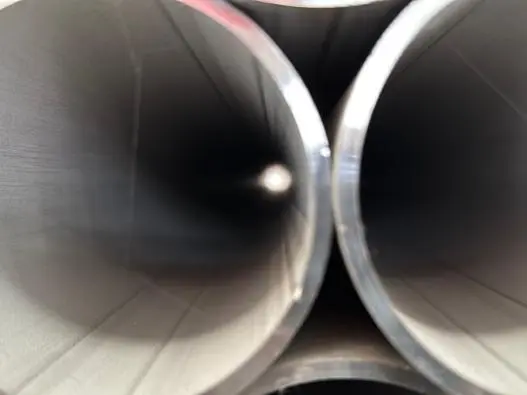
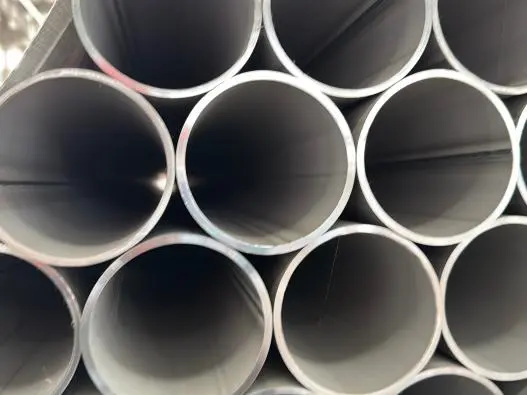
Understanding ASTM A312 TP347 and 347H Stainless Steel Pipes
ASTM A312 sets the standards for austenitic stainless steel pipes that are used in high-temperature and corrosive environments. These pipes can be seamless, welded, or heavily cold-worked. This standard makes sure that the chemical makeup, mechanical qualities, and accuracy of measurements are the same across all production processes.
Chemical Composition and Stabilization Mechanism
Base alloying elements in both TP347 and TP347H grades are 17–19% Chromium and 9–13% Nickel. The difference between these grades is the amount of Columbium and Tantalum, which must be at least ten times the amount of carbon. This stabilization stops chromium carbide from forming at the edges of grains when they are welded or exposed to high temperatures for a long time. The 347H version has a higher carbon range to improve its creep rupture strength above 500°C. This makes it essential for ultra-critical boiler applications and petrochemical cracking units where constant thermal cycling causes metallurgical stress.
Mechanical Properties and Heat Treatment
TP347H has a minimum tensile strength of 515 MPa and a minimum yield strength of 205 MPa. It can handle much higher stresses than 304L even at temperatures above 538°C. For manufacturing, strict solution annealing at least 1040°C is done first, then water quenching. This makes sure that the microstructure is uniform and the rust protection is at its best. These pipes come in a wide range of shapes and sizes, from NPS 1/8" to 48" and wall thicknesses from Schedule 5S to Schedule XXS. They are available in seamless, welded, and highly cold-worked forms, and meet the tolerances for dimensions set by ASTM A312/A312M-22.
Certification and Traceability Standards
Strict testing protocols are needed to build trust in procurement. Checking for intergranular corrosion according to ASTM A262 Practice E, hydraulic or non-destructive electric testing using eddy current or ultrasound methods, and figuring out the grain size according to ASTM E112 are all important parts of the process. Material Test Reports (MTR) that follow EN 10204 3.1 or 3.2 give full chemistry analysis and mechanical test data. Positive Material Identification checks the Nb+Ta ratios on-site. Manufacturers with ISO 9001, PED, and ISO 17025 laboratory accreditations make sure that their products meet the standards set by international organisations.
Performance Characteristics and Applications in High-Heat Environments
The value of stabilized stainless steel piping is based on how well it works in the real world. These materials solve operating problems that have a direct effect on safety, the life of assets, and the predictability of upkeep costs.
Corrosion Resistance and Thermal Endurance
Stabilizing Columbium makes it very resistant to polythionic acid stress corrosion cracking, which is a typical way for things to break during the shutdown and startup processes of a refinery. Continuous use at temperatures up to 870°C keeps the oxidation resistance higher than unstabilized grades. It also keeps the ductility and impact hardness at cold temperatures as low as -196°C. Because they can work at two different temperatures, these pipes are flexible enough to handle yearly changes in operations and process upsets that would weaken less durable materials.
Typical Industrial Applications
These pipes are used a lot in hydrocracker units and fluid catalytic cracking systems at petrochemical plants, and for ASTM A312 TP347 347H Stainless Steel Pipes, the stabilized grades are essential for resisting intergranular corrosion in high-pressure hydrogen environments above 500°C, with 347H providing the creep rupture strength needed for superheater and reheater tubes in ultra-critical thermal power boilers and for welded fabrications in chemical processing plants handling hot nitric acid and high-temperature organic chemical processes. They are constantly exposed to high-pressure hydrogen and temperatures above 500°C. Thermal power plants use 347H for superheater and reheater tubes in ultra-critical boilers because it has a high creep rupture strength that is needed for long-term use in extreme thermal cycling. Chemical processing plants that use hot nitric acid and high-temperature manufacturing processes to make fertilisers and organic chemicals depend on stabilized grades to keep welds from breaking down.
Case Study Evidence
In their reformer exit manifolds, a large industrial complex in the Midwest switched from standard 304H pipe to TP347H pipe. After five years of operation at 650°C and cyclic loading, ultrasonic inspection showed no intergranular attack or creep deformation. This confirmed a 30% increase in the expected component lifespan. In the same way, a power plant in the Southeast had no unexpected outages due to tube failures in their 347H superheater sections over eight years of tracking. This was in contrast to their previous 321-grade performance, which meant that the tubes had to be replaced every four to five years.
Comparing ASTM A312 TP347 with Other Stainless Steel Grades
When making decisions about what to buy, it helps to compare materials in a way that is fair and takes into account things like budget and operational needs.
TP347 vs. TP304 and TP304L
Although TP304 is cheaper to make and has good resistance to rust in general, it is not stabilized and can become sensitive during welding or service at temperatures between 427°C and 815°C. The carbon percentage in TP304L is lowered to lower the chance of sensitization, but the high-temperature strength is lost. Columbium stabilization makes TP347 completely immune to sensitization issues. This makes it the best choice for welded structures that will be used at high temperatures, even though it costs 15-20% more.
TP347 vs. TP316 and TP316L
TP316 types have 2 to 3 percent molybdenum added to them to make them more resistant to pitting and crevice corrosion in chloride conditions. Molybdenum, on the other hand, helps form the sigma phase when exposed to temperatures above 600°C for a long time. This makes the metal less tough and resistant to corrosion. This doesn't happen with TP347 because it has better resistance to oxidation and weldability in high-heat situations. This means it works better in dry, high-temperature oxidizing environments than in wet chloride service.
TP347 vs. TP321
TP347 and TP321 are both stabilized grades that are meant to keep people from becoming too sensitive. Titanium stabilization is used in TP321, which can cause titanium nitride to form during welding. This can make the joint less solid by causing holes. Columbium in TP347 stays more stable and doesn't give off gases as easily while welding. This makes the welds cleaner and stronger. Field welding output goes up because pre-heating and post-weld heat treatment aren't needed as much as they were with TP321.
TP347 vs. TP309 and TP310
The TP309 and TP310 types have more chromium and nickel, which makes them resistant to rusting and carburization at temperatures above 870°C. However, the higher metal content makes the material cost 40–60% more than TP347. For uses that stay below 870°C all the time, TP347 and TP347H offer enough oxidation protection at a much lower cost, making the lifetime cost-effectiveness optimal without lowering safety margins.
Procurement Guide for ASTM A312 TP347 and 347H Stainless Steel Pipes
To do global sourcing right, you need to know what affects prices, lead times, and the dependability of your suppliers. Procurement managers who are knowledgeable about both technology safety and business efficiency.
Pricing Factors and Cost Drivers
The price of pipes depends on their outside width, wall thickness, how they are made, and how much they are ordered, and for ASTM A312 TP347 347H Stainless Steel Pipes, seamless pipes cost 20–30% more than welded due to complex processing and lower material yield, but offer higher pressure capability and reduced longitudinal joint risk, while wall thickness follows ASME B36.19 schedules with larger schedules increasing material cost, and customization options such as cut-to-length, bevelled ends over 2 inches, and electropolished finishes add 5–15% to the base price, with TP347H currently priced 12–18% above TP304L based on nickel market fees. Because the process is more complicated and the material yields less, seamless pipes cost 20–30% more than welded pipes. However, they can handle higher pressures and have a lower chance of longitudinal join flaws. Wall thickness is based on ASME B36.19 schedules, and larger schedules make materials cost more. Options for customization, like cutting to a specific length, having ends that are bevelled above 2 inches, and electropolished finishes, raise the base price by 5 to 15 percent. Based on nickel metal fees, TP347H costs about 12 to 18% more than TP304L on the market right now.
Supplier Evaluation Criteria
Manufacturers you can trust have ISO 9001 quality management certification, follow the European directives for pressure equipment (PED), and have ISO 17025 accredited labs for testing their products in-house. There should be third-party inspection reports, Welding Procedure Specifications, Procedure Qualification Records, and Manufacturing Process Sheets in documentation packages. The certificates should be based on EN 10204 3.1 or 3.2. Reports from non-destructive tests, such as ultrasound or X-rays, confirm that the inside is sound. Suppliers with low minimum order quantities for single pipes show that they are flexible for prototype development and small-scale projects while still offering competitive prices for large orders.
Logistics and Delivery Considerations
Lead times range from seven days for regular sizes that are in stock to four to six weeks for special sizes that need mill production runs. Shipping goods by sea doesn't have to damage them if they are packed in wooden boxes with steel frames, square binding, and weave bags for protection. Getting goods to major ports like Tianjin, Shanghai, or Houston cuts down on the costs of shipping them within China. During the quotation process, make sure you understand the Incoterms (FOB, CIF, or DDP) so you know who is responsible for the freight, insurance, and customs clearance. There are options for faster shipping for projects that are on a critical path and need to be finished quickly.
Why Choose ASTM A312 TP347/347H Pipes for Your High Heat Projects?
It's not enough to just look at the material specs when choosing a piping partner. You also need to look at their production capabilities, quality control, and customer service. Youfa Stainless Steel Pipe Co., Ltd. has a lot of experience with high-temperature uses that need a lot of skill.
YOUFA was established in 2017 and has fifteen specialized production lines that can handle 50,000 tonnes of material each year. They work with clients in the new energy, chemicals, power generation, and advanced manufacturing sectors. Our building has ISO 9001, PED, and TÜV licenses, and we have an ISO 17025-accredited laboratory on-site that does chemistry analysis, mechanical testing, and non-destructive examination.
When you work with YOUFA to get ASTM A312 TP347 347H Stainless Steel Pipes, these are the main benefits:
- Complete Size Range Availability: We make pipes from NPS 1/8" to 48" (DN6 to DN1200) in schedules 5S through XXS, so we can meet the needs of a wide range of projects without having to buy from multiple suppliers. Both seamless and welded options give you choices based on the pressure class you need and your budget.
- Rigorous Quality Control: The ability to track raw materials starts with the choice of steel mill, and before production, each batch is tested to confirm its chemical makeup. Solution annealing and water cooling are both done at exact temperatures that are tracked by instruments that have been measured. Final inspection includes checking the dimensions, judging the finish on the surface, and putting the product under pressure. Each shipment comes with full paperwork packages.
- Flexible Procurement Terms: A single-pipe minimum order number allows for the development of prototypes, the repair of equipment, and small-scale projects without having to buy in bulk. Competitive price structures increase with volume, which rewards long-term relationships while still making the service easy to use for first trials.
- Responsive Technical Support: Our engineering team helps you choose the right materials, follow the best installation methods, and weld them together. On-site commissioning help is offered for critical applications that need to be supervised during start-up and have their performance checked.
These benefits directly lead to easier buying, faster project timelines, and greater confidence in the performance of materials under the harshest temperature and corrosive service conditions your operations face.
Conclusion
ASTM A312 TP347 347H Stainless Steel Pipes are the engineered answer for fields that need to be stable at high temperatures and have strong welds. Columbium stabilization stops the intergranular corrosion that shortens the service life of regular austenitic grades. The 347H variant's higher carbon content gives it the creep strength needed for very demanding thermal cycling applications. When you look at how well it works compared to TP304, TP316, TP321, and high-nickel grades, you can see that it has clear scientific and economic benefits in the 427°C to 870°C temperature range. To make procurement work well, you need to find a good balance between the requirements for the materials, the abilities of the suppliers, the quality documentation, and the efficiency of the logistics. YOUFA always meets these requirements through certified manufacturing processes and customer-focused service.
FAQ
What is the primary difference between TP347 and TP347H grades?
Differences are based on carbon content and the temperature at which the product is meant to be used. The carbon content of TP347 is between 0.04 and 0.08%, making it good for most high-temperature uses. TP347H calls for 0.04-0.10% carbon and solution annealing above 1040°C. This improves the strength against creep rupture for use above 500°C, where long-term load-bearing capacity under thermal stress is very important.
Can TP347 pipes be used in cryogenic applications?
Yes, these grades are still very tough and flexible at temperatures below zero, all the way down to -196°C, but their main design goal is to work well in high-heat environments. The austenitic structure stays stable and doesn't become brittle. This makes them good for handling liquefied gases and cold process piping where resistance to corrosion is important.
How do I verify pipe authenticity during inspection?
Check the Material Test Report for records of the solution heating temperature, the amount of carbon in the material, and the ratios of Columbium to Tantalum. Use portable XRF analysers for Positive Material Identification to confirm the elements' make-up. Ask for the results of the Intergranular Corrosion Test according to ASTM A262 Practice E, and use calibrated measuring tools to check that the dimensions are within the limits set by ASTM A312.
Is pre-heating required for welding 347H pipes?
Most of the time, no, because the stabilized composition gets rid of most of the need for pre-heating. However, parts with thick walls that are above Schedule 80 may benefit from a post-weld heat treatment or stabilization annealing to make them more resistant to rust. Talk to qualified welding engineers and follow the approved Welding Procedure Specifications that are made for your pipe schedule and joint configuration.
Why choose 347H over 321 stainless steel?
Columbium stabilization in 347H makes it more stable during welding than titanium stabilization in 321, which lowers the risk of gas release and porosity. Field welding makes work more efficient because the joints are cleaner and have better mechanical qualities. Columbium is less likely to form intermetallics when exposed to high temperatures for a long time. This means that it can be used for longer in environments with changing temperatures.
Partner with a Trusted ASTM A312 TP347 347H Stainless Steel Pipes Supplier
YOUFA can help you with your high-temperature piping projects by offering large-scale manufacturing, technical know-how, and service that is focused on the customer, and for ASTM A312 TP347 347H Stainless Steel Pipes, our ISO 9001 and PED certified production facilities manufacture pipes that meet the strictest ASTM A312 standards, complete with full documentation packages including MTR 3.1/3.2, ultrasonic testing records, and third-party inspection certificates, and we support everything from single replacement pipes to complete plant piping systems with flexible MOQs and express delivery to Tianjin Port within seven days. Our production sites are ISO 9001 and PED certified, and the pipes they make meet the strictest ASTM A312 standards. They also come with full paperwork packages that include MTR 3.1/3.2, ultrasonic testing records, and third-party inspection certificates. If you need a single replacement pipe or a whole plant piping system, we can help. Our minimum order amounts are variable, and we can deliver quickly to Tianjin Port in seven days. You can talk to our procurement experts at info@youfass.com about the specific needs of your application, ask for technical data sheets, or set up sample tests. We give your processes the quality, dependability, and quick help they need.
Online Message