
Jul 28, 2026
ASTM A312 TP310 310S 310H Stainless Steel Pipes Supplier
When sourcing stainless steel piping for critical industrial applications, procurement managers face an important question: how do you select the right grade that balances performance, cost, and long-term reliability? At YOUFASS, we understand that choosing between TP310, TP310S, and TP310H variants within the ASTM A312 standard isn't just about matching specifications—it's about ensuring your operations run smoothly under the most demanding conditions, and for ASTM A312 TP310 310S 310H Stainless Steel Pipes, these high-alloy austenitic grades serve industries from petrochemical refineries to power generation facilities where temperatures soar above 1000°C and corrosive environments threaten equipment integrity. Whether you're an engineer designing a new heat exchanger system or a distributor building inventory for diverse client needs, understanding the nuanced differences among these grades directly impacts project success. This guide walks you through the essential technical considerations, real-world applications, and procurement strategies that simplify sourcing decisions while optimizing your supply chain outcomes.
|
|
|
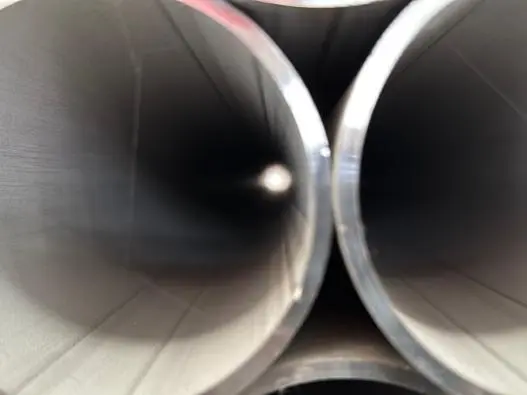
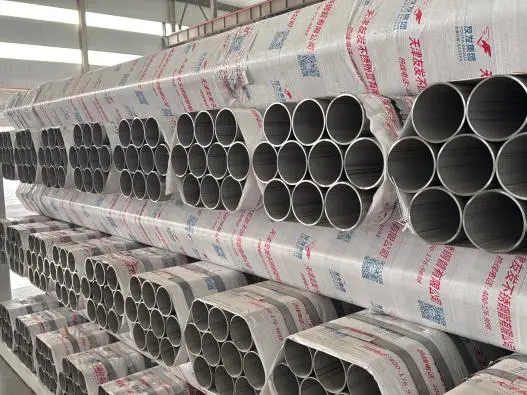
Understanding ASTM A312 TP310, TP310S, and TP310H Stainless Steel Pipes
The ASTM A312/A312M-22 standard tells us how to make ASTM A312 TP310 310S 310H Stainless Steel Pipes that are seamless, welded, and highly cold-worked and are meant to be used at high temperatures. These standards make sure that all manufacturing operations around the world use the same levels of accuracy in measurements, mechanical strength, and chemical composition. Our production at YOUFASS meets these strict standards, and our ISO 9001, PED, and TUV certifications back it up. Testing is done in our ISO 17025 qualified laboratory.
Chemical Composition and Metallurgical Framework
Between 24% and 26% chromium and 19% to 22% nickel make up the TP310 line, which is a very high-quality metal. This mix makes a stable, protective oxide layer that doesn't oxidise even at very high temperatures. TP310 is the base metal with normal amounts of carbon. TP310S, on the other hand, limits carbon to a maximum of 0.08% to prevent carbide precipitation during welding, which is very important for assembled parts. TP310H has controlled carbon levels of 0.04% to 0.10%, which is designed to improve creep-rupture strength for situations where pipes need to keep their shape under long-term high-temperature stress.
At YOUFASS, we make things by solution annealing them and then cooling them in water. This evens out the microstructure and makes sure they are very resistant to rust. This heat treatment gets rid of any chromium carbides that might form while welding or fabricating, which makes the material able to fight intergranular rust again.
Mechanical and Thermal Performance Characteristics
These types have a minimum tensile strength of 515 MPa and a minimum yield strength of 205 MPa, which is strong enough for systems that are under pressure. The TP310 line is different because it has better thermal stability, meaning it keeps its strength and resistance to rust at temperatures up to 1100°C while being used continuously. Because of its thermal expansion coefficient, the material can handle repeated heating without getting stress cracks. This makes it perfect for furnace parts and radiant tubes that are heated and cooled many times.
We have pipes in sizes from NPS 1/8" to 48" (Ø10.3 mm to Ø1219 mm), and the wall thickness ranges from Schedule 5S to XXS. With this wide range of sizes and the choice of seamless or welded construction, procurement teams can make sure that their projects get exactly what they need without having to worry about lead time or availability.
Corrosion Resistance and Surface Treatments
Because it has a lot of chromium, it is very resistant to oxidising acids, even pure nitric acid at room temperature. However, success in reducing conditions, especially those with sulphur compounds, needs to be carefully chosen. Because it has less carbon, TP310S often works better in these situations because it stops chromium-depleted zones from forming near grain borders.
In clean or high-purity settings, surface finish has a big effect on how well something works. YOUFASS offers a range of finish options, such as electropolished, pickled and annealed, and bright annealed surfaces. Pickled surfaces get rid of heat scale and dirt, and bright annealing makes a smooth, shiny finish that can be used in semiconductors or pharmaceuticals. Passivation treatments make the protective oxide layer even stronger, which increases its useful life in harsh chemical environments.
Key Comparisons: Choosing Between TP310, TP310S, and TP310H Pipes
Knowing when to specify each grade keeps expensive failures from happening and makes the best use of budgets for ASTM A312 TP310 310S 310H Stainless Steel Pipes. TP310S is the standard for most welded pieces when heat treatment after welding isn't possible. Because it doesn't have much carbon in it, welded joints don't become sensitised, which is when chromium carbides form around seams and make them less resistant to corrosion. Because of this, TP310S is the best material for complex pipe assemblies in chemical processing plants that do a lot of welding.
TP310H deals with a different problem: creep deformation. When pipes are under constant pressure above 600°C, materials slowly lose their shape over time. The higher carbon content that is controlled in TP310H makes the creep-rupture strength a lot better. This means that pipes can stay the same size in superheater tubes and coal gasifier parts. When temperatures are above 650°C and internal pressures are higher than 10 MPa, procurement experts should mention TP310H.
There are important differences between these types and more popular austenitic alloys like TP316 and TP304. The TP316 series works well in chloride-containing settings and the TP304 series is good for general-purpose uses, but neither of them is as good as the TP310 series when it comes to high-temperature oxidation protection. The higher amounts of nickel and chromium in TP310 types make up for their higher price when used at temperatures above 750°C, which is when TP316 starts to scale more quickly.
Cost factors include more than just the initial price of the materials. TP310S usually costs a little more than regular TP310 because it has better carbon control, and TP310H costs more because it performs better at high temperatures. The longer service life and less frequent upkeep, on the other hand, often result in a lower total cost of ownership. YOUFASS's procurement experts help clients figure out the total cost of ownership by comparing the initial investment to planned maintenance and replacement dates.
Applications and Use Cases Across Critical Industries
The special features of these austenitic alloys make ASTM A312 TP310 310S 310H Stainless Steel Pipes useful in many fields where failure of a material can have major effects on safety and operations. In petroleum plants, TP310 series pipes work in heated tubes inside fired heaters. They can handle direct flame contact and flue gas temperatures of more than 1000°C. Because the material is resistant to sulfur-containing burning products, it doesn't break down as quickly as lower-alloy steels do.
In power plants, TP310H is used in superheater and reheater tubes, where steam temperatures reach 540°C to 600°C and pressures are higher than 16 MPa. The grade's creep resistance keeps tubes from sliding and breaking after decades of use. One utility client said that after moving from standard austenitic grades to TP310H, tube replacement times went from 12 to 18 years. This showed that the switch was worth it financially.
Manufacturers of industrial furnaces use TP310S for muffle retorts and heat treatment fixtures that need to be heated and cooled many times. The low-carbon composition keeps the ability to weld complex assemblies together and keeps them from oxidising even after thousands of heating cycles. These lines are used in baking ovens and roasting tools in food processing plants. The non-reactive surface of the material keeps the product pure.
Aerospace uses parts from the TP310 line in thermal processing tools to treat turbine blades and structural elements with heat. Because the material is stable at high temperatures, it can be heated evenly without introducing any contamination. Also, facilities that make hydrogen use these pipes in electrolysis systems and reformer tubes. They can withstand both high-temperature oxidation and hydrogen embrittlement, which is something that not many alloys can do.
We learned about a new use for batteries while working with battery makers in the new energy field. TP310 doesn't rust in humid, high-temperature oxidising environments, which is good for fuel cell stack parts and bipolar plate production equipment. As this industry grows, material requirements favour ASTM A312 compliant piping more and more because it has been shown to work well in the past.
Procurement Guide: Sourcing with Confidence and Compliance
Verifying that the material you're using is real ASTM A312 TP310 310S 310H Stainless Steel Pipes compliant protects your projects from using low-quality copies that don't meet safety and performance standards. Material Test Certificates (MTC) that meet EN 10204 Type 3.1 or 3.2 standards are given by legitimate providers. These certificates show the chemical make-up, mechanical properties, and heat treatment settings for each production lot. If you ask, YOUFASS can give you all the paperwork you need, like PMI reports, dimensional inspection records, and third-party inspection certificates.
Traceability marking makes sure that each pipe can be connected to the records of how it was made. Look for permanent marks that say the grade, standard, name of the maker, and heat number. The markings on our pipes are either roll-stamped or laser-etched so that they can be read during manufacturing and installation. This helps with quality control until the job is finished.
Supplier Selection Criteria
To properly evaluate possible providers, you need to look at more than just their prices. Lead times are affected by how much can be manufactured. YOUFASS has 15 production lines that can make 50,000 tonnes of goods each year, which means that even large orders can be filled quickly. Our low minimum order quantity of just one pipe lets prototypes be made and small maintenance jobs be done without requiring large inventory commitments.
Logistics and delivery times are affected by where things are located. Even though our main factory is in China, we keep our export processes simple so that it only takes seven days to get goods to Tianjin Port. This efficiency, along with knowledge of foreign shipping paperwork, cuts down on the time it takes to buy something compared to sellers who don't have as much export infrastructure.
Technical support is what sets partners who help a project succeed apart from sellers who just sell pipe. Our engineering team helps choose the right materials, gives specs for the welding process (WPS/PQR), and gives advice on the best ways to put things. This discussion method works especially well when moving from materials that are already known to higher-performance types.
Pricing Structures and Volume Negotiations
The prices of the TP310 series are based on the costs of raw materials, the difficulty of making them, and changes in market demand. Due to the more difficult manufacturing process, seamless pipes usually cost more than welded pipes. However, seamless construction does not have longitudinal weld seams, which is important for high-pressure uses. Prices are also affected by the thickness of the walls and the size tolerances; tighter tolerances need more quality control steps.
When you make a volume commitment, you can get better prices without having to place a single shipment order. We work with procurement teams to set up blanket purchase agreements that get good prices and let deliveries happen in stages that match project milestones. This method strikes a balance between lowering costs and keeping track of working capital, which is especially helpful for building projects that last for more than one year.
Why YOUFASS Delivers Unmatched Value for Your Piping Projects?
Our dedication to making the best ASTM A312 TP310 310S 310H Stainless Steel Pipes starts with tight control over the raw materials we use. We buy steel from well-known mills with well-established quality systems. These mills use traceability protocols to keep track of material from the melting point to the finished pipe. This base makes sure that all production batches have the same chemical makeup and mechanical qualities.
Through seamless, welded, and highly cold-worked methods, our manufacturing flexibility lets us meet the needs of a wide range of projects. Each method has its own benefits: seamless construction is best for high-pressure uses, welded pipes are better for larger diameters and lower costs, and heavily cold-worked versions are best for needs that need more strength. We can make products in any size, from NPS 1/8" to 48", and our wall schedules can work with low-pressure drainage systems through extra-extra-strong pressure vessels.
Quality assurance goes beyond what is required by business standards. Some of the tests we do are hydrostatic pressure testing, nondestructive eddy current and ultrasonic examination, intergranular corrosion testing according to ASTM A262 Practice E, and measuring grain size according to ASTM E112. These checks make sure that every pipe meets certain performance standards before it is shipped. This lowers the number of rejected pipes and speeds up the project.
Support for customers is what sets strategic partners apart from transactional suppliers. During the specification phase, our team gives expert advice, helps with the paperwork needed for foreign shipments, and is available for questions after delivery during installation and testing. This all-inclusive service plan shows that we know that projects need more than just goods to be successful.
With package protection, pipes will arrive in the same condition they were in when they left our facility. For heavy-wall pipes, we use wooden boxes with an extra steel frame support, along with hexagonal binding and safe woven bags. This layering method keeps damage from happening during transport and makes handling easier on the job site.
Conclusion
Choosing the right grade in the TP310 series directly affects the success of projects using ASTM A312 TP310 310S 310H Stainless Steel Pipes, including how much they cost to maintain and how long they last. TP310S is for welded parts that need to resist sensitisation, TP310H is for high-temperature creep issues, and standard TP310 works well in a variety of moderate-severity situations. By knowing these differences and working with the right suppliers and checking the quality thoroughly, you can make sure that the choices you make about what to buy are in line with technical needs and your budget. YOUFASS offers stainless steel piping solutions that meet the high standards of global industrial operations by combining manufacturing skills, technical know-how, and service that is focused on the customer.
FAQ
What distinguishes TP310H from TP310S in practical applications?
Higher controlled carbon (0.04-0.10%) in TP310H is designed to improve creep-rupture strength above 600°C. This makes it essential for superheater tubes and parts that are constantly under high-temperature stress. TP310S limits the amount of carbon to 0.08% at most, putting weldability and resistance to sensitisation first in built-up parts where it's not possible to do a heat treatment after welding.
Can these pipes withstand sulfur-containing environments?
The TP310 series works great in oxidising environments, but cutting sulphur gases like H2S can speed up the attack. Because it forms a stable oxide layer, TP310S usually has better protection in these kinds of situations. When choosing materials, you should think about the gases present, the temperature, and the length of time they will be exposed in your work area.
What certifications verify authentic ASTM A312 compliance?
Material Test Certificates (EN 10204 Type 3.1/3.2) from legitimate suppliers show the parameters for chemical analysis, mechanical testing, and heat treatment. Positive Material Identification (PMI) reports, measurement inspection records, and third-party inspection certificates from reputable bodies are some other ways to check something. YOUFASS keeps its ISO 9001, PED, and TUV standards by checking its products in a lab that is ISO 17025 certified.
Partner with YOUFASS for Reliable Stainless Steel Piping Solutions
YOUFASS can help you with your next project by providing you with high-quality ASTM A312 TP310 310S 310H Stainless Steel Pipes. As a well-known supplier with over 200 skilled workers and a 50,000-ton annual capacity, we can provide the technical know-how and output flexibility that are needed for difficult industrial uses. Our wide range of products includes TP310, TP310S, and TP310H grades in sizes ranging from NPS 1/8" to 48", and they come in either seamless or welded constructions with a number of different surface finishes. You can email our technical sales team at info@youfass.com to talk about your unique needs, get full specs, or get quotes for your project. We'd love the chance to show how our focus on quality and quick response to customer needs create value for procurement workers looking for reliable pipe system parts.
Online Message