
Jul 29, 2026
ASTM A312 TP309 309S Pipes for Industrial Processing
When industrial operations demand materials that endure extreme thermal stress and aggressive chemical environments, ASTM A312 TP309 309S Stainless Steel Pipes stand out as engineered solutions built for reliability. These austenitic chromium-nickel pipes are designed specifically for high-temperature service and corrosive conditions, offering exceptional scaling resistance up to 1038°C in continuous operations. The TP309 variant delivers superior creep strength through higher carbon content, while TP309S—with its controlled low-carbon formulation—minimizes carbide precipitation during welding, effectively preventing intergranular corrosion in critical heat-affected zones.
|
|
|
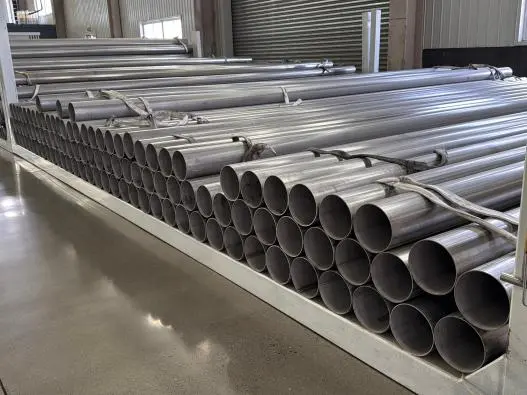
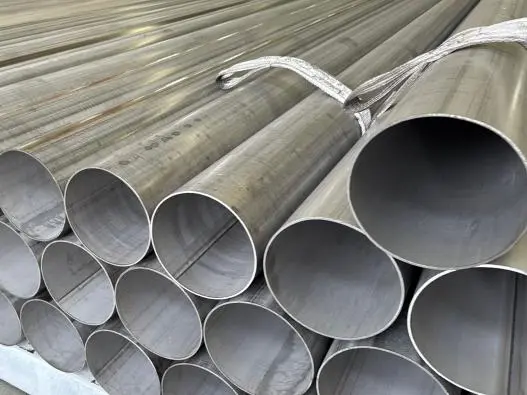
Understanding ASTM A312 TP309 & TP309S Stainless Steel Pipes
These pipe types work well because their steel is carefully controlled and strict manufacturing standards are followed.
Chemical Composition and Mechanical Properties
With chromium levels between 22% and 24% and nickel levels between 12% and 15%, the microstructure is strong and doesn't oxidise or break down when heated and cooled many times. This method of alloying gives a minimum yield strength of 205 MPa and a maximum tensile strength of 515 MPa. This makes the structure stable even when pressures and temperatures change. The main difference between TP309 and TP309S is the amount of carbon in them. TP309S keeps the carbon level below 0.08%, which has an effect on how well it welds and how well it works afterward. This managed chemistry lowers the chance of sensitisation, which is when chromium carbides form along the edges of grains when heated and make welding parts less resistant to rust.
Corrosion and Heat Resistance Capabilities
Pipes such as ASTM A312 TP309 309S Stainless Steel Pipes are exposed to sulfur-containing fumes, thermal shock, and oxidising atmospheres when they are used in industrial plants and power plants. Because these grades have a lot of chromium, they create a stable passive oxide layer that can heal itself even if it gets damaged. This keeps scaling from happening. When used continuously, these pipes keep their shape and mechanical features at temperatures close to 1038°C. When used intermittently, they can safely hit 980°C. This thermal resilience directly leads to fewer repair cycles and longer equipment lifespans, which solves the problems that come up with unexpected downtime and the high cost of replacing parts.
Pipe Dimensions and Standards Compliance
YOUFA makes these pipes in a wide range of sizes, from NPS 1/8" to 48" (DN6 to DN1200), and in wall thicknesses from Schedule 5S to Schedule XXS. They come in both seamless and welded configurations, and are made using solution-annealed and water-quenched heat treatment protocols to make sure the grain structure is uniform. The wall thickness tolerances are very close to what is required by ASTM A312. The positive tolerances are between +22.5 and +15.5%, and the negative tolerance is set at -12.5%. With this level of accuracy in controlling dimensions, installation results can be predicted, and the system will work with existing pipe systems in a wide range of industrial facilities.
Comparative Analysis: TP309 vs TP309S and Other Stainless Steel Grades
Pipes such as ASTM A312 TP309 309S Stainless Steel Pipes are exposed to sulfur-containing fumes, thermal shock, and oxidising atmospheres when they are used in demanding industrial environments. To choose the best grade, you need to know about the trade-offs between performance and application-specific needs that are different in different industrial processing environments.
TP309 Versus TP309S: Understanding the Differences
The main difference is the amount of carbon in the material and what that means for welded structures. Higher carbon levels in TP309 make it more resistant to creep when loaded at high temperatures for a long time. This makes it good for uses where bonding isn't necessary, and mechanical strength under heat is very important. On the other hand, TP309S solves the problems that come up with built-in systems that need a lot of welding. The lower carbon content stops carbide from forming when heated, so the rust resistance stays high in weld cracks and other heat-affected areas. Procurement teams should look at what they need to make: TP309S is better for projects with complicated pipe assemblies and a lot of welds, while TP309 is better for easier configurations that will be used in high creep conditions.
Comparison with TP304 and TP310 Grades
Putting these grades next to commonly specified alternatives makes their value proposition clearer, and for ASTM A312 TP309 309S Stainless Steel Pipes, TP304 is cheap and widely available but fails above 650°C and lacks sulphurous resistance, while TP310 offers superior heat resistance up to 1150°C but at significantly higher cost and reduced fabricability—TP309 and TP309S occupy the optimal middle ground, delivering far better high-temperature performance than TP304 while remaining more formable and cost-effective than TP310, with an exceptional cost-performance ratio for multi-unit installations like heat exchanger networks and boiler piping systems. Even though TP304 is cheap and easy to find, it doesn't work well above 650°C and isn't resistant enough to sulphurous conditions. While TP310 is better at withstanding heat up to 1150°C, it comes at a much higher cost and is less flexible. When it comes to practicality, TP309 and TP309S are in the middle. They work much better at high temperatures than TP304 while still being easier to shape and cheaper than TP310. They are perfect for uses between 800°C and 1000°C because they are balanced. At these temperatures, TP304 would fail too soon and TP310 is too specific. The cost-performance ratio is especially good for setups with a lot of units, like heat exchanger networks and boiler piping systems.
Applications and Industry Use Cases of ASTM A312 TP309 & TP309S Pipes
The fact that these materials are being used in demanding industry areas shows how useful they are in normal situations.
Petrochemical and Chemical Processing
Catalytic cracking units and flare systems in refineries work in conditions that break down less durable materials very quickly. The sulphur compounds in process streams and temperatures above 900°C make an environment where TP309S pipes can keep their structural integrity while preventing scaling and sulfidation to a minimum. A big refinery on the Gulf Coast saw a 40% drop in maintenance-related downtime after switching heat recovery pipes from TP304 to TP309S. Inspections were done every three years instead of every 18 months. Because the pipes are resistant to thermal fatigue, cracks don't start to form even when temperatures change quickly, which is common in batch processing.
Power Generation and Boiler Systems
Compliance with Industry Standards
Meeting regulatory standards is an important part of choosing materials for safety-critical uses that can't be skipped. YOUFA's production methods meet the standards set by the ASME Boiler and Pressure Vessel Code, the Pressure Equipment Directive (PED) for European markets, and the API specs that are important for oil systems. Every production run goes through strict testing procedures, such as hydrostatic pressure testing, non-destructive examination using eddy current or ultrasonic methods, and intergranular corrosion testing according to ASTM A262 Practice E. This documentation trail, which includes Material Test Reports (MTR) certified to EN 10204 3.1 and 3.2 standards, gives procurement teams the proof they need to get engineering approvals and regulatory inspections.
How to Identify and Verify Authentic ASTM A312 TP309 and TP309S Pipes?
There are big risks in global supply lines when fake materials and low-quality substitutes are used, so verification procedures are necessary to make sure quality.
Visual Identification Markers
Permanent identification markings, such as pipe grade, heat number, and standard designation, are used by legitimate manufacturers. YOUFA labels each pipe with laser etching or low-stress stamping that can be read while the pipe is being handled and installed. ASTM A312 TP309 309S Stainless Steel Pipes should be marked with the relevant standard designation, grade information such as "TP309S" or "TP309," the standard pipe size, and the schedule width. The materials used for packaging have matching stickers with information on how to track batches. A close look should reveal a consistent surface finish that matches the selected treatment. For example, pickled surfaces have a matte grey appearance, while bright-annealed finishes have a shiny sheen without stains or contamination.
Technical Testing and Inspection Methods
Portable X-ray fluorescence (XRF) analysers can quickly prove the presence of chromium and nickel by checking the chemical makeup using Positive Material Identification (PMI), and for ASTM A312 TP309 309S Stainless Steel Pipes, optical emission spectroscopy provides precise quantification of all alloying elements including trace elements like sulphur and phosphorus, while portable Rockwell or Vickers hardness testing confirms proper heat treatment with solution-annealed TP309S typically showing 160–190 HB, and calibrated dimensional measurement ensures wall thickness tolerances are met—critical for replacement installations where fit-up accuracy affects installation speed. An optical emission spectroscopy study in the lab gives more accurate amounts of all alloying elements, even important trace elements like sulphur and phosphorus. Portable Rockwell or Vickers tests can be used to prove that the heat treatment was done correctly. Solution-annealed TP309S usually has a Brinell hardness of between 160 and 190 HB. For dimensional verification, calibrated measuring tools should be used to make sure that the wall thickness is within the allowed ranges. This is especially important when replacing old pipes, since fit-up accuracy affects how quickly the new pipes are installed.
Evaluating Supplier Credentials
Supplier approval is the first step to reliable buying. Certified manufacturers follow ISO 9001 quality management systems and are audited by outside groups like TÜV or Bureau Veritas on a regular basis. YOUFA has both an ISO 9001-certified and an ISO 17025-certified laboratory, which means that they can do testing in-house that meets standards recognised around the world. Procurement managers should ask for proof of things like manufacturing process qualifications (PQR), welding procedure specifications (WPS), and references from similar projects that have been done before. Long-term ties with suppliers based on regular quality lower risk more than buying on the spot from sources you don't know.
Procurement Guide: Buying ASTM A312 TP309 & TP309S Pipes
To get the best overall project costs, strategic sourcing decisions weigh the technical requirements of the materials, the business terms, and the logistics of the supply chain.
Understanding Price Drivers and Cost Factors
Material costs depend on more than just the price of the base metal. Pipe diameter and wall thickness directly affect how much raw material is used and how hard it is to make. Pipes with bigger sizes and thicker walls cost more because they require more material and more work to make them. Specifications for the surface finish add value. For example, standard pickled finishes are cheaper than electropolished surfaces that can be used in pharmaceutical settings. Price is also affected by the level of certification; providing full documentation packages that include third-party inspection (TPI) reports and material traceability increases the cost of testing and administration. Nickel and chromium prices change a lot depending on how the markets are doing. Setting up framework agreements with fixed pricing helps budget predictability for projects that have more than one phase.
Minimum Order Quantities and Lead Times
When it comes to manufacturing speed, production runs with similar specs tend to work best. However, YOUFA can meet the needs of a project with a minimum order number of just one pipe. This means that prototype development and small-scale retrofit projects can be supported without putting too many buy obligations on the customer. Standard wait times for making ASTM A312 TP309 309S Stainless Steel Pipes are three to four weeks for popular sizes. For custom sizes or less common grades, it may take six to eight weeks. When projects need to be finished quickly, expedited delivery options can cut lead times for shipping to Tianjin Port down to seven days. Keeping a buffer inventory of key sizes lets you respond faster to unplanned repair needs, which is something you might want to talk about during business discussions.
Evaluating Procurement Channels
Direct connections with manufacturers are better for controlling quality, getting expert help, and seeing prices clearly. Buying from distributors is convenient because they have local inventory and smaller lot sizes, but they usually charge more for their services. Online platforms make it easier to compare prices and check specifications, but they might not offer the professional support that is needed for more complicated tasks. The way YOUFA works is a mix of direct sales for big projects and partnerships with distributors for service in smaller areas. When you work directly with manufacturing engineering teams, it's easier to meet project-specific needs like on-site execution support or custom testing methods.
Conclusion
For industrial processing applications where thermal stability and corrosion resistance have a direct impact on operational reliability, ASTM A312 TP309 309S Stainless Steel Pipes are a tried and true solution. The metallurgical design takes into account the difficulties of working at high temperatures, and the production accuracy makes sure that the dimensions are always the same and that the product meets all regulations. Successful procurement strategies are based on knowing the technical differences between grades, making sure the material is real, and building relationships with qualified suppliers. Selecting materials that are designed to work in harsh settings lowers the total cost of ownership by increasing service life and lowering the number of maintenance tasks that need to be done.
FAQ
What is the primary difference between TP309 and TP309S for high-temperature service?
Because it has more carbon, TP309 has better creep resistance at very high temperatures. This makes it good for uses where there isn't much welding, and there is a lot of mechanical loading. TP309S is best for soldered parts because its low carbon content stops sensitisation and the intergranular rust that follows in areas that have been heated.
Can these pipes be used in high-sulfur environments?
The high chromium content makes it very resistant to the oxidising sulphurous atmospheres that are common in processing petrochemicals. Nickel content may need to be taken into account more in settings with less sulphur, but these grades work well in most industrial sulfur-bearing uses.
How does the maximum scaling temperature affect service life?
Scaling resistance is maintained up to about 1038°C in continuous service and up to about 980°C in intermittent service. When you stay within these limits, you stop too much rust from forming, which damages the mechanical properties and physical stability of the system and makes it last longer.
Are these pipes magnetic in standard condition?
These austenitic grades are not magnetic when they have been solution-annealed. A little magnetism may form when cold working is used to make pipes, but this doesn't change how well they fight rust or work at high temperatures.
Partner with YOUFA for Reliable High-Performance Piping Solutions
YOUFA offers complete stainless steel pipe solutions that are backed by ISO 9001, PED, and TÜV certifications. This ensures that all of the pipes meet strict international standards. Our 15 production lines make 50,000 tonnes of steel every year, which helps with projects ranging from single-pipe prototypes to large-scale industrial installations. We offer full material tracking through MTR paperwork, ultrasonic testing results, and PQR certifications because our lab is ISO 17025 certified. As a reliable ASTM A312 TP309 309S Stainless Steel Pipes supplier, we offer flexible minimum order quantities that start at just one pipe, as well as fast delivery options that can get your pipes to Tianjin Port within seven days. Get in touch with our technical team at info@youfass.com to talk about your particular application needs and get expert advice on choosing materials, testing procedures, and improving the supply chain.
Online Message