
Jul 15, 2026
ASTM A312 GR TP316Ti316TI Stainless Steel Pipe Supplier
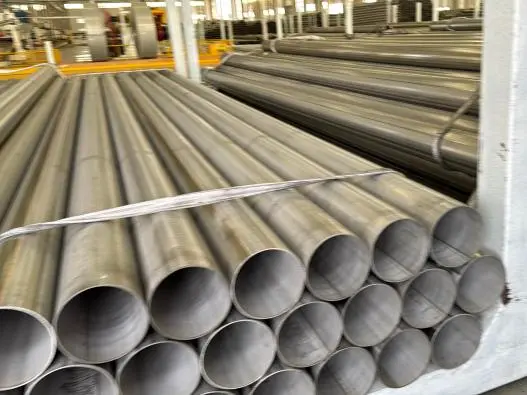
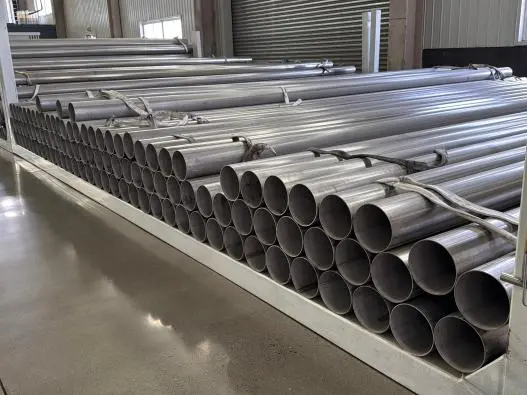
When sourcing titanium-stabilized austenitic stainless steel piping for mission-critical applications, procurement managers and engineers consistently turn to ASTM A312 GR TP316Ti Stainless Steel Pipes. This specialized grade represents an evolution from standard 316 alloy, incorporating titanium additions that prevent intergranular corrosion during elevated temperature service. Our manufacturing facility produces these pipes under strict adherence to ASTM A312/A312M-22 standards, delivering solutions for fuel cell systems, heat exchanger manifolds, exhaust assemblies, and chemical processing infrastructure throughout the United States industrial landscape.
|
|
|
Understanding ASTM A312 GR TP316Ti Stainless Steel Pipes
The TP316Ti designation refers to a titanium-stabilized modification of molybdenum-bearing austenitic stainless steel pipe. This material addresses a specific metallurgical challenge encountered in welded structures and high-temperature environments.
What Makes TP316Ti Different From Standard 316?
Traditional austenitic stainless steels can experience sensitization when exposed to temperatures between 425°C and 815°C. During this exposure, chromium carbides precipitate at grain boundaries, creating chromium-depleted zones vulnerable to intergranular attack. The TP316Ti grade solves this issue through titanium addition, calculated as five times the combined carbon and nitrogen content, ranging from a minimum stabilization ratio to a maximum of 0.70%. Titanium preferentially forms carbides with carbon, keeping chromium available within the steel matrix for corrosion protection. This metallurgical design makes welded TP316Ti assemblies resistant to the weld decay phenomenon that can compromise standard grades after thermal cycling.
Chemical Composition and Mechanical Strength
Temperature and Corrosion Resistance Profile
Operating temperature range extends from cryogenic conditions to approximately 870°C in oxidizing atmospheres. The material demonstrates superior resistance to pitting and crevice corrosion in chloride-containing environments compared to non-molybdenum grades. Pitting Resistance Equivalent Number calculations typically exceed 24, indicating suitability for marine environments, brackish water systems, and processes involving acidic condensates. Chemical processing plants handling phosphoric acid, acetic acid solutions, and fertilizer production streams rely on this grade, where both corrosion resistance and thermal stability are required simultaneously.
Comparing ASTM A312 TP316Ti With Other Stainless Steel Pipes
Material selection requires understanding performance trade-offs between different austenitic grades, such as ASTM A312 GR TP316Ti Stainless Steel Pipes, and more expensive duplex alternatives.
TP316Ti vs. TP316 and TP316L
While standard TP316 provides excellent general corrosion resistance, it remains vulnerable to sensitization during welding or prolonged elevated temperature exposure. The low-carbon variant TP316L reduces this risk by limiting carbon content below 0.03%, but sacrifices some mechanical strength in the process. TP316Ti offers a middle path, maintaining adequate strength while eliminating sensitization concerns through titanium stabilization rather than carbon reduction. This makes TP316Ti the preferred choice for applications involving repeated thermal cycling, such as exhaust systems, steam generators, and heat recovery equipment.
Comparison With TP304 and TP317 Grades
TP304 represents the most economical austenitic option but lacks the molybdenum content that enhances pitting resistance in chloride environments. ASTM A312 GR TP316Ti Stainless Steel Pipes are widely used as a stabilized austenitic grade designed to improve resistance to intergranular corrosion and maintain performance in elevated temperature service conditions. For budget-conscious projects in mild service conditions, TP304 suffices, but fuel cell systems, hydrogen production equipment, and seawater-cooled heat exchangers require the enhanced corrosion protection that molybdenum provides. TP317 offers higher molybdenum content (3.0–4.0%) than TP316Ti, delivering superior resistance in highly corrosive chemical processes. However, this performance improvement comes with increased material cost, making TP316Ti the optimal balance point for many industrial applications where extreme corrosivity is not the primary concern.
Cost-Performance Balance Versus Duplex Stainless Steels
Duplex stainless steels combine austenitic and ferritic microstructures, providing approximately twice the yield strength of TP316Ti along with exceptional chloride stress corrosion cracking resistance. These advantages make duplex grades attractive for subsea oil and gas infrastructure and desalination plants. However, duplex materials typically cost 30-50% more than titanium-stabilized austenitic grades and present greater fabrication challenges due to their higher strength and narrower processing windows. Procurement managers serving industries like automotive component manufacturing, battery module production, and medical device fabrication frequently find that TP316Ti delivers adequate performance at substantially lower total project cost.
Manufacturing Process and Quality Assurance of ASTM A312 GR TP316Ti Pipes
Production methodology directly impacts the mechanical integrity and service reliability of finished piping systems.
Seamless vs. Welded Pipe Manufacturing
Heat Treatment and Surface Finishing
Quality Control and Testing Protocols
Rigorous inspection procedures ensure compliance with ASTM A312 dimensional and performance requirements. Hydrostatic pressure testing verifies pressure integrity across the pipe body and any longitudinal welds. Ultrasonic and eddy current examinations detect internal flaws and surface imperfections that could compromise service life. Intergranular corrosion testing according to ASTM A262 Practice E confirms effective titanium stabilization. Positive Material Identification verifies the critical titanium-to-carbon ratio that defines proper stabilization. Mechanical testing, including flattening, flaring, and transverse tensile specimens, validates that material properties meet specification minimums. Documentation packages include Material Test Reports conforming to EN 10204 3.1 or 3.2 standards, providing full traceability from heat chemistry through final inspection results.
Procurement Guide: Sourcing ASTM A312 GR TP316Ti Stainless Steel Pipes
Successful global sourcing requires evaluating suppliers beyond unit pricing alone.
Supplier Evaluation Criteria
Quality management certifications, including ISO 9001, PED compliance for European pressure equipment, and independent laboratory accreditation, demonstrate systematic approaches to product consistency for ASTM A312 GR TP316Ti Stainless Steel Pipes. Factory audits reveal production capacity, equipment condition, and process controls that impact delivery reliability. Technical capability assessment should verify whether suppliers maintain in-house testing laboratories equipped for complete ASTM A312 verification or rely on third-party testing that may introduce delays. Document generation capacity matters significantly—suppliers capable of producing welding procedure specifications, procedure qualification records, and material processing specifications support complex project requirements that basic pipe mills cannot accommodate.
Pricing Dynamics and Cost Factors
Raw material nickel content drives base pricing for all austenitic stainless steels, with nickel price fluctuations on the London Metal Exchange creating monthly cost variations. Molybdenum surcharges apply to 316-series alloys, with titanium additions representing a modest incremental cost over standard 316 grades. Order volume significantly influences unit pricing—container-load quantities typically command 15-20% discounts versus small lot purchases. Manufacturing process affects cost structure, with seamless pipes commanding premiums of 25-40% over welded equivalents in comparable sizes. Lead times interact with pricing, as expedited production often carries surcharges while suppliers may offer discounts for orders accepting extended delivery windows.
Logistics and Customization Considerations
Why Choose Us as Your ASTM A312 GR TP316Ti Stainless Steel Pipe Supplier?
Youfa Stainless Steel Pipe Co., Ltd. brings comprehensive capabilities that address the complete spectrum of industrial piping requirements.
Manufacturing Capacity and Product Range
Our fifteen dedicated production lines generate 50,000 annual tons of stainless steel piping across the complete ASTM A312 grade range, including TP304/304L, TP316/316L, ASTM A312 GR TP316Ti Stainless Steel Pipes, TP317/317L, TP321/321H, TP347/347H, TP309S/309H, and TP310S/310H variants. This breadth allows us to serve diverse applications from building water systems to high-temperature petrochemical service within a single supply relationship. Diameter capabilities span NPS 1/8" through NPS 48" with wall schedules from Sch 5S through Sch XXS, supported by both seamless and welded manufacturing processes. Minimum order quantity of just one pipe accommodates prototype development, maintenance, replacements, and project overruns without forcing uneconomical purchase volumes.
Quality Assurance and Certification
Recognition among China's Top 500 enterprises reflects our commitment to operational excellence and customer satisfaction. ISO 9001 quality management systems govern all production activities, complemented by PED certification for pressure equipment destined for European markets, including ASTM A312 GR TP316Ti Stainless Steel Pipes. Our ISO 17025-accredited laboratory performs complete chemical analysis, mechanical testing, and corrosion evaluation using calibrated equipment traceable to international standards. TÜV certification provides independent verification of our quality systems. We generate comprehensive documentation packages including Material Test Certificates, Third-Party Inspection reports, Welding Procedure Specifications, Procedure Qualification Records, Material Processing Specifications, and Ultrasonic/Radiographic Testing reports that satisfy the most demanding project specifications.
Technical Support and Service Excellence
More than 200 dedicated employees bring expertise spanning metallurgy, welding engineering, quality assurance, and international logistics. Our technical team assists with material selection decisions, reviews customer specifications for manufacturability, and provides on-site commissioning support for complex installations. Project management capabilities coordinate multi-item orders involving various grades, sizes, and delivery schedules to ensure complete system availability when installation begins. Fastest delivery of seven days to Tianjin Port supports urgent maintenance requirements and project acceleration needs. We maintain responsive communication throughout order fulfillment, providing production updates, shipping documentation, and post-delivery support that builds lasting partnerships with distributors, EPC contractors, and end-users across new energy industries, automotive manufacturing, chemical processing, electronics fabrication, medical device production, and aerospace component manufacturing sectors.
Conclusion
FAQ
What applications benefit most from TP316Ti instead of standard TP316?
Applications involving welded construction exposed to elevated temperatures between 425°C and 815°C benefit most from titanium stabilization. This includes exhaust manifolds, heat recovery systems, flue gas desulfurization units, and thermal cycling equipment, where weld decay could compromise standard TP316. Chemical plants handling hot organic acids and fertilizer production facilities processing aggressive compounds at elevated temperatures also rely on TP316Ti's intergranular corrosion resistance.
How does titanium stabilization affect welding procedures?
Titanium stabilization eliminates the need for rapid cooling after welding, which low-carbon grades require. Standard welding procedures appropriate for 316-series stainless steels apply to TP316Ti without special precautions for sensitization prevention. Post-weld heat treatment at 870-900°C can be performed if required for stress relief without degrading corrosion resistance, unlike standard TP316, which would experience sensitization at these temperatures.
What documentation should I expect from a qualified supplier?
Qualified suppliers provide Material Test Reports certified to EN 10204 3.1 or 3.2 standards, showing actual chemistry and mechanical properties for each heat. Inspection reports documenting hydrostatic testing, dimensional verification, and surface quality accompany shipments. For critical applications, request intergranular corrosion test results per ASTM A262 Practice E, PMI verification of titanium content, and ultrasonic examination reports confirming internal soundness.
Partner With YOUFA for Your Titanium-Stabilized Stainless Steel Piping Needs
YOUFA Stainless Steel Pipe Co., Ltd. stands ready as your reliable ASTM A312 GR TP316Ti Stainless Steel Pipes supplier, combining robust manufacturing capacity with unwavering quality commitment. Our ISO 9001, PED, and TÜV certifications, paired with an ISO 17025 accredited laboratory, ensure every pipe meets exacting international standards. Whether your project involves fuel cell component manufacturing, heat exchanger fabrication, or chemical processing system installation, our technical team provides responsive support from specification review through delivery. Contact us at info@youfass.com to discuss your specific requirements and experience the YOUFA difference in stainless steel piping solutions.
Online Message