
Jul 13, 2026
ASTM A312 GR TP304L Stainless Steel Pipes chemical composition and mechanical properties
ASTM A312 GR TP304L stainless steel pipes are a low-carbon austenitic grade that is very good at resisting rust and being easy to weld in harsh industrial settings. The chemical makeup has 18.0 to 20.0% chromium, 8.0 to 12.0% nickel, and a maximum of 0.030% carbon. This makes it strong enough for a wide range of uses, from chemical processing to making medical devices. While TP304L works well in most corrosive conditions, ASTM A312 GR TP304L Stainless Steel Pipes are not better at withstanding chloride-rich environments because they do not contain molybdenum. This makes them less suitable for sea and tough chemical uses compared to molybdenum-containing grades such as 316L. When it comes to mechanics, TP304L pipes have a minimum tensile strength of 485 MPa and a yield strength of 170 MPa. This means they can work reliably under a wide range of practical stresses in fields like making fuel cells, semiconductors, and car parts.
|
|
|
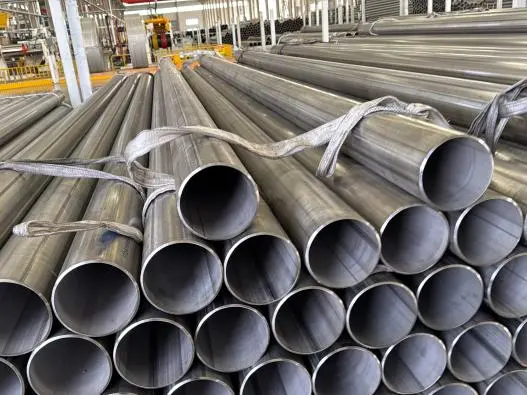
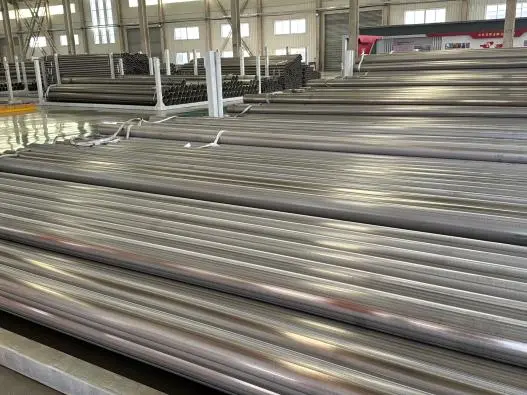
Understanding ASTM A312 GR TP304L Stainless Steel Pipes
TP304L pipes have an austenitic structure because they are made of a perfectly balanced metal system. Chromium makes a protective oxide layer, and nickel keeps the austenite phase stable at room temperature. This microstructure doesn't conduct magnetic fields and is very easy to shape, which lets PCB makers and precise coating companies make it into complicated shapes.
Chemical Composition Analysis
ASTM A312 GR TP304L Stainless Steel Pipes are engineered so that the elements that make up TP304L are carefully chosen so that intergranular rust doesn't happen when it's being welded. The inactive layer that guards against oxidizing acids and atmospheric rust is made up of chromium, which is between 18.0% and 20.0%. Nickel levels between 8.0% and 12.0% make the metal more flexible and keep its austenitic structure even at very low temperatures. This is very important for companies that make tools for hydrogen generation and work with systems that store liquid hydrogen. Up to 2.0% manganese makes the material better for working in hot conditions, and up to 0.75% silicon removes oxygen during melting. The most important thing is that the carbon content can't be more than 0.030 percent. This stops chromium carbide from forming at the edges of grains during the hot welding zone, which keeps the rust resistance high for fuel cell companies in electrochemical applications.
Mechanical Properties Overview
TP304L pipes made according to ASTM A312/A312M-22 have a minimum tensile strength of 485 MPa (70 ksi), which means they can withstand high pressures in companies that make electrolytic cells and industrial chemical processing. The yield strength level of 170 MPa (25 ksi) ensures that the material doesn't deform too much under practical loads and still has a minimum elongation of 40% in 2 inches, which means it is very flexible for cold forming. Hardness is usually no more than 201 HB, which makes grinding easier for companies that make medical equipment that needs to be accurate in terms of size. The qualities stay the same from -196°C to 425°C, which means they can be used in both cryogenic hydrogen storage and moderate-temperature chemical reactions that are used by companies that make power batteries.
Dimensional Specifications and Tolerances
YOUFA manufactures ASTM A312 GR TP304L Stainless Steel Pipes in a wide range of sizes, from NPS 1/8" to NPS 48" (DN6 to DN1200), with outside widths that run from 10.3 mm to 1219 mm. There are different wall thickness choices for Schedule 5S to Schedule XXS, which means that they can handle pressure levels ranging from low-flow instrumentation lines in IC packing companies to high-pressure process streams in copper electrolysis makers. As per ASTM A312 standards, the positive side of the wall thickness tolerances runs from +22.5% to +15.5%, and the negative side ranges from -12.5% to -12.5%. This makes sure that the flow features and structural performance are always the same. Pipes with diameters up to 2 inches have straight ends, while pipes with sizes greater than 2 inches have beveled ends to make welding easier in field setups for Tier 1 car suppliers building battery module assembly lines.
ASTM A312 GR TP304L Pipe Quality and Testing Standards
As part of ASTM A312/A312M-22, quality assurance methods set strict standards that keep end users safe from major problems in important uses. These standards cover everything, from checking the melt chemistry to checking the final dimensions. They make the whole supply chain clear for Tier 2 car suppliers and advanced material processing businesses.
Chemical Composition Verification Methods
Optical emission spectrometry (OES) or X-ray fluorescence (XRF) tests are done on each heat of a TP304L pipe to make sure that its chemical makeup is within certain ranges. The tests are done on production samples by YOUFA's ISO 17025-accredited lab, which issues Material Test Certificates (MTC 3.1 per EN 10204) that show the real chemistry compared to ASTM limits. The carbon content is closely studied using flame analysis to keep it below the important 0.030% level needed to avoid sensitization during welding at companies that make battery modules and electrolysis systems. Trace elements like sulfur (≤0.030%) and phosphorus (≤0.045%) are checked to make sure they don't cause hot cracks when welding. Checking the nitrogen content ensures there is enough resistance to pitting for use in copper electrolysis makers.
Mechanical Property Testing Protocols
Tensile testing is done according to ASTM A370 standards. Longitudinal samples are taken from ASTM A312 GR TP304L Stainless Steel Pipes and tested to determine yield strength, ultimate tensile strength, and elongation values. YOUFA performs these tests at the intervals required by ASTM A312, usually one test per heat and size. The results are recorded in approved mill test records (MTR 3.2). Using the Brockwell B or Brinell methods for hardness testing quickly verifies quality and correlates it with tensile properties, which is useful for manufacturers of surgical tools that need to evaluate new components. Flattening tests assess flexibility and the absence of defects. This is especially important for thin-wall pipes used in precision applications in IC packaging companies. In order to pass the bend test, specimens must withstand 180-degree bends around specified mandrel sizes without breaking. This is a critical check for manufacturers producing fuel cell bipolar plates with complex geometries.
Non-Destructive Testing Requirements
Ultrasonic testing (UT) checks the inside of ASTM A312 GR TP304L Stainless Steel Pipes in both seamless and welded pipe bodies to find any internal flaws like laminations, inclusions, or incomplete weld penetration that might affect the pressure stability. YOUFA uses UT according to ASTM E213 for pipes that aren't joined together, and ASTM E213 for pipes that are. The acceptance standards are set out in ASTM A999. High-sensitivity surface and near-surface defect identification is possible with eddy current testing. This is especially useful for thin-wall uses at companies that make electrical parts, where the quality of the surface affects the coating processes that follow. Radiographic testing (RT) looks at the seams of welded pipes and makes lasting film records of the quality of the welds so that they can be tracked in safety-critical uses at companies that make aerospace parts. Hydrostatic testing checks the stability of the pressure, putting each pipe through test pressures estimated according to ASTM A312 formulas. This makes sure that the pipes don't leak when they're in use at boiler makers and petrochemical processing plants.
Manufacturing Process of ASTM A312 GR TP304L Stainless Steel Pipes
The way TP304L pipes are made has a big impact on their microstructural properties, their accuracy in measurements, and how well they work. By understanding these differences in manufacturing, sourcing experts at companies that make electrochemical equipment and precision coatings can better evaluate suppliers and find the best material qualities for each application.
Seamless vs. Welded Production Methods
Seamless pipes are made from solid round billets that are pierced and stretched by rotating tools. This makes a smooth structure without any longitudinal weld lines. This way of making things gives better pressure ratings and even corrosion protection around the outside. This is why seamless pipes are the best choice for fuel cell companies to store high-pressure hydrogen and for NEV makers to use for important safety reasons. For tough pressure tank uses, YOUFA's seamless production lines can handle sizes from NPS 1/8" to NPS 24", and wall thicknesses of up to Schedule XXS. Welded pipes start out as a flat strip or coil that is shaped into a tube shape and joined using TIG, plasma arc, or laser welding. These methods are cheaper and let you get pipes with diameters up to NPS 48". Heavily cold-worked (HCW) welded pipes go through extra cold reduction after welding to get higher strength levels and better dimensional tolerances, meeting the exacting needs of companies that make semiconductor fabrication equipment and precision plating suppliers.
Heat Treatment and Annealing Procedures
Solution annealing constitutes a mandatory thermal treatment for TP304L pipes, involving heating to temperatures between 1040°C and 1120°C, followed by rapid water quenching or air cooling. This process accomplishes multiple objectives critical to performance. Carbides and other precipitates formed during solidification or prior working dissolve back into the austenite matrix, preventing localized chromium depletion that could trigger intergranular corrosion in welded assemblies at electroplating plants. Residual stresses from forming and welding operations are relieved, improving dimensional stability during subsequent fabrication at motor component manufacturers. Grain size homogenization occurs, optimizing the balance between strength and ductility required by cold forming operations at precision medical equipment producers. YOUFA maintains precise temperature control and quenching rates in our solution annealing furnaces, with continuous monitoring systems ensuring compliance with ASTM A312 heat treatment specifications across every production batch.
Quality Control Throughout Production
Process control begins at melt shops where YOUFA sources material exclusively from certified steel mills employing AOD (Argon Oxygen Decarburization) or VOD (Vacuum Oxygen Decarburization) refining to achieve the stringent chemistry control demanded by TP304L specifications for ASTM A312 GR TP304L Stainless Steel Pipes. In-process dimensional inspection occurs at multiple manufacturing stages using automated measurement systems that verify outside diameter, wall thickness, and ovality against ASTM tolerances, preventing out-of-specification material from advancing to subsequent operations. Surface quality receives continuous monitoring through visual examination and automated optical systems that detect surface irregularities potentially affecting corrosion performance or subsequent polishing operations at bright annealing suppliers. Final inspection encompasses dimensional verification, surface examination, marking verification, and certification document preparation, with full traceability maintained through our ISO 9001 certified quality management system that links finished pipes to original melt heats—essential traceability for safety-critical applications at aerospace high-temperature coating suppliers and medical device manufacturers.
Selecting the Right Stainless Steel Pipe for Your Application
A structured approach to material selection should include a thorough analysis of service conditions, performance requirements, and economic factors in order to get the best results in terms of asset reliability and lifecycle costs. This helps procurement managers at chemical processing companies and advanced manufacturing facilities balance technical performance with budgetary constraints.
Evaluating Environmental and Chemical Exposures
Mechanical Stress and Pressure Requirements
Operating pressure sets the minimum wall thickness needed according to ASME B31.3 or an equivalent piping code. ASME Section II Part D lists the allowable stress values for TP304L. When figuring out internal pressure, you have to take into account corrosion allowances, temperature derating, and weld joint efficiency factors, especially for welded pipe installations at petrochemical plants. External loads like weight, thermal expansion forces, and vibration affect support spacing and pipe schedule selection, which requires mechanical analysis for complex piping systems at power plants and offshore platforms. Fatigue conditions from changing pressure or temperature require an analysis of alternating stress intensities and accumulated fatigue usage. These are important things to think about for pulsating flow applications at hydrogen compressor stations and cyclic thermal loads in fuel cell stack coolant systems.
Supplier Evaluation and Partnership Criteria
Certification depth and laboratory accreditation provide confidence in material traceability and test result validity. YOUFA maintains ISO 9001 quality management certification, PED (Pressure Equipment Directive) compliance for European markets, TÜV product certification, and ISO 17025 laboratory accreditation, ensuring our test reports meet international recognition standards required by aerospace component manufacturers and multinational engineering firms. Manufacturing capacity and lead time responsiveness affect project scheduling, with our 15 production lines and 50,000-ton annual capacity supporting both large-volume commodity orders and rapid delivery of specialized sizes within 7 days to Tianjin Port. Technical support capabilities, including material selection assistance, welding procedure recommendations (WPS/PQR documentation), and on-site commissioning support, add value beyond basic product supply, particularly for complex installations at fuel cell manufacturing facilities and precision coating lines. Minimum order flexibility accommodates diverse customer needs, with YOUFA accepting orders starting at just 1 pipe to support prototype development at research institutions and specialty equipment builders.
Conclusion
The ASTM A312 GR TP304L stainless steel pipes have a low-carbon austenitic composition that makes them resistant to corrosion and good at mechanical performance in a wide range of industrial settings. Knowing about the chemical and mechanical properties listed here helps you choose the right material, and knowing about manufacturing processes and quality standards helps you judge a supplier's work. A clear understanding of TP304L’s corrosion resistance limits, particularly in chloride-containing environments, allows for more accurate material selection in chemical processing, food and beverage systems, pharmaceutical equipment, and general industrial piping applications, ensuring improved reliability, safety, and lifecycle cost efficiency.
FAQ
Why does low carbon content improve weldability in TP304L pipes?
When carbon levels go above 0.030%, chromium carbide doesn't form at grain boundaries during the welding process. When carbon levels go above this level, chromium combines with carbon in the heat-affected zone, making chromium-depleted areas that are vulnerable to intergranular corrosion. This is called sensitization, and it breaks down the passive film integrity that protects stainless steel from corrosive attack. Low-carbon TP304L keeps chromium available for passive layer reformation even after welding, so most applications don't need to be heat-treated afterward. This is a big plus for large fabrications at electrochemical equipment manufacturers and field installations at chemical processing plants.
Can TP304L pipes handle high-temperature chemical environments?
It is reliable in chemical service up to about 425°C in non-oxidizing atmospheres, but the maximum temperature depends on the specific chemical. Oxidizing acids, like nitric acid, can be used at a wide range of temperatures, but reducing acids have lower temperature limits based on concentration. Chloride-containing solutions need careful temperature control, as chloride stress corrosion cracking becomes more likely above 60°C. Prolonged exposure above 425°C risks carbide precipitation, which could weaken corrosion resistance. Applications that need to keep working above 425°C should look at stabilized grades, like TP321 or TP347, which resist sensitization through titanium or niobium additions.
Partner with YOUFA for Your Stainless Steel Piping Solutions
YOUFA stands ready to support your next project with comprehensive ASTM A312 GR TP304L and TP306L stainless steel pipes backed by certified quality and responsive service. As a Top 500 Chinese enterprise with 15 production lines and 50,000-ton annual capacity, we deliver seamless and welded pipes from NPS 1/8" through NPS 48" with full ASTM A312/A312M-22 compliance. Our ISO 17025-accredited laboratory ensures accurate chemistry verification and mechanical testing, while ISO 9001, PED, and TÜV certifications demonstrate our commitment to international quality standards. We provide complete documentation, including MTC 3.1/3.2, WPS/PQR, and UT/RT reports to support your quality assurance requirements. With minimum orders starting at just 1 pipe and delivery within 7 days to Tianjin Port, YOUFA offers the flexibility and responsiveness that procurement managers value. Contact our team at info@youfass.com today to discuss your requirements for ASTM A312 GR TP304L Stainless Steel Pipes supplier partnerships, request technical specifications, or obtain a competitive quotation aligned with your project timeline and budget parameters.
Online Message