
Nov 17, 2026
ASTM A249 Welded Stainless Steel Tubes for Industrial Heat Exchangers
ASTM A249 Welded Stainless Steel Tubes is the name of these austenitic tubes. They are used in heat exchangers, condensers, boilers, and superheaters. They are made to handle rough conditions and high temperatures where heat flows through the tube wall. The standard talks about how to treat and test common grades like TP304L and TP316L. It also covers a lot of different sizes. They are picked by engineers because of this. The standard only talks about the tubes' materials; it doesn't talk about the exchanger as a whole. To make sure they meet the ASME code and your project's needs, you should still check the grade, wall thickness, finish, testing, supplier qualification, and the most recent edition.
There will be YOUFA data in the places where I talk about grades, sizes, tests, standards, and how to buy below.
|
|
|
ASTM A249 Specifications, Grades, and Sizes
What the Standard Covers
As long as they meet ASTM A249/A249M, heat-resistant austenitic steel tubes can be used in a boiler, superheater, heat exchanger, or condenser. These tubes are often found in shell-and-tube heat exchangers, condensers, process heaters, and equipment that makes electricity. This document tells you exactly what chemicals must be used, how they must be heated, what size tolerances must be used, and how they must be tested. It's only a requirement, so it doesn't change the pressure code, the design of the exchanger, or the project specifics. Before you place your order, make sure you read the most recent edition, the rules, and your operating file. Things like the chemistry of the fluid, the pressure, the temperature, the vibrations, and the chance of corrosion are all part of this. Most of the time, teams working on new energy equipment, chemical processing, and metalworking look at these first. This is because it is safest to use the right tube for a process fluid that is acidic.
Grade Selection: 304L, 316L, and Beyond
There are different grades that determine how long it lasts, how well it welds, and how much it costs. The TP304 and TP304L can work with a lot of different kinds of water, steam, and mild process fluids. Both TP316 and TP316L have about 2 to 3 percent molybdenum in them. So, they are less likely to pit in fluids that have chloride in them. Most grades don't stay hard after welding, but L grades do better because they only let 0.035% carbon in. TP321 and TP321H are more stable when they are hot because titanium is added to them. Because TP317 has more molybdenum than 316, it can handle chloride better. Because it has more chromium and nickel, TP310 can handle heat better. Take a look at the chemistry of the fluid first. This includes how much chloride is in it, the temperature, the cleaning chemicals, and how much it will cost over its whole life. Next, you should get a materials engineer to look at the harsh service.
YOUFA Tube Sizes and Delivery Conditions
These are the main things that set the ASTM A249 Welded Stainless Steel Tubes that YOUFA sells apart.
| Item | YOUFA specification |
|---|---|
| Grades | TP304, TP304L, TP316, TP316L, S31254, TP321, TP321H, TP317, TP310 |
| Standard | ASTM A249 |
| Process | Welded |
| Outside diameter | 1/8"–12" (3.2–304.8 mm) |
| Wall thickness | 0.015"–0.320" (0.4–8.1 mm) |
| Length | Random, fixed, or U-bent |
| Delivery condition | Solution annealed; bright annealing |
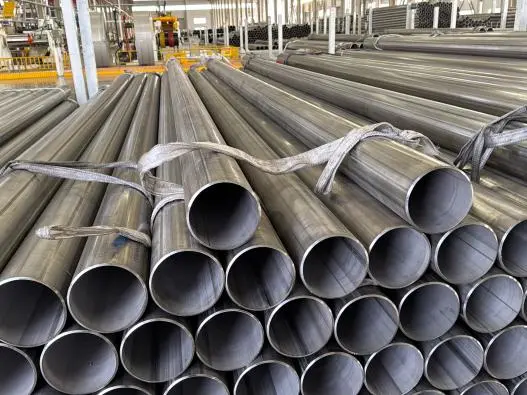
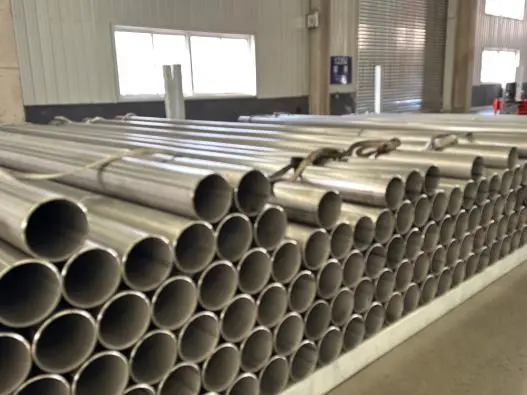
| Packing | Wooden box (optional steel frame), hexagonal binding, woven bag |
There are a lot of different kinds of coils and tubes in these ranges. Our engineers will look over your drawing and let you know if it's possible.
Dimensions, Finish, Welding, and Heat Treatment for A249 Tubes
Outside Diameter, Wall Thickness, and Tolerances
To get a correct quote, you need to know the outside diameter, wall thickness, length, straightness, ovality, end condition, and acceptance ranges. What makes a wall thick is how much pressure it can hold, how heavy it is, how it corrodes, and how it works when it is being built. Things are less likely to rust when the walls are thin, but they also help move heat around better. When the gaps are small, tubes fit into holes and baffles in tube sheets. Not all the time, just giving heat exchanger tubing a schedule number is enough. You should also give the exact OD and wall thickness, like 19.05 mm x 1.65 mm. YOUFA has these in random length, fixed length, or U-bent shape, with OD sizes ranging from 1/8" to 12" (3.2–304.8 mm) and wall thicknesses ranging from 0.015" to 0.320" (0.4–8.1 mm).
Surface Finish Options
What the finish does to change how corrosion, fouling, and cleaning work. An awful lot of people pick surfaces that have been mill-finished, bright annealed, pickled and passivated, mechanically polished, and electropolished. YOUFA sends tubes that have been either bright-annealed or solution-annealed. Protective air is used during bright annealing to keep the surface clean, smooth, and free of oxide scale. Things that are smoother don't get dirty as quickly and are easier to clean. When you pickle, the oxide and heat tint come off, and a layer of chromium oxide is added to protect the food. In the bathroom, a polished or electropolished surface works well, but ASTM A270 is more often used when the finish is the most important thing. Make sure the finish will work with the cleaner and process you want to use before you place your order.
Welding and Solution Annealing
A strip of stainless steel should be folded in half, rolled up into a tube, and welded all the way along its length. They clean up the weld area, heat-treat the tube, cut it, straighten it, make it the right size, and check it. How deep the weld goes and how long the tube lasts depend on the type of welding we use, the quality of the strip, how well we prepare the edges, and how well we can shape the tubes. The heated area stays safe because the work area is kept clean and oxidation is kept in check. The tube is heated in this process to break up harmful carbides. It then cools down very quickly. It does a lot of things, like making the material easier to stretch and bend and restoring its resistance to corrosion. For controlled projects, I believe you should ask for records of the heat treatment, the weld inspection results, and the ability to keep track of each batch.
Testing, Documentation, and Application Fit
Mechanical Properties and Required Tests
What the limits are for mechanics depends on the material grade. For ASTM A249 Welded Stainless Steel Tubes, TP304 needs to have a tensile strength of at least 75 ksi (515 MPa) and a yield strength of at least 30 ksi (205 MPa), as specified in ASTM A249.1. For TP304L, the minimum tensile strength is 70 ksi (485 MPa), while TP316L requires a minimum yield strength of 25 ksi (170 MPa). If you handle the tubes, expand them, U-bend them, or subject them to vibration, these mechanical properties are particularly important. The standard also specifies flattening, flange, and reverse flattening tests. In addition, every tube must pass either a hydrostatic test or a nondestructive electric test, such as eddy current testing, without causing damage to the tube. Hydrostatic testing can identify through-wall defects and leaks. Depending on project requirements, buyers can also request ultrasonic testing, positive material identification (PMI), or intergranular corrosion testing.
Documents Buyers Should Request
The files you bought have the things you bought on them. Some of these tests are WPS/PQR, MPS, UT/RT, MTC/MTR (3.1/3.2), hydrostatic, eddy current, and mechanical. YOUFA can tell you about all of them. We also help with third-party inspection (TPI). We have ISO 9001, PED, and TÜV certifications, and so does our lab. We only buy steel from places we know, and we keep records that help us find those places. Each paper should have a heat number that can be used to keep track of it, and that number should match the markings on the tube. That part of the inspection that takes less time is when the mill certificate, heat-treatment record, dimension report, and conformity certificate are all the same. You should all agree on how the code should be formatted and how it will be checked before it is made. It costs money and time to make changes after the items have been shipped.
Heat Exchangers, Boilers, and Condensers
Each service puts different amounts of stress on ASTM A249 tubing. There is no difference in the heat exchangers' tube side performance when it comes to fouling, cleaning, corrosion, or pressure loss. When you work with superheaters and boilers, you need to pay more attention to things like pressure, temperature, oxidation, and following the rules. Acids in the condensate, chlorides, vibrations, and the chance of a leak are just some of the things that can damage condensers. What happens is based on how thick and how big the wall is. Less pressure is felt when the diameter is smaller, but flow and heat transfer speed up. Something with a thicker wall is stronger and less likely to rust, but it also takes a little longer for heat to move through it. When you send your question, write down the name of the fluid, its temperature, and its speed. YOUFA tubes are used to move heat in harsh environments like heat exchangers and boilers.
ASTM A249 Compared with Other Tube Standards
A249, A269, and A270
In heat exchangers, boilers, superheaters, and condensers, welded austenitic tubes are used. This is what ASTM A249 is about. That's what ASTM A269 is for: general-use austenitic tubing that doesn't need to be welded.... The ASTM A270 SANITABILE TUBE keeps the inside clean and the outside smooth. It's not the same for all three standards. There are different rules for how to test them, what sizes to use, and how the surface should look. In other words, a tube that is sold under one standard might not meet another standard on its own. Let the manufacturer know that it is possible if you need two different types of certification. Write them both on the form. A270 finish rules should be checked on any surface that will come in contact with the item. A249 is more about moving heat than keeping things clean.
Welded Versus Non-Welded Tubing
No-weld tubes are used in boilers, superheaters, and heat exchangers, and ASTM A213 and A249 both cover them. Because of this, people who buy them often put them next to each other. The walls are all the same thickness because they are made of flat strips. When the tubes are long and the walls are thin, they cost less and take less time to make most of the time. Non-welded tubes are made from solid billets and don't have a longitudinal weld if the owner wants one. It's not easy to choose between them. Most of the time, when design codes talk about welded tubing, they mean how well the weld was done. A249 must follow both the code and the end user's rules, as set by the project engineer. Make sure everything is okay before you look at prices.
U-Bends, Custom Sizes, and Tube-Sheet Fit
Many heat exchangers need U-tubes, tubes cut to specific lengths, or tubes in custom shapes. YOUFA supplies ASTM A249 Welded Stainless Steel Tubes in standard lengths, custom lengths, and U-bend configurations. For U-bends, you need to specify the bend shape, the lengths of the straight legs, and the inspection requirements after bending. This is important because bending can create stress and cause thinning or cracking along the outer wall. Let us know if you need any additional end preparation for the tubes. The ends can be finished according to your project specifications. Manufacturers should determine whether custom-made strips are available, the required diameter-to-wall thickness ratio, the allowable bending radius, whether special tooling is needed, and the required inspection frequency. Reviewing your drawings early helps save time, allowing our engineers to assess the feasibility of your design. Our minimum order quantity is one tube, so you can test a sample bend before proceeding with the full production order.
Buying ASTM A249 Tubes and Choosing a Manufacturer
How to Write a Complete Inquiry
It's better to ask one full question than to send many emails. There should be details about the type, grade, OD, wall thickness, length or U-bend, finish, heat treatment, testing, applicable codes, packaging, marking, destination, and Incoterms. Then talk about how prices and amounts are calculated. YOUFA will send you a test pipe before the project goes live as long as you order at least one pipe. To find the best deal, you might not just look at the unit price. This is because the price per kilogram changes based on size, shape, freight, and certification needs. Think about how detailed the plans are, how well they stick to the schedule, and how risky the project is as a whole. It takes us 7 days to ship to Tianjin Port at our fastest. How long it takes to get your order will depend on how many you need and how big the order is.
How to Evaluate a Manufacturer
Providers should show you how they do things. Find out if they have made things before, if they have quality certifications, if they can keep track of materials, if they know how to test things, if they have exported before, and if they have references from projects that are similar to yours. You could ask them about incoming inspection, test monitoring for welds, eddy-current or ultrasonic testing, hydrostatic testing, nonconformance, dimensional control, and third-party inspection. That was in 2017. Now that YOUFA has 15 lines, they make 50,000 tons of goods every year. There are more than 200 people working for the Top 500 company in China. We can meet all of your needs for stainless steel pipes because we are a one-stop shop. One team can handle tubes, paperwork, and export packing, which may include boxes made of wood with steel frames.
Purchasing Checklist
Before you send an order or question, look over this list.
- Technical: Confirm the ASTM A249 edition, grade (for example, TP316L) and composition, outside diameter, wall thickness, length, tolerances, heat treatment, finish, testing, end preparation, design pressure, and operating temperature. Write them on the drawing or datasheet, not only in an email, so the factory, inspector, and buyer all read the same numbers.
- Commercial: Confirm quantity, MOQ, price basis, currency, payment terms, Incoterms, lead time, shipping method, packaging, quotation validity, and claims procedure. State whether the price covers certification and third-party inspection, since those items can change the total cost and the delivery schedule for the order. Agree on these terms in writing before production starts.
- Quality: Confirm MTCs, heat-number traceability, the inspection plan, test reports, conformity certificates, document format, and third-party inspection options. Ask for the reports to arrive with the shipment, and keep a copy of the signed inspection plan, so you can resolve any later questions about the tubes quickly. Compare each heat number against the tube markings on arrival.
This kind of checklist makes sure that there are no gaps in the details, price changes, or delivery disputes.
Conclusion
But the standard only talks about the tube's material. Whether it's good or not, the design of the exchanger and the rules that govern it are what really matter. The ASTM A249 Welded Stainless Steel Tubes are used in condensers, superheaters, and heat exchangers. The chemistry, chlorides, and temperature of the fluid are the first things that are looked at to decide on a grade. It is better for M grades to be used with chlorides and for L grades to be used after welding. As long as the tube has the right outside diameter, wall thickness, and finish that can be cleaned, it will last longer. One way to check the quality is to use mechanical tests, hydrostatic tests, or electrical tests. You can also keep records of the tests. That's why people who want to buy something need to make sure they pick the right standard and that it can be joined together. It's less likely that there will be gaps in the specification or delivery delays if there is a full specification backed by a qualified manufacturer.
FAQ
What are ASTM A249 welded stainless steel tubes used for?
They do a good job of moving heat in heat exchangers, condensers, boilers, and superheaters. Boilers and heat exchangers use our tubes to move heat around when it's cold or hot outside. If it will work for your project, you still need to know the grade and how it will be used.
Are ASTM A249 tubes corrosion resistant?
Yes. Even when they are very hot, stainless steel grades don't rust or scale. Still, grades are important. It's true that TP316L can handle chlorides better than TP304L, but we still need to check the temperature, concentration, and cleaning chemicals.
Can ASTM A249 tubes replace ASTM A213 non-welded tubes?
Most of the time, the answer is yes, as long as the cylindrical weld is taken into account by the design pressure and the code allows it.
Do ASTM A249 tubes come with inspection certificates?
Yes. You can get reports on mechanical, eddy current, hydrostatic, and MTC/MTR (3.1/3.2) tests from YOUFA, and they can also help with third-party inspections.
Is ASTM A249 suitable for food and beverage use?
There are many things that can touch food that are made of this metal, but the standard is meant to help with heat transfer. For a clean finish on the surface, you should follow ASTM A270.
Request ASTM A249 Welded Stainless Steel Tubes from YOUFA
YOUFA is a company that makes ASTM A249 Welded Stainless Steel Tubes. Send them the drawing, the grade, the outside diameter, the wall thickness, the quantity, and the date you need it delivered. Our factory has 15 lines of work, and the smallest order we take is one pipe. You can also find MTC/MTR (3.1/3.2) documents here. There are also ISO 9001, PED, ISO 17025 lab, and TÜV marks on our work. Send an email to info@youfass.com or go to youfass.com to get a quote. Your email will be read by someone on our team.
Online Message