
Nov 13, 2026
ASTM A249 Welded Stainless Steel Tubes for Condenser Manufacturing
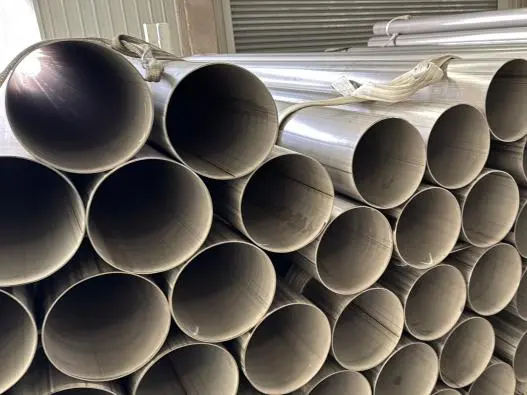
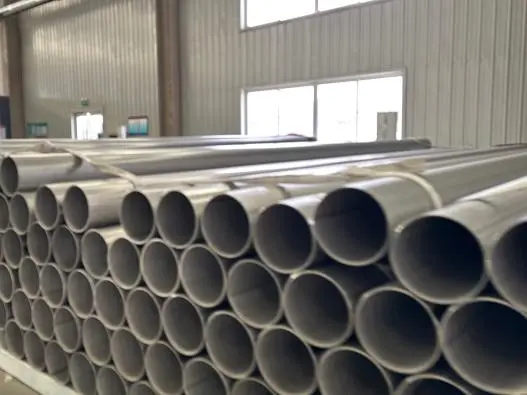
ASTM A249 Welded Stainless Steel Tubes suit condenser manufacturing because the specification covers welded austenitic tubes for boilers, superheaters, heat exchangers, and condensers. The tubes pair corrosion resistance with controlled dimensions and efficient heat transfer, provided the grade, wall thickness, finish, and testing match the cooling medium. At YOUFA, we supply A249 tubing in nine grades, from TP304 to S31254, with outside diameters from 1/8" to 12". This guide covers scope, grades, testing, comparisons, and purchasing steps, so engineers and buyers in the United States can write a precise RFQ and avoid leakage, corrosion, and certification delays.
|
|
|
Understanding the A249 Specification, Grades, and Dimensions
What does the standard cover? How does each factor affect the condenser's performance? Make sure you know this before you compare prices.
Scope and Manufacturing Process
Welded austenitic steel tubes can be used in a boiler, superheater, heat exchanger, or condenser that meet ASTM A249/A249M. After rolling a flat piece of metal into a tube, the machine welds the long seam without using filler metal. The tube is then cut to the right size. As per the standard, the weld can be cold worked. This means that mills can work the bead flush with the base metal to make that area less likely to wear out from friction. The next steps are to heat treat, clean the surface, test, label, and pack. When buyers look for something, ASTM A249 Welded Stainless Steel Tubes are just the beginning. They need to add project standards like design code, special tolerances, and more review. YOUFA has 15 assembly lines that let us shape, weld, and heat each order exactly the way we want it.
Material Grades and Chemical Composition
YOUFA sells the TP304, TP304L, TP316, TP316L, TP321, TP321H, TP317, TP310, and S31254 parts. Because it has 18 to 20 percent chromium in it, TP304 doesn't rust very often. When molybdenum is added to TP316, it makes it less likely to crack in water that has salt in it. Because the L types hold less carbon, carbides don't form near the welds. It is added to TP321 and TP321H with titanium to make them more stable. TP317 has more molybdenum than TP316. High temps don't change TP310, and S31254 has about 6% molybdenum, which makes it good for heavy salt work. Choose the grade based on the chemicals in the water, its temperature, its flow rate, and the chemicals that are used to clean it. In the next step, look at the science sample test certificate.
Dimensions, Wall Thickness, and Tolerances
The sizes determine how well heat moves, how well the tube and sheet fit together, and how much they expand. YOUFA makes ASTM A249 tubes with walls that are between 0.015" and 0.320" thick (0.4 to 8.1 mm) and have an outside diameter of 1/8" to 12" (3.2 to 304.8 mm). It is lighter and more heat can pass through thin walls than through thick walls. Thick walls make things tougher but also let rusting happen. Lengths can be all over the place, set, or U-shaped. It is now possible to use ASTM A249. The OD and wall are used to figure out standard tolerances. Write down in the purchase order any OEM limits that are stricter for end condition, straightness, and ovality. Make sure that the final sizes are correct for the operational temperature, design pressure, tube-sheet drilling, and engineering code that is being used.
Heat Treatment, Testing, Finish, and Alternatives
How tubes act after being installed depends on the steps that were used to make them and the checks that were done. When you clearly compare one specification to another, you can avoid making mistakes that cost a lot of money.
Heat Treatment and Surface Finish
When you weld or shape something, you leave behind stress and changes in the microstructure nearby. When you anneal something in a solution, you get rid of dangerous carbides, make the structure less likely to rust, and even out its structure. There are two types of solution-annealed ASTM A249 Welded Stainless Steel Tubes that YOUFA sells. The bright-annealed tubes have a smoother, brighter surface. It's easier to clean smooth bores because they don't get stuck as often. Buyers can also choose pickling and passivation. These steps clean the surface and help the protective chromium oxide film grow back. These steps are very important when the process fluid or cooling water is rough. Standards set limits on how hard something can be. These limits help make sure that the heating process went well. Don't guess about the terms of delivery and finish; write them down in the order.
Testing and Documentation
As per ASTM A249, every tube needs to pass either a hydraulic test or an electric test that doesn't damage the tube. It also has to pass technical tests like base and flattening tests. The ASTM E426-based eddy current test finds cracks in the weld seam, and the hydraulic test confirms that the pressure is kept in check. You can get reports from YOUFA on mechanical, eddy current, and hydrostatic tests, and our ISO 17025 lab can help you test things. You can get the MTC/MTR (3.1/3.2), TPI, WPS/PQR, MPS, and UT/RT data. For each tube to be linked to its certificate, you should ask for heat numbers and measurement records. Keeping track of this helps with checks and finding out when a tube breaks while it's being used.
A249 vs. A269, A213, and Carbon Steel
Heat exchanger and condenser tubes that are soldered are what ASTM A249 is for. ASTM A269 covers tubing that can be used for many things, and ASTM A213 covers tubes that aren't welded along their length. It is possible to use these tubes in plans that don't allow welded parts. Most of the time, ASTM A249 tubes have the same wall thickness, come in a lot of different sizes, and cost less, as long as the design takes into account the weld joint as required by code. Since "ASTM A249" doesn't describe a process, you should ask the service what kind of welding is being used (WPS/PQR). Carbon steel is less expensive to buy, but it rusts more quickly in cool water, so it costs more to keep up and replace over time.
Application Selection, Installation, and Service Life
That's because each condenser has to deal with various fluids, temperatures, and maintenance plans. You need to know how the condenser is being used in order to find the right tube.
Steam Condensers and Cooling-Water Systems
There is cooling water on one side of steam surface condensers and vacuum steam on the other. There is chloride, wear and tear, and vibration that the ASTM A249 Welded Stainless Steel Tubes have to deal with. The Heat Exchange Institute's standards for steam surface condensers are used to help power plants design their equipment. TP304 or TP304L works well in clean water. TP316 or TP316L can handle water that is salty or has chloride in it. S31254 could be used for salt service that is rougher. Starting with the chemistry, temperature, speed, and vacuum of the water, describe it. After that, choose the grade and end. Add positive material identification or review by a third party to important tools.
Chemical, Energy, and Process Equipment
Not only power plants use ASTM A249 tubing. Plants that handle chemicals, petrochemicals, and cool factories use it in heaters and heat exchangers. In areas like making new energy and processing metal, condensers and coolers are also used to get heat back or cool process lines. If you heat TP321 and TP321H over and over, they will not break. TP310, on the other hand, can be hot and oxidize. For the chemical, cleaner, and temperature, make sure the grade is correct. Also, test the galvanic effects with materials that are linked. ASTM A249 is about heat transfer, while ASTM A270 is about surface standards. This makes the sanitary job different.
Installation, Cleaning, and Service Life
Fitting ASTM A249 Welded Stainless Steel Tubes correctly is the only way to get the most out of good tube quality. Make sure the tube-sheet hole fits and that the ends are ready before you roll or seal weld. Keep the flow speed within the design range to avoid erosion and fouling, and use space supports to stop vibrations. Chemical or mechanical cleaning can get rid of deposits, but cleaning products contain chlorides that need to be controlled. Keep an eye on the approach temperature, pressure drop, plugging rate, wall loss, and how often you clean. Eddy current testing done on a regular basis shows damage before leaks show up. Repair-or-replace decisions should be based on total cost, not guessing, and these steps support that.
Buying Guide: RFQ, Total Cost, and Supplier Evaluation
When selling something abroad, an organized buy method saves time and lowers risk.
Preparing a Complete RFQ
Quotes are given faster and more accurately when the RFQ is clear. Please list the edition and grade of ASTM A249/A249M, as well as the length, number, tolerances, finish, test requirements, and type of certificate. Include the reason, how it will be used, where it will go, how it will be shipped, and whether you need straight or U-bent tubes. YOUFA lets you order as little as one pipe, which is good for sample checks, first-article approval, and test runs before you place a large order. Since the first lot passed inspection, more orders can come in. Please send drawings as soon as you have them. They will clear up any questions about the bend radius and end condition.
Comparing Price and Total Delivered Cost
Price per kg doesn't tell the whole story. Because nickel and molybdenum prices change, you need to add inspection fees, third-party witnessing, freight, duties, finishing, packaging, and material surcharges to your quote. If the ASTM A249 Welded Stainless Steel Tubes are broken or don't have the right license, a cheap unit price isn't worth it. YOUFA puts tubes in wooden boxes that can have a steel frame added if needed. The tubes are then bound in hexagonal shapes and wrapped in woven bags to protect them during ocean freight. We can get things to Tianjin Port in as little as 7 days, and we let project teams know about production goals so they can plan when to drill tubes and place sheets.
Evaluating a Manufacturer or Supplier
A weld's quality isn't always stable just because it seems to comply. Look at the testing tools, quality system, output range, export experience, and tracking. YOUFA was started in 2017 and has more than 200 employees working on 15 production lines that make 50,000 tons of goods every year. Our ISO 17025 lab is run by people who are certified by ISO 9001, PED, and TÜV. Ask any seller what version of ASTM A249 they use, how often they test, if they give out EN 10204 3.1 or 3.2 certificates, and how they handle returns and replacements. Before you place a large order, ask for samples of the work and project references.
Final Decision Checklist and YOUFA Supply
The technical choices above can be linked to a confident purchase by a short list.
Is A249 Welded Tubing Right for Your Condenser?
Do four checks. As a start, does the environment for corrosion match the grade, like 304L or 316L for welded parts in chloride water? Second, does your design code allow welded tube with its weld joint factor? Third, do you need extra tests, positive material recognition, or a review by a third party? Fourth, do the measurements meet the needs for drilling and flow in tubes and sheets? As long as all four answers are yes, ASTM A249 is usually the most cost-effective way to get consistent wall thickness and effective heat transfer. If the code calls for tubes without a lengthwise weld, you should look at ASTM A213.
YOUFA ASTM A249 Product Range
The ASTM A249 Welded Stainless Steel Tubes that YOUFA sells come in TP304, TP304L, TP316, TP316L, S31254, TP321, TP321H, TP317, and TP310. The outside diameter ranges from 1/8" to 12" and the wall thickness from 0.015" to 0.320". Shipped tubes can be any length, a fixed length, or U-shaped. They can be solution annealed or bright annealed, and they are used to move heat in heat exchangers and boilers where corrosion is a problem. YOUFA is one of China's Top 500 companies, and they offer a complete range of stainless steel pipes. Customers can use heat exchanger tubes, thin-wall water pipes, and industrial welded pipes all in one project.
Quality Control and Project Support
For quality to begin, the sources of the raw materials must be controlled, and management must be able to be watched. After that, specific testing and inspection tools and methods are added with a focus on the user, their full participation, process control, and continued growth in mind. We offer technical support, on-site commissioning options, and full supply coordination for projects. Our work is backed by engineering cases and long-term partnerships. From the quote to the shipment, responsive communication keeps buyers in the loop, so procurement teams can plan installations with fewer surprises.
Conclusion
When the standard is paired with project-specific needs, ASTM A249 Welded Stainless Steel Tubes are a quick way to get condenser and heat-exchanger tubing. The grade you choose depends on the temperature and chemistry of the water. For general cooling duty, 304L and 316L grades are best, while stabilized or high-molybdenum grades are better for rougher use. Leak resistance and service life are based on standards, solution annealing, surface finish, and hydraulic or eddy current tests. ASTM A249 is cheaper and has uniform wall thickness compared to ASTM A269, ASTM A213, and carbon steel. However, the way the weld is treated in the design code needs to be checked. A full RFQ, the total cost of delivery, and confirmed source papers are all important for smart buying. The investment will be safe if heat-transfer signs are installed carefully and checked regularly.
FAQ
What are ASTM A249 welded stainless steel tubes used for?
They are used in boilers, heat exchanges, and condensers that need to reliably move heat.
Can A249 tubes replace ASTM A213 tubes?
Yes, in many situations where heat exchangers are used. As long as the design pressure takes into account the longitudinal weld, ASTM A249 has uniform wall thickness and is cost-effective.
Are A249 tubes corrosion resistant?
Yes. Grades of stainless steel don't scale or rust, even at high temperatures. If you will be exposed to salt, choose 316L or S31254.
Do A249 tubes come with inspection certificates?
Yes. We can give you test results for hydraulic, eddy current, and mechanical tests.
Is A249 suitable for food and beverage use?
It deals with how heat moves. When it comes to surface finish standards, ASTM A270 is the norm for sanitary uses.
Request a Quote for ASTM A249 Welded Stainless Steel Condenser Tubes
Want to find a provider of ASTM A249 Welded Stainless Steel Tubes that has the right grade, size, and paperwork for your condenser project? Email YOUFA at info@youfass.com with your ASTM A249 edition, grade, size, quantity, operating conditions, destination, and schedule. If you order at least one pipe, our technical team will give you a clear quote, wait time, inspection papers, and packing information. You can find out more at youfass.com.
Online Message