
Nov 10, 2026
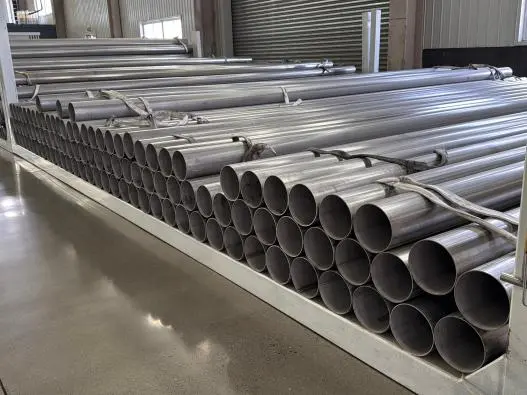
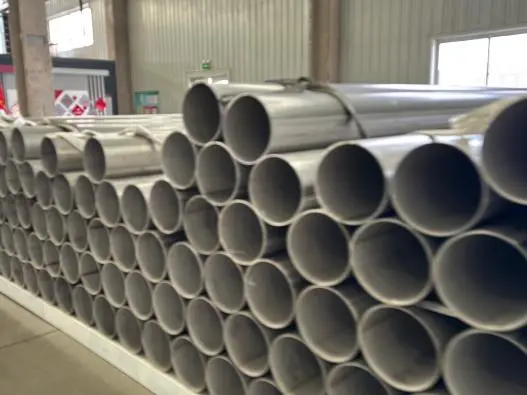
ASTM A249 TP304 Tubing for Boiler and Condenser Applications
ASTM A249 TP304 Tubing is welded austenitic stainless steel tubing made for boilers, condensers, and heat exchangers. It contains 18–20% chromium and 8–11% nickel, which gives it good corrosion resistance, easy forming, and dependable weldability. It performs well in treated water, steam, and mild process fluids at moderate temperatures. It does not suit every duty, though, so the details below matter. Chloride level, pressure, temperature, and design code all shape the final choice. In this guide, I explain the specification, properties, testing, and buying steps so you can judge fit before you request a quote.
|
|
|
Why ASTM A249 TP304 Tubing Is Used in Boiler and Condenser Systems?
The role of welded stainless steel tubing in heat-transfer equipment
Equipment that moves heat from one stream to another does so through the tube wall. Hot water or gas sits on one side of a boiler, and water or steam moves on the other. When water cools, it takes heat from steam or process gas and stores it. It's important that the wall of the tube can stand up to pressure, not rust, and keep its shape in both hot and cold weather. Waxed stainless tubes can meet these needs for a fair price. Mills heat the strip, roll it into a tube, join the seam, and then cut it to the right size. Along this road, the walls are close together, and because they are thin, heat moves through them quickly.
What does ASTM A249 TP304 mean?
ASTM A249 TP304 Tubing is a standard that says "Standard Specification for Welded Austenitic Steel Boiler, Superheater, Heat-Exchanger, and Condenser Tubes." That level has a score of TP304. Austenitic stainless steel is what it is made of. Chrome and nickel make up most of it. Chemical tests, heat treatment tests, mechanical property tests, and electrical or pressure property tests are all part of the standard. It doesn't say how hard your plant can work. Rules for design, like ASME rules, say how much force is okay at a certain temperature. To describe a tube, I look at its grade, standard, and code basis for each question. A name doesn't tell me much about it by itself.
Who should use this guide?
This book is for people who need welded steel tubes for boilers, condensers, and exchangers. It also helps people who work with heat exchangers in companies that make food and drinks, power plants, and chemical plants. If you work with acids, alkalis, or chlorides in chemistry or metals, these connections are important. Teams in charge of buying things can ask clear questions in the buying area. They can use the tests and parts on sites to see how the offer from a dealer stacks up against the standard. For YOUFA, it works best when both groups look at the same details.
ASTM A249 TP304 Tubing Chemical Composition and Material Properties
Chemical composition and why it matters
The ASTM A249 TP304 Tubing standards are as follows: carbon 0.08% max, manganese 2.00% max, phosphorus 0.045% max, sulfur 0.0300% max, silicon 1.00% max, chromium 18.0–20.0%, nickel 8.0–11.0%, and iron as the rest. On the surface, chromium forms a thin layer of inactive oxide. This film protects the steel in many water and steam services. Nickel keeps the austenitic structure stable, which makes the tube strong and simple to shape. The weld is also better because the standards for phosphorus and sulfur are low. To find the most up-to-date form of the standard, look at the heat chemistry on the mill study record.
Mechanical properties of TP304 welded tubing
As per ASTM A249, TP304 must have a tensile strength of at least 75 ksi (515 MPa) and a yield strength of at least 30 ksi (205 MPa). It is ductile because it can stretch at least 35%. Fabricators can stretch tubes into tube sheets and bend them into U-shapes when they do their job right. It also tells you how hard something can be. You should know that these numbers show the material stress, not the design stress. Engineers use the right rule, such as ASME Section II, Part D, to figure out how much force is safe at a certain temperature. No matter how well a tube tests, it might not be right for its job if it doesn't have the right form.
TP304 versus TP304L: when low carbon helps
ASTM A249 for ASTM A249 TP304 Tubing says that TP304L can only have 0.035 percent carbon, but TP304 can have up to 0.08%. Steel with more carbon can form chromium carbides at the ends of the grains between 800°F and 1500°F (425°C and 815°C). The process of making something more sensitive can make it easier for rust to form near welds. When solution annealing is done right, it helps get the structure back. TP304L gives you more space for heavy field welding or parts that can't be re-annealed. Even now, TP304 is often used when tubes are annealed, and there isn't much room to weld. YOUFA has TP304 and TP304L that have been joined together and sold.
ASTM A249 TP304 Tubing Dimensions, Heat Treatment, and Testing Requirements
Dimensions, wall basis, and tolerances
YOUFA makes ASTM A249 TP304 Tubing with a wall thickness of 0.015" to 0.320" and an outside diameter of 1/8" to 12" (3.2 to 304.8 mm). You can set the lengths or make them bend in a U shape. People can order ASTM A249 with either a minimum wall or an average wall. These are not the same thing. When you give a minimum-wall order, the wall of the tube is always at least that thin. There is room for difference around the average with an average-wall order. You should put the source after every quote. If you want to compare prices based on weight, multiply (OD - WT) by WT to get the kg/m value. The outside diameter of a tube that is 25.4 mm wide and 1.65 mm thick weighs about 0.98 kg/m. Make sure that limits are part of the current norm.
Heat treatment and weld manufacturing
As per ASTM A249, welded TP304 tubes must be supplied to you already heated. At least 1900°F (1040°C) is needed for solution annealing to begin, and then it cools down very fast. Chromium carbides are broken down in this step, stress is relieved, and corrosion resistance is brought back to the weld zone. YOUFA sells tube options that have been annealed or bright-annealed. Once the strip has been formed, it is longitudinally welded, annealed, sized, and inspected. It is important to finish the weld seam so that the transition is smooth and the wall thickness is even. This makes the area less likely to erode or rust. Ask your supplier to show you proof of how they welded. People who ask for WPS/PQR papers can get them from YOUFA.
Testing, certificates, and traceability
Either a nondestructive electric test, like eddy current, or a hydraulic test must be passed by each tube, unless the purchase order says otherwise. These tests check the weld for flaws and leaks. As part of ASTM A249, mechanical tests like flaring or flange tests and flattening tests must also be done. These tests show how strong and flexible the weld is. Check to see what tests are needed for the order you placed. YOUFA is a manufacturer that has ISO 9001, PED, and TÜV certifications. They also run an ISO 17025 laboratory. You can get data from the MTC/MTR (3.1/3.2), TPI, WPS/PQR, MPS, and UT/RT. Check that the heat numbers on the tube match the numbers on the certificate before you sign for the package.
ASTM A249 TP304 Tubing Applications in Boilers and Condensers
Boiler and feedwater service
ASTM A249 TP304 Tubing welding tubes can be used in the heat-transfer parts of boilers, the feedwater systems, and the economizers as long as the temperature stays below code limits and the chemistry of the water is controlled. The water and steam can't change the passive film, and the smooth bore lets a steady flow happen. A tube provider can't just agree to do something. This is the boiler builder's job to make sure the limits for stress, thermal cycle, and oxidation are fair. If you want to stop rusting quickly, check the feedwater for salt and dissolved oxygen early on. The heat exchangers and boiler tubes made by YOUFA can move heat in places that are toxic. Before we give a mark, we check the work.
Condensers, heat exchangers, and process equipment
A shell-and-tube unit has condenser tubes inside it. Water that is cool flows through the tubes, and outside, vapor cools off. You can use either clean or treated water to cool TP304. It can also be used in industries that need to be clean, like food and drink, medicine, and water treatment. When the fluids are not too hot or too cold, it is used to heat and cool processes in chemical plants. Check the shape of the tube sheet, the flow rate, and the amount of salt. Plaques can settle when the speed is low, which can cause corrosion to start under the plaques. You can use random-length, fixed-length, and U-bent tubes from YOUFA to make your products fit.
High-temperature and chloride limits
ASTM A249 TP304 Tubing can do a lot of things, but not all of them. When there is tensile stress and chlorides above about 140°F (60°C), you can get corrosion cracks from chlorides. More often than not, seawater and brackish water need a higher grade of alloy. You need to use code stress plots to check the changes in oxidation, creep, and temperature at high temperatures. Hot spots under deposits can also pose a risk in a certain area. If you work with high chlorides, acids, or temperatures, talk to the YOUFA team about TP316, TP321, TP317, TP310, or S31254. These are the grades we give to ASTM A249.
How to Select and Buy ASTM A249 TP304 Tubing?
Comparing TP304, TP316, and ASTM A269
When you add 2.00–3.00% molybdenum to TP316, it makes it less likely to pit or crack in salt conditions. ASTM A249 TP304 Tubing costs less and can do many tasks that need clean water or mild chemicals. Waxed pipe is not weaker by itself. There are a lot of heat exchangers that use ASTM A249. They tell us how to heat-treat and test soldered tubes. Smooth tubing might be the best choice when the code or customer requirements say so. ASTM A249 is for tubes used in boilers, superheaters, heat exchangers, and condensers, and ASTM A269 is for tubes used for other things. Change them out only after you've looked over the design code and the order. Pick the grade that works with the weather, the level of chloride, your plan to weld, and your maintenance schedule.
Preparing a complete inquiry
This saves time and keeps you from giving wrong quotes. These are the first three things I want them to check.
- Material and standard: Remember to write down the grade (such as TP304 or TP304L), the version of ASTM A249, and the heat treatment type (such as bright annealing or solution annealing). Everyone will have to offer the same price if you add any design code, test needs, and license type, such as MTC 3.1 or 3.2.
- Size and quantity: Write down the outside width, the wall thickness (with a minimum or average scale), the number of pieces, and the type of length (random, set, or U-bent). To begin a project, YOUFA needs at least one line. This means that repair orders, trial lots, and big project lots all go through the same steps.
- Delivery and packing: Make a note of the due date, the Incoterms, and the port of arrival. We can get your package to Tianjin Port in 7 days, which is the quickest. Most things are packed in a wooden box, but you can also use a steel frame, hexagonal binding, or a woven bag. Before the work starts, let us know if you have any special marking needs.
These numbers let us give you a price for the tube you need, not one that is similar.
Supplier checks, pricing, and quality assurance
You should change all of the prices to the same measure when comparing prices per piece, kilo, or meter. You should also think about how much it costs to ship, certify, and pack. Then keep an eye out for red flags like unclear standards, missing heat numbers, or certificates that don't match the tube's marks. That was in 2017. YOUFA now has 15 production lines that make 50,000 tons of goods each year. There are more than 200 people working for the Top 500 company in China. We have all the stainless steel pipes you need in one place. Before we start to make the product, we look over the drawings and tolerances to make sure the quality is good. We check it while it's being welded and heated, and before we send it out, we check the paperwork, markings, and quantity.
Conclusion
ASTM A249 TP304 Tubing: Welded austenitic stainless steel tubing can be used in boilers, condensers, and heat exchangers as long as the chemical composition and temperature of the water stay within the design range. It doesn't rust because it has 18–20% chromium and 8–11% nickel in it. The minimum tensile strength is 75 ksi, the yield strength is 30 ksi, the stretch is 35%, and the solution is heated to 1900°F. All of these things help make the material strong and easy to shape. It must be clear from the buy order what the sizes, wall base, and electric or hydrostatic tests are. The reason for this is that material values can't take the place of code design stress. ASTM A269 and ASTM A249 are not the same thing. After heavy welding, TP304L helps make the surface more sensitive. Metals above TP316 are good for being exposed to salt. When grade, standard, documents, and service conditions all match, it's a good choice.
FAQ
Is ASTM A249 TP304 tubing suitable for boilers?
It is possible for some services. What takes place is determined by the type of water, its temperature, its pressure, and the design code. Before you choose the grade, look at ASME Section II, Part D to see how much chloride is allowed and how much stress is allowed.
What is the difference between ASTM A249 and ASTM A269 tubing?
In ASTM A249, welded austenitic tubes are used for boilers, superheaters, heat exchangers, and condensers. In ASTM A269, both seamless and welded tubing are used for general corrosion-resistant work. Since they have different roles, don't switch them around without being told to.
What documents should I request when buying?
You should request the ASTM A249 TP304 Tubing edition, heat numbers, test results, and MTC/MTR (3.1 or 3.2). You can also ask YOUFA for reports on UT/RT, WPS/PQR, TPI, and MPS.
Can the tubing be supplied in custom sizes?
The OD can be anywhere from 1/8" to 12", and the wall can be anywhere from 0.015" to 0.320". You can set the lengths or U-bend them. You can only buy one pipe.
Request an ASTM A249 TP304 Tubing Quotation from YOUFA
Want to buy ASTM A249 TP304 Tubing from a company? YOUFA can give you a price based on the test, grade, size, and number you need. A lot of steel is made there every year—50,000 tons on 15 lines. Send your question, your application, where you want to go, and when you want to get there to info@youfass.com. We can send your order to Tianjin Port in 7 days, and you only need to order one pipe. Visit youfass.com to learn more.
Online Message