
Jul 10, 2026
All You Need to Know About ASTM A312 Welded Stainless Steel Pipes
If you need to buy pipes for harsh, high-temperature, or salty industry settings, you need to know about ASTM A312 Welded Stainless Steel Pipes. These austenitic stainless steel pipes with a straight seam are a reliable and affordable option for a wide range of applications, from industrial plants to power plants. This standard covers types like TP304, TP304L, TP316, and TP316L that are made from flat-rolled steel using automated welding without adding any filler metal. The main benefit is that it resists corrosion very well in both acidic and alkaline environments, keeps its shape under thermal stress, and is a cheaper alternative to seamless options for large-diameter installations where maintaining a consistent wall thickness is important for pressure calculations.
|
|
|
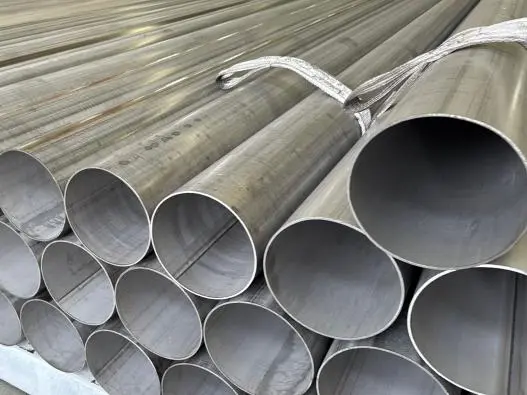
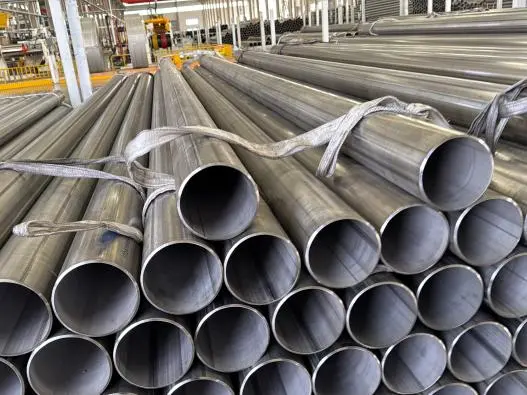
Understanding ASTM A312 Welded Stainless Steel Pipes
The ASTM A312/A312M-22 standard lists all the requirements for ASTM A312 Welded Stainless Steel Pipes that are meant to be used in general acidic and high-temperature working situations. This standard goes beyond just dimensional tolerances. It sets exact limits on chemical makeup and mechanical property requirements that make sure that each production batch performs the same way.
Key Chemical and Mechanical Properties
Austenitic stainless steel pipes that meet this standard have nickel content between 8% and 10% and chromium levels that are managed to be between 16% and 18% at the very least. This gives these materials their legendary resistance to corrosion. The amount of carbon in each grade is different. Low-carbon grades like TP304L keep the carbon content at a maximum of 0.035% to keep carbides from forming during welding. This chemical control directly fixes problems with intergranular rust in areas that are hot.
When it comes to mechanical qualities, the minimum yield strength is usually between 30 and 35 ksi, but this depends on the grade. Tensile strength standards make sure that structures will hold up under pressure. All pipes must go through solution annealing, a heat treatment that involves heating temperatures of up to 1900°F (1040°C) and quickly quenching them in water. This process makes the pipes more resistant to rust by breaking down carbides and keeping chromium in solid solution throughout the austenitic matrix.
Manufacturing Process and Quality Control
To make a welded pipe, flat steel is first put through precise making tools that shape it into a tube-like shape. High-frequency induction welding or tungsten inert gas (TIG) welding makes the lengthwise seam without adding any filler metal. This makes clean weld joints with few areas that are affected by heat. A heat treatment after welding evens out the structure of the metal, and then cleaning and passivation processes get rid of surface impurities and improve the protective chromium oxide layer.
Measurement checks, visual checks, and non-destructive tests like ultrasonic or eddy current examination of weld gaps are all part of quality assurance routines. The flattening test is still very important. In this test, the weld seam is placed at a right angle to the direction of the applied force, and any cracks that appear show that the joint quality is not good enough. Before final approval, hydrostatic pressure testing makes sure that the structure is sound.
Welded Versus Seamless Pipe Considerations
It is thought that seamless pipes are better at keeping pressure inside because they don't have any weld seams, but welded austenitic stainless pipes that meet ASTM A312 work just as well in most service situations as long as they are made and tested correctly. The weld joint efficiency factor, which is usually between 0.85 and 1.0 when a full radiography examination is done, needs to be taken into account when designing the pressure. For uses with diameters bigger than 16 inches, welded construction is often the only cost-effective choice, since seamless making becomes too expensive at these sizes.
Welded pipes have better dimensional stability than seamless pipes because the forming processes are more controlled. This means that the outside diameter and wall thickness limits are smaller. This level of accuracy in measurements makes installation easier and lowers the cost of fitting in complicated pipe systems.
Comparing ASTM A312 with Other Stainless Steel Pipe Standards
Understanding how ASTM A312 Welded Stainless Steel Pipes fit in with other pipe standards helps you choose materials that meet the needs of your project. Each standard covers a different set of uses, production methods, and efficiency requirements.
ASTM A312 Versus ASTM A358
ASTM A358 is for welded austenitic chromium-nickel stainless steel pipe with a bigger diameter, usually larger than the sizes that A312 covers. A312 works with pipes up to NPS 48, but A358 goes beyond this range for heavy industrial uses. The main difference is how they are made: A358 allows for either single- or double-welded construction with backing strips, while A312 is all about automatic welding without adding filler. Additionally, A358 requires a full X-ray test for some classes, which improves quality control for important uses.
ASTM A312 Versus ASTM A269 and A213
For general use, ASTM A269 covers seamless and welded austenitic stainless steel tubing. A213 covers seamless ferritic and austenitic alloy steel tubes for boilers, superheaters, and heat exchangers. It is important to know the difference between pipe and tube types. Pipes are named by their standard pipe size (NPS) and schedule number, while tubes are named by their exact outside diameter and wall thickness. When it comes to heat transfer, A269 and A213 materials are often used, and exact measurement control is very important. On the other hand, A312 is used for fluid transport in pressure pipe systems that are controlled by codes like ASME B31.3.
Corrosion Resistance and High-Temperature Performance
As stated in ASTM A312, austenitic types are very resistant to rust over a wide range of temperatures. TP304 works effectively in oxidizing conditions up to about 870°C, but it should not be exposed to temperatures between 425°C and 815°C for long periods of time to avoid becoming sensitized. TP316 types with 2% to 3% molybdenum are better at resisting pitting and crevice corrosion in chloride-containing settings. This makes them the best choice for marine uses and chemical processes with halogenated compounds.
Concerns about sensitization can be addressed by stable grades such as TP321 (titanium-stabilized) and TP347 (columbium-stabilized) in situations where the material needs to be used at middle temperatures or after it has been manufactured. These stable elements prefer to join with carbon, which stops the formation of chromium carbide, which would remove chromium from the edges of grains and make areas that are more likely to rust.
Procurement Guide for ASTM A312 Welded Stainless Steel Pipes
To find your way around the business world of ASTM A312 Welded Stainless Steel Pipes, you need to know about a number of factors that affect the total cost of acquisition, the trustworthiness of delivery, and the guarantee of long-term performance.
Pricing Dynamics and Grade Selection
The prices of nickel, chromium, and molybdenum affect the cost of materials. Because it contains more molybdenum, TP316L usually costs 15–25% more than TP304L. Pipe size has a big effect on unit price; bigger diameters and heavy wall schedules use more materials and make it more difficult. Schedule XXS pipes need a lot more material than Schedule 5S pipes, which has a direct effect on the price per foot. Prices have leveled off on the market in 2024 after being unstable earlier, but procurement workers should still be aware of how the global nickel supply changes, as it comes from the main producing areas.
Supplier Qualifications and Certifications
Reliable providers have full quality management systems that are approved to ISO 9001 standards. This shows that they consistently control the process and look for ways to make it better all the time. Certification under the European Pressure Equipment Rule (PED) is necessary for products that are going to be sold in the EU. Organizations like TÜV offer third-party inspection services that let you check the features of materials and make sure they match the specifications. Suppliers should easily give Mill Test Certificates (MTC) that meet the standards of EN 10204 3.1 or 3.2. These certificates should include records of the material's chemical makeup, mechanical properties, and heat treatment so that the whole process can be tracked.
Minimum Order Quantities and Lead Times
When it comes to normal grades and sizes, production costs usually set minimum order numbers around 5–10 tons. However, specialized providers may be able to meet smaller needs at a higher cost. With 15 production lines and an annual capacity of 50,000 tons, YOUFASS is very flexible, and the minimum order size is only one pipe. This means that it can handle trial needs and small projects that bigger mills can't afford to handle. Standard wait times for mill orders are between 4 and 8 weeks, but fast production is still possible for those who need it right away.
Logistics and Inventory Management
International goods need to be carefully packed to keep them from getting damaged in transit. Pipe ends are protected and stay straight during container loading and ocean transport when they are packed in wooden crates with an extra steel frame support. Hexagonal bundle binding with a woven bag overwrap is a cheap way to protect normal business goods. For cost-effectiveness, optimizing the containers becomes very important. 20-foot containers can hold between 18 and 22 tons, based on the size of the pipes, while 40-foot containers can hold between 24 and 27 tons. Major Chinese ports like Tianjin have regular travel plans to North America and Europe. It usually takes 25 to 35 days to get from one port to another.
Technical Insights and Installation Best Practices
Service life and system efficiency are greatly affected by proper installation and ongoing upkeep. Common failure modes can be avoided by knowing about the properties of the material and sticking to tried-and-true methods.
Welding Techniques for ASTM A312 Pipes
TIG welding, which uses tungsten inert gas, is still the best way to join ASTM A312 Welded Stainless Steel Pipes because it makes clean, high-quality welds with little heat. Backing gas protection with argon or nitrogen stops oxidation on the inside surface of the root pass, keeping the weld zone resistant to rust. Controlling the temperature between passes below 150°C stops too much heat from building up, which could cause grains to grow or grades that aren't stable to become sensitive.
Filler metal selection should match or slightly beat the rust resistance of the base metal. ER308L filler works well with TP304L base metal, while ER316L filler has the right chemistry for TP316L uses. If you use low-carbon base metals with ER308 filler, the higher carbon content in the filler could make the base metals more susceptible to localized sensitization.
Inspection and Testing Protocols
In addition to looking at the surface for flaws, non-destructive testing makes sure that the weld is solid. Liquid penetrant testing is a good way to find surface-breaking flaws in austenitic stainless steel welds, since the materials aren't magnetic, magnetic particle screening can't be used. Radiographic testing keeps a lasting record of the quality of the internal weld, but ultrasonic testing is faster for checking regular production welds as long as it is set up correctly for austenitic materials that have acoustic anisotropy.
Prior to commissioning, the system is checked for soundness by subjecting it to pressure testing at 1.5 times the original pressure for at least 10 minutes. If you are worried about water damage, pneumatic testing with nitrogen or compressed air is an option. However, because of the risks of stored energy, you need to follow stricter safety rules.
Maintenance Strategies for Extended Service Life
External rust should be checked for on a regular basis, especially under insulation, where moisture buildup causes harsh conditions. Austenitic stainless steel is mostly at risk from chloride pollution; salt deposits can be removed by washing it every so often in seaside or industrial settings. Every three to five years, passivation processes bring back the protective chromium oxide film in places where there is mechanical damage or joint discoloration.
Ultrasonic gauging is used to check the thickness of walls at set places and find rust or erosion before it gets too bad. Setting up standard data during approval lets you do trending analysis, which tells you how long the service will last and helps you decide when to replace it.
Why Choose ASTM A312 Welded Stainless Steel Pipes
The fact that ASTM A312 Welded Stainless Steel Pipes can be used in a lot of different industries and have been shown to work well in many of them shows their basic technical benefits and economic value.
Industry Applications and Case Studies
ASTM A312 pipes are used in chemical processing plants to move toxic substances like sulfuric acid, phosphoric acid, and caustic solutions. A big industrial complex in Europe just finished expanding. For process lines that handle chlorinated chemicals, 12 kilometers of TP316L pipe were used, which was chosen because it is better at resisting pitting in this tough environment. The device has been up and running nonstop for three years with no rust problems.
These materials are used in heat recovery systems, condensate return lines, and flue gas desulfurization units in power plants. High-temperature grades, such as TP309S and TP310S, are used in superheater areas where the temperatures are too high for lower-alloy options to work. Food and drink makers like how electropolished ASTM A312 tubing is clean and meets hygienic design standards while still keeping its structural integrity during cleaning-in-place operations.
Facilities that treat water and remove salt from it use TP316L for systems that handle brine where chloride levels are 35,000 parts per million or higher. The molybdenum presence protects against pitting and crevice rust, which would quickly break down less durable materials.
Trusted Manufacturing and Quality Assurance
When global sourcing workers need ASTM A312 materials, YOUFASS is the kind of company they look for. The organization was founded in 2017 and has grown quickly, making it one of China's top 500 businesses. It blends modern industrial skills with strict quality control. More than 200 workers run 15 dedicated production lines that make 50,000 tons of goods every year. This level of supply stability is something that smaller makers can't match.
A wide range of certifications, such as ISO 9001, PED compliance, an ISO 17025-accredited laboratory, and TÜV recognition, show that the company is dedicated to quality standards that are known around the world. Documentation for material tracking includes MTC/MTR certificates that meet the standards of EN 10204 3.1/3.2, inspection reports from a third party, welding procedure specifications with procedure qualification records, summaries of the material's properties, and ultrasonic or radiographic test reports as needed.
Supporting Global B2B Procurement Requirements
Instead of just looking at spot prices, modern buying focuses on the overall cost of ownership, the stability of the supply chain, and the dependability of the vendors. YOUFASS meets these needs by having flexible minimum order policies that can accommodate projects of all sizes, fast delivery options that can get goods to Tianjin Port in 7 days for urgent needs, and full technical support that includes help choosing materials and setting up the system when it's needed. Professional piping system companies are different from commodity steel sellers because they focus on service.
Conclusion
In conclusion, ASTM A312 Welded Stainless Steel Pipes have been used for many years in harsh industrial settings where long-term dependability, resistance to rust, and structural integrity are very important. Knowing the technical standards, grade selection criteria, and procurement issues in the specification helps you make smart choices that lower both the original investment and the costs over the product's lifetime. The welded design saves money on bigger diameters while still meeting performance standards that are good for most pressure pipe uses. These materials offer flexible solutions backed by decades of successful field experience and ongoing manufacturing progress. They can be used for projects involving chemical processing, power generation, water treatment, or the handling of industrial fluids.
FAQ
Can a welded stainless steel pipe substitute for a seamless pipe in pressure applications?
When the weld joint efficiency factor is taken into account in the design calculations, ASTM A312 Welded Stainless Steel Pipes work well for most pressure uses. In most cases, code requirements call for an efficiency of 0.85 for a normal welded building or 1.0 when a 100% radiographic study proves the quality of the weld. For most industrial plumbing systems that work within normal temperature and pressure ranges, seamless pipe doesn't offer any real benefits.
What distinguishes TP304L from standard TP304 grade?
The letter "L" in TP304L stands for "low carbon content." Standard TP304 has a maximum carbon content of 0.08%, but TP304L only has a maximum of 0.035%. This lower carbon level stops carbide production during welding, so there are no sensitization issues in heavy-gauge uses or when heat treatment after welding is not possible. For most welded buildings, TP304L is the best standard to use.
How do I verify supplier quality certifications?
Ask for Mill Test Certificates that meet the requirements of EN 10204 3.1 or 3.2. These certificates show the chemical makeup, mechanical qualities, and heat treatment records and are backed up by an independent review. Check that the company has ISO 9001 approval by looking at the registries of accreditation bodies. Also, make sure that products going to European markets are compliant with PED. Reliable sellers are happy to give you this paperwork right away.
Partner with a Reliable ASTM A312 Stainless Steel Pipe Supplier
YOUFASS is ready to meet your needs for ASTM A312 Welded Stainless Steel Pipes with top-notch manufacturing, quality assurance, and service that is focused on the customer. Our wide range of services, including production, testing, and expert advice, ensures that you get materials that meet your exact needs and come with all the necessary paperwork. Our flexible approach lets us meet a wide range of needs that bigger mills simply can't afford to. This includes needs as different as a single pipe for a prototype or large-scale production numbers for big projects. Get in touch with our expert team at info@youfass.com to talk about your unique application needs, get reasonable pricing, and experience the dependability that has made YOUFASS a trusted producer in markets around the world. We don't just sell goods; we also offer full piping options that help your business succeed.
Online Message