
Aug 13, 2026
310S Electric Fusion Welded Pipes Support Heavy Industrial Equipment
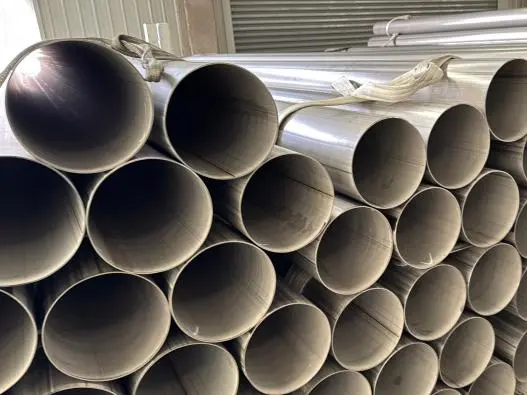
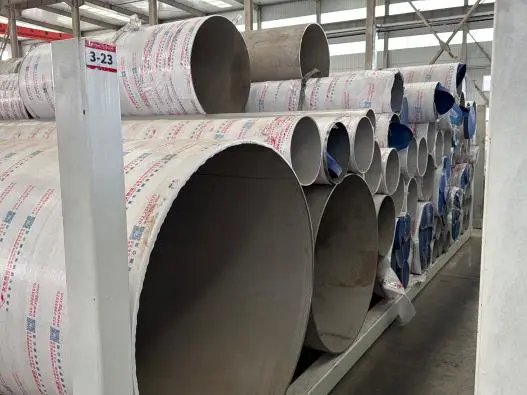
When your heavy industrial operation demands piping that performs reliably under extreme heat and corrosive attack, ASTM A358 310S Electric Fusion Welded Steel Pipes deliver the solution. These austenitic stainless steel pipes combine high chromium-nickel content with precision electric fusion welding, creating a material engineered specifically for temperatures reaching 1150°C and harsh chemical environments. Industries from fuel cell manufacturing to petrochemical processing depend on 310S welded pipes to maintain structural integrity where standard materials fail, offering exceptional oxidation resistance and mechanical strength that translates directly into reduced downtime and extended equipment lifecycles.
|
|
|
Understanding ASTM A358 310S Electric Fusion Welded Steel Pipes
To build big equipment that works well, you must first understand what makes these lines technically better. ASTM A358 310S Electric Fusion Welded Steel Pipes sets the standards for how to make and inspect electric fusion-welded stainless steel lines that are used in harsh, high-pressure settings. This standard covers a number of grades, but the 310S name stands out because it is made of a higher-grade alloy.
Chemical Composition and Material Properties
The chromium content of the 310S grade is 24–26% and the nickel content is 19–22%, which is a lot more than the common 304 or 316 grades. This improved alloy structure makes a protective oxide layer that can grow back even after being heated and cooled many times. The "S" at the end of the name means that the metal has a low carbon content (up to 0.08%), which stops carbide from forming during welding and keeps the metal's resistance to rust in areas that have been heated. This chemical balance solves a big problem that companies that make power batteries and equipment for making hydrogen have to deal with: materials breaking down at high temperatures.
With a minimum tensile strength of 515 MPa and a yield strength of 205 MPa, the mechanical qualities meet strict requirements. These pipes stay flexible and strong even after being exposed to high temperatures for a long time, which would damage other materials. The melting point range of 1398–1454°C and mass of 8 g/cm³ make it thermally stable, which is important for electrolysis systems and high-temperature chemical reactions.
Temperature and Corrosion Resistance Advantages
The performance envelope of the 310S is what makes it stand out for heavy industrial equipment. Up to 1150°C of constant service, the material doesn't oxidize or scale, which makes it essential for heat treatment ovens and other thermal processing equipment. This ability to work at high temperatures directly helps fuel cell companies that need long-lasting stack parts and electrode assemblies that can handle heat stress without changing size.
Resistance to corrosion goes beyond temperature tolerance. The high ratio of chromium to nickel makes it very resistant to sulfuric acid, phosphoric acid, and alkaline solutions that are common in electroplating and making electrolytic cells. For companies that work with active media in chemical processing, this means longer maintenance gaps and a lower chance of sudden failures that stop production lines.
The Electric Fusion Welding Process for ASTM A358 310S Pipes
Quality of manufacture determines performance in the real world. The lengthwise seam in these large-diameter pipes is made by a controlled process called electric fusion welding. This makes them different from seamless or other types of welded pipes.
How Does EFW Technology Ensure Structural Integrity?
The first step in electric fusion welding is to carefully shape a stainless steel plate that meets strict chemical and mechanical standards. Before high-frequency induction heating joins the joint, the edges are carefully prepared. In some configurations, the joint is welded without filler metal, but in others, controlled filler addition is used. This makes a weld zone whose metallurgical properties are the same as the base material, which is very important for pressure vessels and piping systems in power plants.
Quality Control and ASTM Compliance Standards
EFW can work with large outside diameters (114.3 mm to 2500 mm), while TIG welding can only work with pipes with a smaller diameter. This makes it ideal for key process lines in industrial plants and utility boiler systems. When it comes to bigger sizes, where casting and piercing become too expensive, this method is more cost-effective than making pipes that are smooth. Because of this, ASTM A358 310S Electric Fusion Welded Steel Pipes is the best option for automakers who are building production lines for battery modules that need large-diameter electrolyte circulation systems.
Every pipe that leaves our facility goes through 100% non-destructive testing. Ultrasonic testing (UT) finds cracks inside the metal, and radiographic testing (RT) shows if the weld is completely solid. This two-step process goes above and beyond what is required by ASTM A358. It also addresses concerns raised by medical device makers that failure or contamination could put patient safety at risk.
Hydrostatic pressure testing makes sure that a structure is strong under load situations that are similar to real work. Transverse guided-bend tests show that the weld is flexible, which means that the joint won't break when it's being installed or when it's being used. We conduct intergranular corrosion testing according to ASTM A262 Practice E. This proves that our heat treatment process stops sensitization, which is a very important issue for applications in the semiconductor industry that need to handle very pure fluids. Material Test Certificates (MTC) with 3.1 or 3.2 certification, Third-Party Inspection reports, Welding Procedure Specifications (WPS), Procedure Qualification Records (PQR), and full UT/RT reports that meet the strictest project standards are all included in documentation packages.
ASTM A358 310S Pipes vs Alternatives: Making the Right Choice
The economics of a project and its long-term dependability are affected by decisions about procurement. Understanding how ASTM A358 310S Electric Fusion Welded Steel Pipes stack up against other materials can help you choose the best option for each job.
Comparing 310S to 309S and 304 Grades
With 22–24% chromium, 309S works well at high temperatures, but 310S is better because it has 19–22% nickel, compared to 12–15% in 309S. This makes it more resistant to carburizing environments and thermal cycling fatigue. This difference is important for companies that make heat exchangers and furnaces, since heating and cooling materials over and over again speeds up the breakdown of lower-nickel metals.
The 304 grade of stainless steel is cheap and easy to find, but it loses its mechanical strength above 800°C and can't handle long-term high-temperature use. PCB makers and IC packagers that use lower-temperature chemical processes might be able to get by with 304, but electrolysis system builders and bipolar plate makers need 310S to meet their service life goals.
310S Versus Carbon Steel and 321 Stainless
It is cheaper to buy carbon steel pipes like ASTM A106 at first, but they rust quickly in acidic or alkaline situations and can't withstand temperatures above 550°C. For companies that make copper and aluminum electrolysis, using carbon steel is not a good deal because it costs a lot more to replace parts and loses production time when they break down too soon than it would to buy corrosion-resistant 310S material.
The 321 grade (18% chromium, 10% nickel, and titanium stability) works well in many industrial settings, but it can't handle high temperatures as well as the 310S grade because it has less nickel. Manufacturers of aerospace parts and makers of high-temperature coatings often choose 310S over 321 because 321 would oxidize faster and lose its shape during thermal processing processes.
Applications and Benefits of ASTM A358 310S Electric Fusion Welded Pipes in Heavy Industry
Performance in the real world proves the choice of materials. ASTM A358 310S Electric Fusion Welded Steel Pipes are used in harsh environments because the material offers measurable benefits that have an effect on the bottom line.
Key Industrial Sectors and Use Cases
Battery manufacturers constructing gigafactories require piping systems capable of handling corrosive electrolyte solutions at controlled temperatures without contamination, and ASTM A358 310S Electric Fusion Welded Steel Pipes meet these demands through their chemical inertness and high-temperature stability. These properties are essential for cathode and anode production lines, where material purity directly impacts battery performance and safety.
Manufacturers of tools for making hydrogen have to deal with some very tough circumstances. High-temperature caustic liquids are used in electrolysis systems to break down weak materials. The 310S alloy doesn't weaken when exposed to hydrogen and keeps its mechanical properties, which helps the clean energy infrastructure grow. One fuel cell company said that their repair times got 40% longer after they switched from using 316L to 310S in the stack assembly process.
Petrochemical plants process crude oil and chemical feedstocks at temperatures and pressures that push the edges of what can be made. 310S welded pipes are used for major process piping, reformer tubes, and thermal cracking units because they stay strong even after years of constant use. When chemical industry companies work with concentrated sulfuric acid and caustic solutions, corrosion rates are much lower than with lower-alloy options.
Operational Benefits and Cost Advantages
The real value proposition goes beyond the price of the item. Less frequent maintenance means fewer planned shutdowns, which directly raises the utilization of production capacity. After adding 310S pipes to their electrode coating systems, automotive makers that make battery modules for electric vehicles reported 15% higher uptime. This was because unplanned fixes that used to slow down production plans were no longer needed.
Better safety performance saves both people and things. The material is less likely to fail catastrophically because it doesn't crack under stress corrosion and can reliably hold pressure during temperature changes. When it comes to medical devices, where failure of equipment could put patients or workers in danger, makers really value this level of dependability.
The total cost of ownership is significantly lower when the working life is extended. The starting cost of the materials is higher than those for carbon steel or lower-grade stainless steel, but 310S setups that are properly installed usually last 20 to 30 years, so they don't need to be replaced as often. When companies that process chemicals for industry add up the costs of avoided downtime and replacements, they get a payback period of less than three years.
Procurement Guide: How to Source ASTM A358 310S Electric Fusion Welded Pipes?
How you choose your suppliers affects whether you get the quality that your requirements call for. There are a number of things that set trusted makers apart from sellers of low-quality goods, especially when sourcing ASTM A358 310S Electric Fusion Welded Steel Pipes.
Evaluating Manufacturer Credentials and Capabilities
Documentation for certification is the basis for evaluating suppliers. Certification in ISO 9001 quality management shows that processes are controlled in a planned way, and compliance with the Pressure Equipment Directive (PED) shows that projects with an international reach can be sold in Europe. TÜV certification is an independent check of a company's ability to make things and its quality control systems.
Production capacity becomes critical when project deadlines are compressed, and for ASTM A358 310S Electric Fusion Welded Steel Pipes, our 15 high-tech production lines with an annual capacity of 50,000 tons enable us to handle large orders without compromising delivery schedules. This scale advantage helps EPC contractors and project managers maintain construction timelines, particularly for large-scale installations requiring thousands of meters of pipe delivered through coordinated shipments.
Manufacturers who really control quality are different from those who depend on third-party testing because they have access to labs. Our ISO 17025-certified lab does chemical analysis, mechanical testing, and metallographic study all in-house. This means that test results are available quickly, and the chemistry of raw materials can be checked before production starts. Precision plating companies and conductive material suppliers are safe from material mix-ups that could hurt the performance of their products because of this vertical integration.
Pricing, MOQ, and Delivery Considerations
Clear pricing structures help you stick to your budget. We give you detailed quotes that include the cost of the materials, the cost of testing, and any special needs you may have, such as beveled ends or custom lengths. By knowing about these parts, engineering teams can make sure that standards are met and that costs are kept low without sacrificing effectiveness.
Smaller tasks or prototype development are often hard to do because of minimum order amounts. Our one-pipe minimum order policy takes away obstacles for research and development programs. This lets companies that make medical devices and aerospace parts test how well materials work in new applications without having to worry about running out of stock. You can combine 310S pipes with 304H or 316L pipes in a single shipment to help sites with a variety of process needs. This freedom also applies to mixed-grade orders.
Delivery speed affects the cost of a job. We keep standard sizes in stock and can ship them to Tianjin Port for export in containers within seven days. For larger diameters or non-standard specifications, our production schedule can quickly meet your needs if you need them right away. Tier 1 car providers that use just-in-time production settings really like how responsive this is; it helps them keep their working capital from getting stuck in extra inventory.
Technical Support and Customization Options
Service after the sale adds value after the sale. When projects need specialist knowledge, our technical team helps with installation, suggests welding procedures, and helps with finishing on-site. This is very helpful for companies that make surgical equipment and electrode probes that are putting in place stainless steel piping systems for the first time.
Customization options meet the specific needs of each application. We offer a range of surface finishes, such as pickled and annealed or solution-annealed conditions that are best for certain environments. You can prepare the ends in two ways: with regular ends for socket welding or angled ends ready for butt welding. This cuts down on the time and money needed for field preparation. Our precise production equipment can handle requests for tighter tolerances on dimensions than what is normally required by companies that work with advanced materials.
Conclusion
Choosing the right ASTM A358 310S Electric Fusion Welded Steel Pipes will protect your big industrial investment and make sure that it works reliably. This material has the mechanical properties, ability to withstand high temperatures, and resistance to corrosion that are needed for tough jobs in the new energy, automotive, chemical processing, and advanced manufacturing industries. Electric fusion welding makes it possible to make large-diameter pipes that are both cost-effective and have the same level of weld stability as seamless pipes. This process is backed by extensive testing and paperwork that meets the strictest quality standards. When you work with a manufacturer that has a track record of output, accredited testing, and quick response technical support, you get more than just a provider. You get trust that your piping system will work as planned for as long as it is in use.
FAQ
What temperature range can 310S welded pipes handle safely?
Continuous oxidation of 310S stainless steel pipes is not possible up to 1150°C; occasional contact is a little higher. This is higher than what is practical for grades 304 (about 800°C) and 316 (850°C), so 310S is the best choice for furnaces, reformer tubes, and other thermal processing equipment. Unlike carbon steel, which loses strength quickly above 500°C, this material keeps its mechanical qualities and physical stability over this temperature range.
How does electric fusion welding compare to pipe that is not joined together?
Electric fusion welded (EFW) pipe is cheaper when the diameter is above 6 inches, because making seamless pipe is more expensive and harder to do correctly. When the right steps and inspection rules are followed, modern EFW methods create weld zones with mechanical qualities that are almost the same as the base material. Some standards require seamless pipes to have no weld seams at all, but for most industrial uses that meet ASTM A358 standards, EFW pipes work just as well for less money and are easier to find in larger diameters.
What documentation should I expect when the pipe is delivered?
Full paperwork packages come with Material Test Reports (MTR) that are approved to EN 10204 3.1 or 3.2 standards and show the real chemical and mechanical test results for each heat of material. You should get Welding Procedure Specifications (WPS) and Procedure Qualification Records (PQR) that explain how the welding process was done, along with test reports for both ultrasonic and radiographic scans of the longitudinal weld seam. Third-Party Inspection reports from companies like TÜV or Lloyd's Register offer impartial confirmation when project requirements call for it.
Partner with YOUFA for Reliable 310S Stainless Steel Piping Solutions
YOUFA has ASTM A358 310S Electric Fusion Welded Steel Pipes that are made to very high standards and ready to help you with your big industrial equipment projects. As a well-known company that makes stainless steel pipes and has ISO 9001, PED, and TÜV certifications, we have 15 production lines that can make 50,000 tons of pipes a year, and an ISO 17025-accredited laboratory that makes sure every pipe meets the requirements. We can meet your needs with variable minimum orders and fast seven-day delivery to major ports, whether you need a single test piece or multiple containers for large-scale setups. Our expert team is there to help you with your project from choosing the materials to putting it into action. Visit youfass.com or email us at info@youfass.com to talk about how our 310S electric fusion welded pipes can improve the performance and reliability of your business.
Online Message